A validated model for short-term mortality after severe traumatic brain injury
Renji Hospital's Head Trauma Centre recently published “An independently validated nomogram for individualised estimation of short-term mortality risk among patients with severe traumatic brain injury: a modelling analysis of the CENTER-TBI China Registry Study” online in The Lancet's journal eClinicalMedicine. Using a large Chinese severe traumatic brain injury cohort, the study developed a rapid, convenient short-term mortality prediction model for clinicians, potentially helping early clinical decisions.
Translation and adaptation of the article
Introduction
Severe traumatic brain injury (sTBI) has high rates of disability and death. Early identification and timely treatment of patients at high risk of short-term death, within 14 days of injury, are crucial. This study aimed to develop and independently validate an individualised short-term mortality prediction model using a large Chinese cohort.
Methods
Data came from the CENTER-TBI China Registry, a prospective, multicentre, longitudinal observational cohort that collected information on 13,627 TBI patients at 56 Chinese hospitals between 22 December 2014 and 1 August 2017. This analysis included 2,631 sTBI patients at 52 hospitals, divided by hospital into development and validation cohorts. Multivariable logistic regression identified independent predictors of short-term death and generated a nomogram. Discrimination was assessed by the area under the receiver operating characteristic curve (AUC) and concordance index (C-index); calibration by calibration plots and the Hosmer–Lemeshow test; and net benefit by decision-curve analysis (DCA).
Results
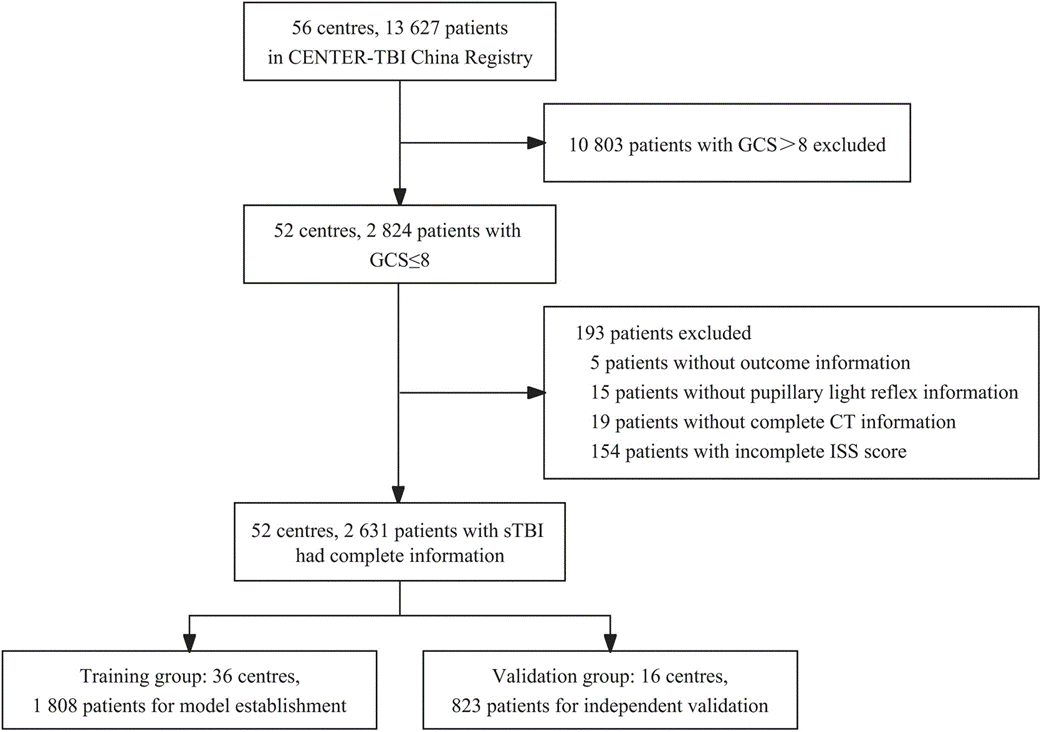
The registry collected clinical information on 2,824 sTBI patients. This analysis included 2,631 and excluded 193 because of incomplete records. Patients came from 52 hospitals in 22 Chinese provinces and municipalities. Thirty-six hospitals with 1,808 patients formed the development cohort, and the remaining 16 hospitals with 823 patients formed the validation cohort, as shown in Figure 1.
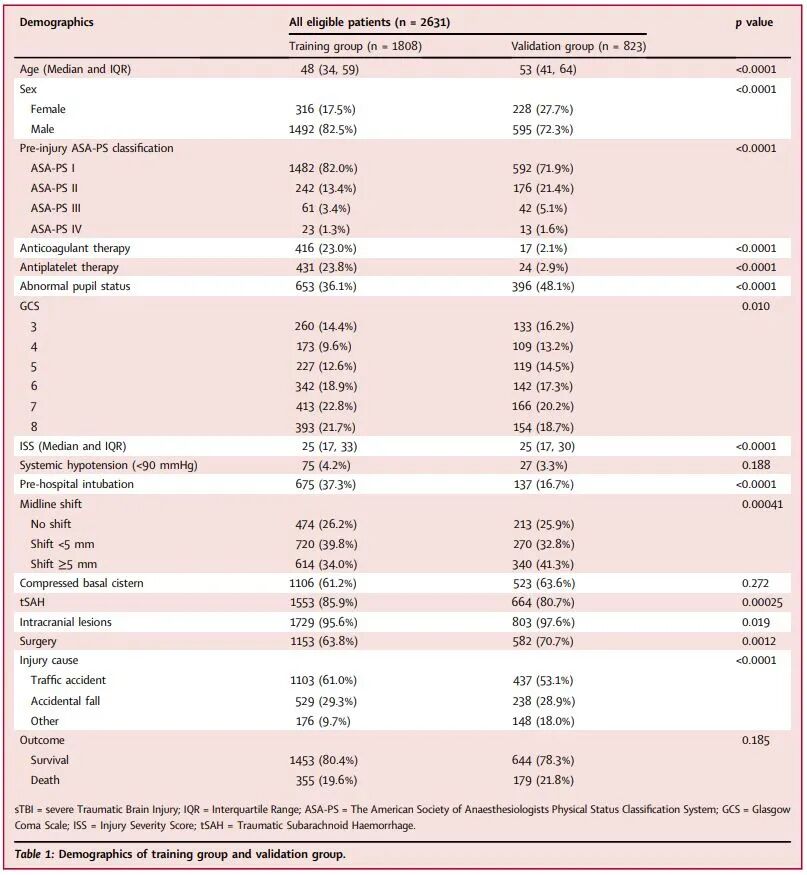
Compared with the validation cohort, the development cohort was younger (median 48 versus 53 years, p<0.0001), had more men (82.5% versus 72.3%, p<0.0001) and better pre-injury health: 82.0% had ASA-PS class I (versus 71.9%, p<0.0001). Fewer had abnormal pupils (36.1% versus 48.1%, p<0.0001), and their overall GCS scores were better; Table 1 provides details. Prehospital intubation was more frequent (37.3% versus 16.7%, p<0.0001). On CT, fewer had midline shift ≥5 mm (34.0% versus 41.3%, p=0.00041), more had traumatic subarachnoid haemorrhage (85.9% versus 80.7%, p=0.00025), and slightly fewer had intracranial haematomas (95.6% versus 97.6%, p=0.019). Fewer underwent surgery (63.8% versus 70.7%, p=0.0012). Mortality was slightly lower, without a statistically significant difference (19.6% versus 21.8%, p=0.185).
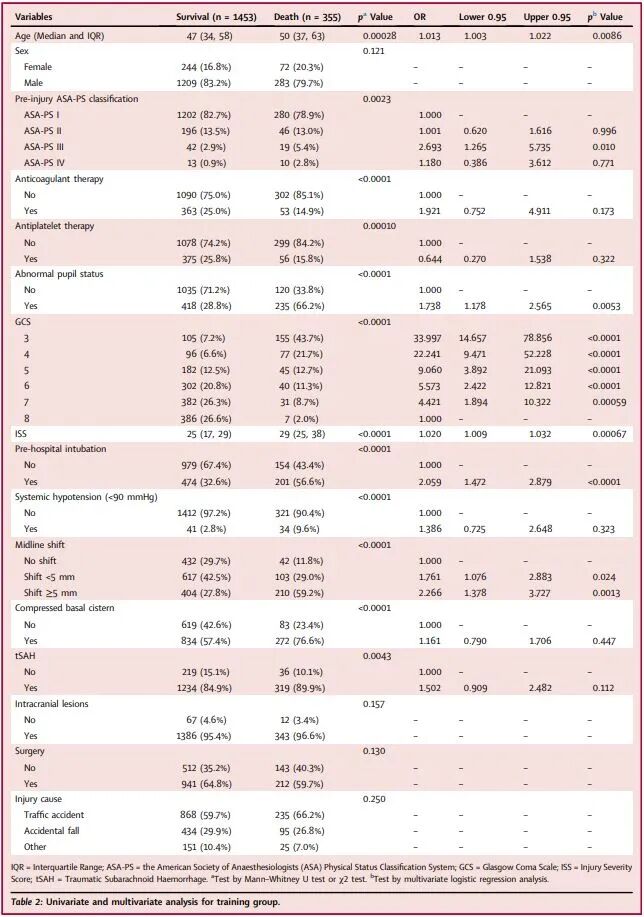
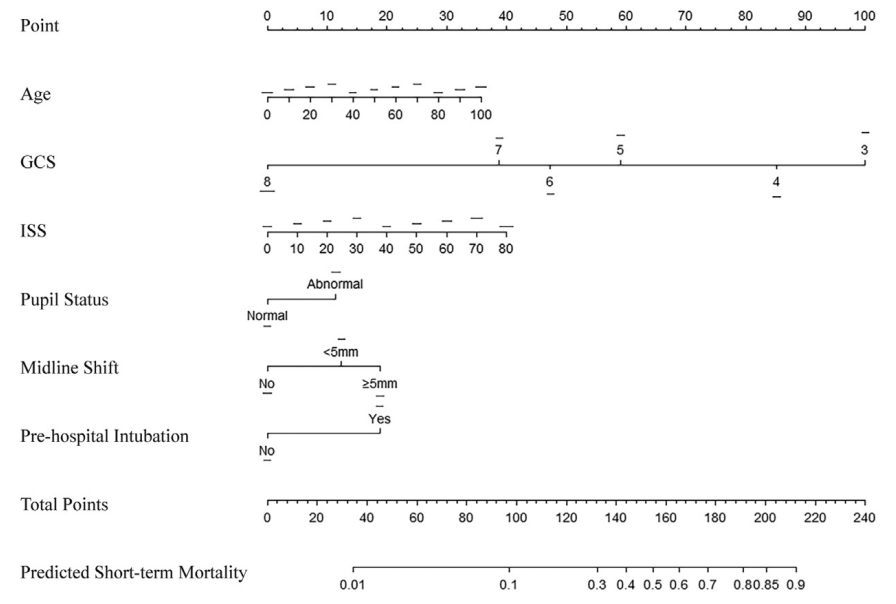
Univariable analyses first identified factors distinguishing survivors from patients who died. Selected variables entered multivariable logistic regression to identify independent risk factors for short-term death. Age, GCS score, Injury Severity Score (ISS), abnormal pupils, midline shift (<5 mm or ≥5 mm) and prehospital intubation were independent risk factors for death within 14 days (Table 2). The nomogram was then constructed from this regression (Figure 2).
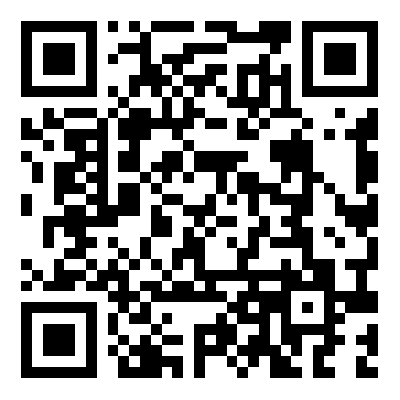
To use it: (1) identify the patient's value on each variable axis; (2) draw a vertical line upward to obtain its score on the top Points axis; (3) add all scores and locate the sum on the lower Total Points axis; and (4) draw a vertical line downward to the predicted short-term mortality axis to read the risk. A web interface was also developed for convenient use (Figure 3).
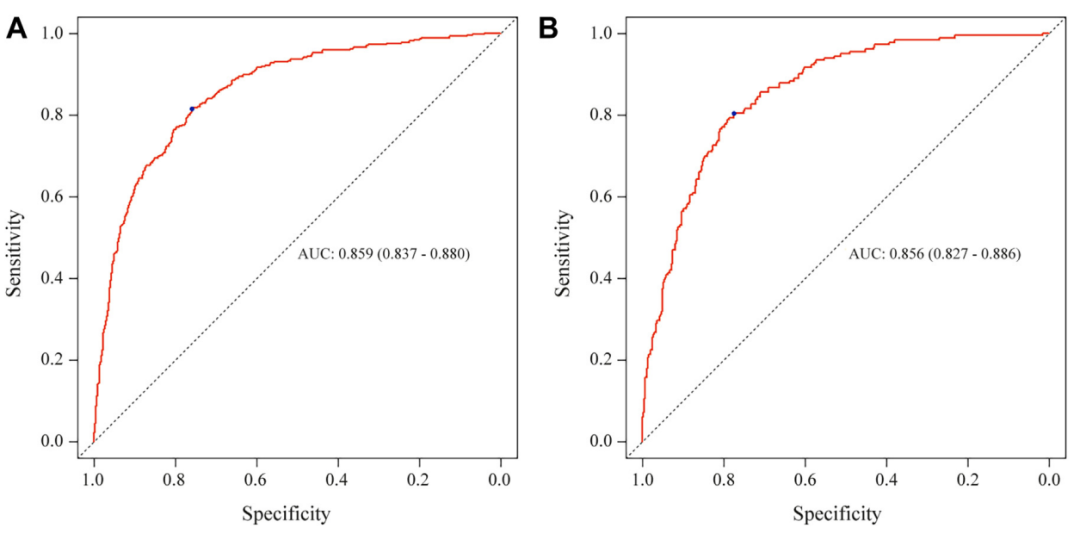
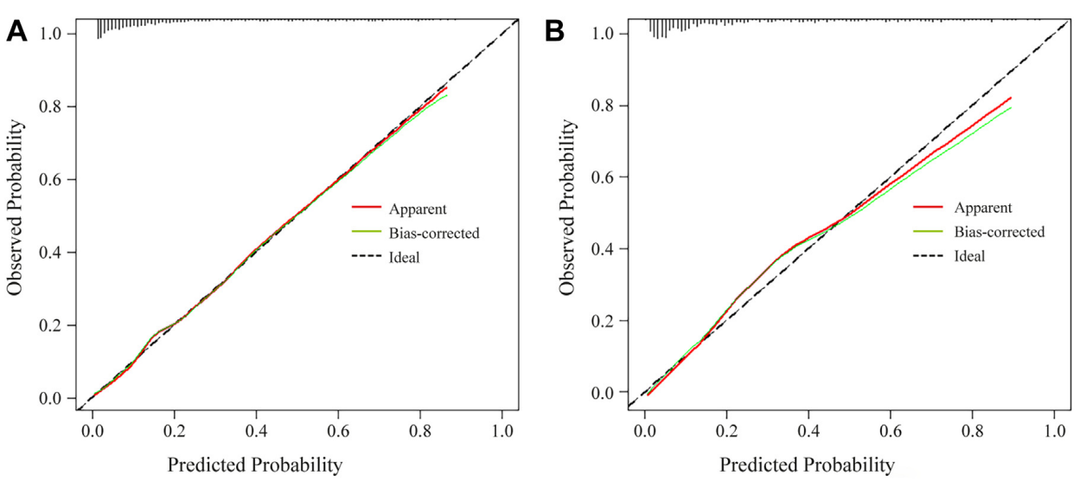
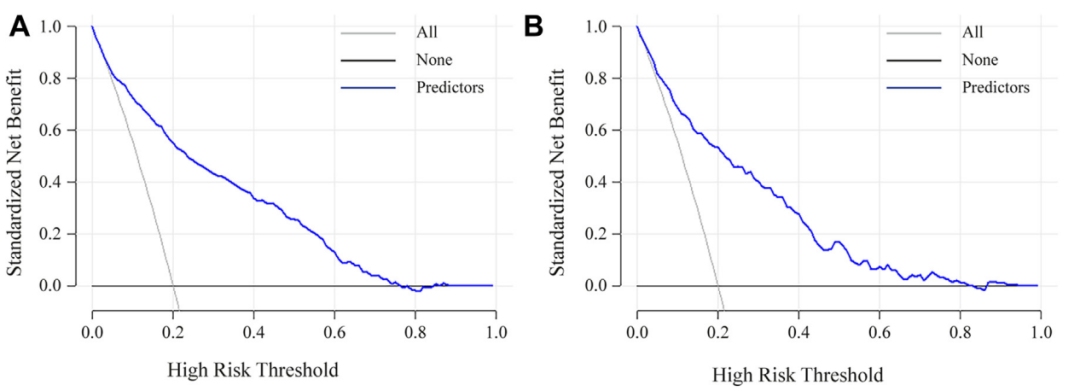
The development cohort's AUC and C-index were 0.859 (95% CI 0.837–0.880), and the validation cohort's were 0.856 (95% CI 0.827–0.886), indicating good discrimination (Figure 4). The Hosmer–Lemeshow p value was 0.504. Predicted and observed probabilities agreed well in both calibration curves, indicating good calibration (Figure 5). DCA also showed substantial clinical net benefit in both cohorts (Figure 6).
Discussion
Using the CENTER-TBI China Registry, this study developed a model predicting death within 14 days of sTBI. Multivariable logistic regression identified six predictors: age, GCS score, ISS, abnormal pupils, midline shift and prehospital intubation. Previous studies have repeatedly linked these variables to sTBI mortality. They are routine clinical information available upon emergency department arrival, making the model convenient and rapid for clinicians to use at any time.
CRASH and IMPACT are the most influential neurotrauma prognostic models. Both were developed in large populations and extensively externally validated over many years, with good discrimination and calibration. Because our outcome of death within 14 days matches CRASH, we compared the models. Our performance was comparable and slightly better than the reported CRASH performance for low-income countries (AUC 0.859 versus 0.840). CRASH's 14-day mortality model was not externally validated in its original development because validation data were unavailable. Subsequent external validations worldwide have reported widely varying performance (AUC 0.66–1.00).
In our previous study, CRASH predicted 1,116 deaths within 14 days (13%) among CENTER-TBI China patients with GCS≤14, whereas 544 patients actually died (7%). The observed-to-expected ratio was 0.49 (95% CI 0.45–0.53), suggesting it may be unsuitable for China or similar low- and middle-income countries. CRASH and IMPACT were developed from databases approximately 20 years old. TBI epidemiology, prehospital care, diagnosis, intensive care and treatment have since changed, potentially making their predictions inaccurate in contemporary settings. Their data also primarily came from clinical trials with strict eligibility criteria, limiting external validity. Many existing models use high-income-country data, but TBI prevalence, causes, diagnosis, treatment and outcomes differ greatly from low- and middle-income settings. Our model was developed from a large multicentre Chinese observational cohort for use in such settings.
The CENTER-TBI China Registry was China's most recent multicentre observational cohort, covering 56 hospitals in 22 provinces. Without strict inclusion criteria, its patients better represent the general population and clinical practice. According to TRIPOD, randomly dividing patients from the same database does not constitute external validation, whereas division by hospital is reasonable. We therefore selected separate hospitals for validation; the cohorts were independent and did not overlap. Previous research also identified differences between hospitals, explaining the significant baseline differences. Those differences help test the model's external validity.
The model has limitations. It lacks laboratory predictors. Some studies identify haemoglobin and glucose as independently associated with death, although others find only limited improvement from adding laboratory measures. Second, the model addresses short-term sTBI mortality, one of clinical practice's most important and practical questions, but does not evaluate the equally important issue of long-term outcomes.
Conclusion
Age, GCS, ISS, pupil status, midline shift and prehospital intubation predicted sTBI death within 14 days. A nomogram based on these variables showed high accuracy on external validation. This individualised model provides a simple, intuitive tool for early identification of patients at high short-term mortality risk, potentially assisting sTBI management and decisions about life-support treatment in low- and middle-income countries.
The work benefited from Professor Jiyao Jiang's encouragement and careful guidance. The corresponding author was Professor Junfeng Feng, Director of Renji's Head Trauma Centre, with Professor Guoyi Gao of Beijing Tiantan Hospital, Capital Medical University, as co-corresponding author. First author Lijian Lang was Feng's master's student. Co-first authors were Dr Tianwei Wang of Zhujiang Hospital, Southern Medical University, and Li Xie of Shanghai Jiao Tong University School of Medicine's Clinical Research Centre.
Author biographies
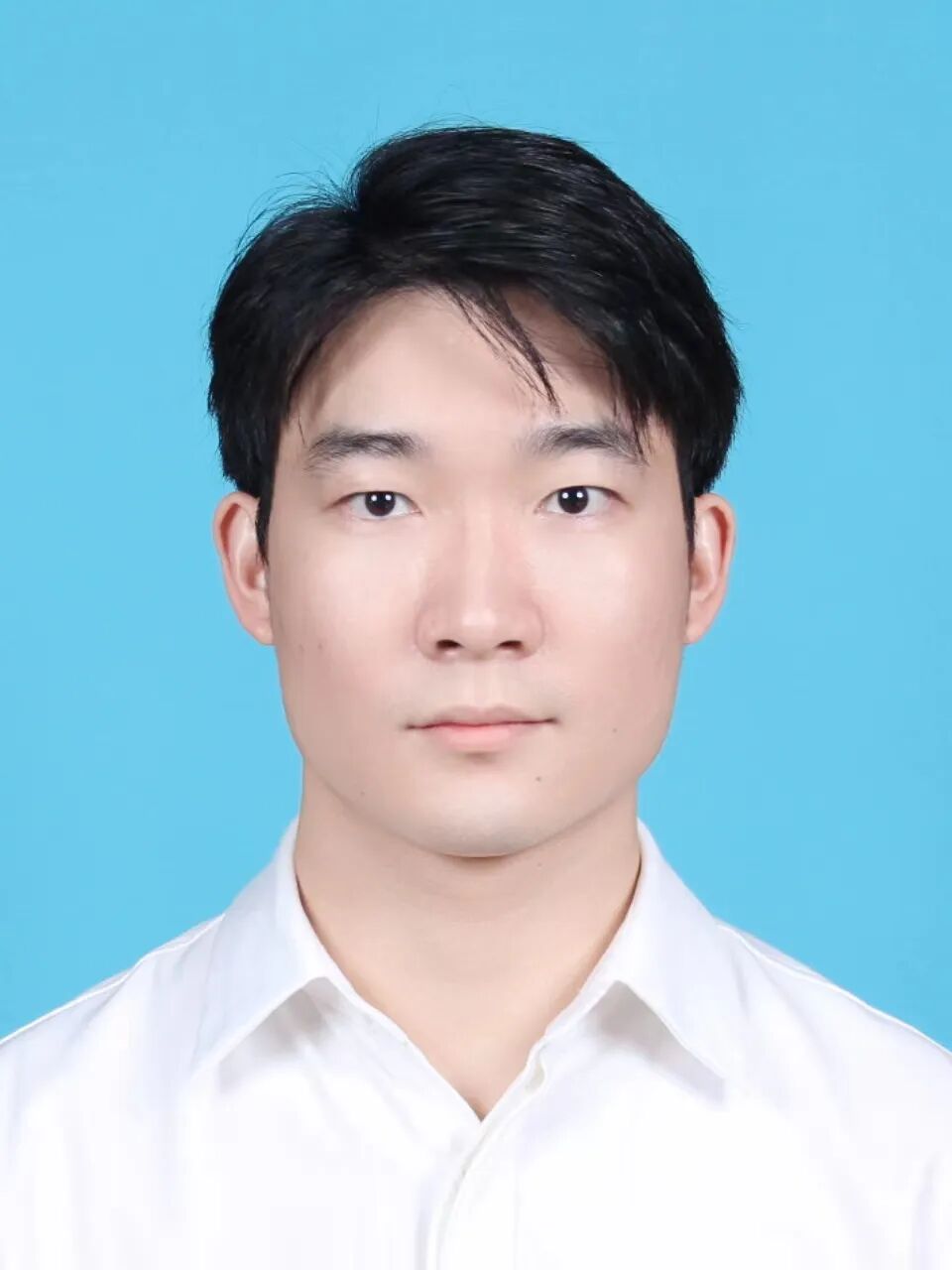
Lijian Lang — First author.
A research master's student at Shanghai Jiao Tong University School of Medicine supervised by Professor Junfeng Feng. He had published three SCI papers as first or co-first author and two papers in Chinese core journals, and received the 2023 Shanghai Outstanding Graduate award.
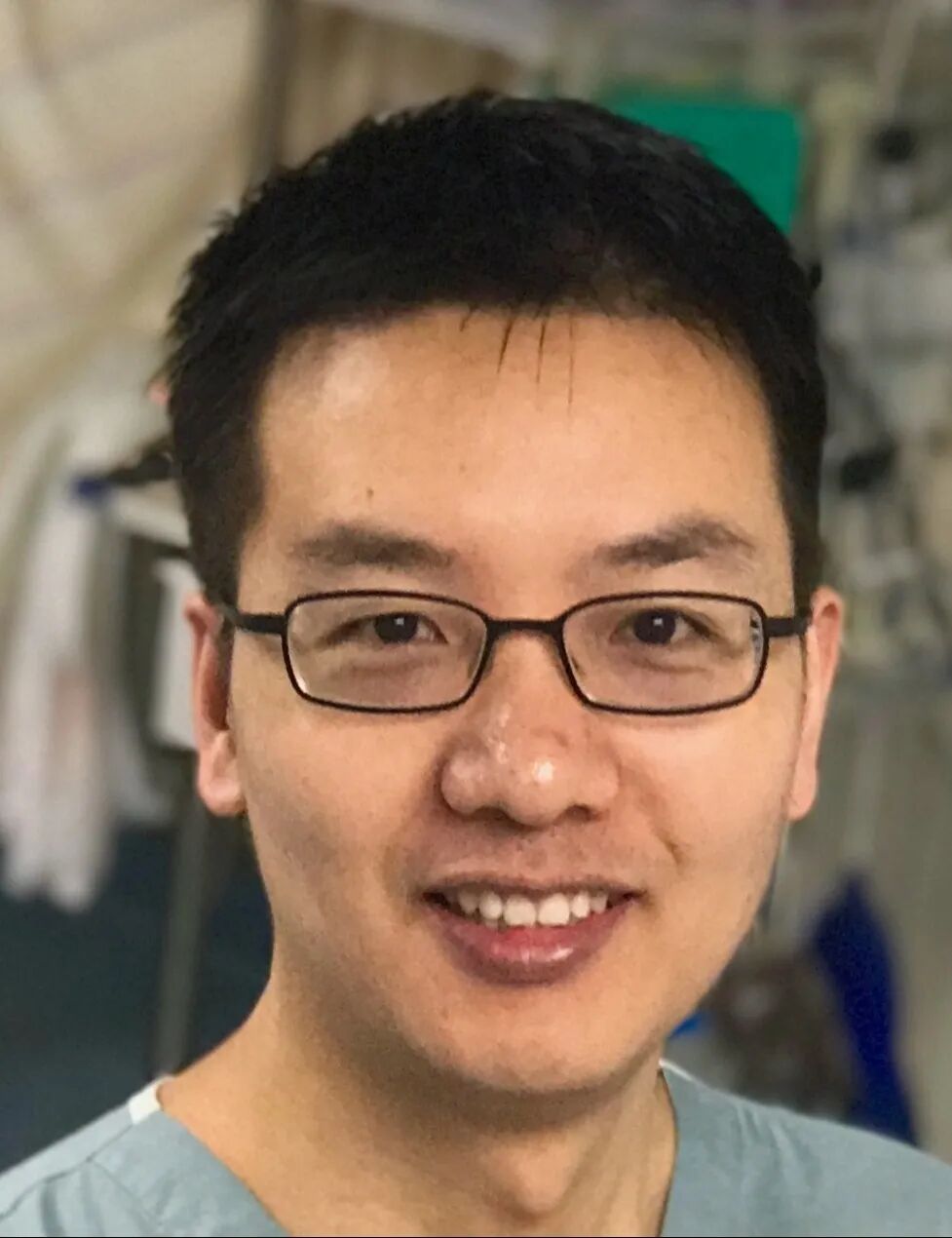
Professor Junfeng Feng — Corresponding author.
Research Professor, Chief Physician, doctoral supervisor and Director of the Head Trauma Centre at Renji Hospital affiliated with Shanghai Jiao Tong University School of Medicine. He was a member of a study group of the Chinese Medical Association's Trauma Branch and a young member of the Shanghai Medical Association's Trauma and Neurosurgery branches. Honours included the Wang Zhongcheng Chinese Neurosurgeon Young Physician Award, the Wang Zhengguo Trauma Medicine Innovation Award, Shanghai Silver Snake Award, Shanghai Outstanding Academic Leader (Young) and Shanghai Outstanding Young Medical Talent. He focuses on neurotrauma and neurocritical surgery and comprehensive care, and studies brain protection, neural repair and regeneration. At the time of the source report, he had four NSFC grants, 15 granted patents and 28 SCI papers in journals including The Lancet Neurology.
近日,上海交通大学医学院附属仁济医院颅脑创伤中心在《柳叶刀》子刊《临床医学》(《eClinicalMedicine》在线发表题为《An independently validated nomogram for individualised estimation of short-term mortality risk among patients with severe traumatic brain injury: a modelling analysis of the CENTER-TBI China Registry Study》的研究成果。该研究首次基于中国重型颅脑创伤患者的大数据队列,建立了一个便于临床医生使用的、方便快捷的短期死亡预测模型,可能为早期临床决策提供一定的指导和帮助。
文章编译
前言
重型颅脑创伤(sTBI)具有较高致残率和死亡率。尽早识别短期(受伤后14天内)死亡风险较高的患者并及时提供治疗至关重要。本研究旨在基于中国的大数据队列,建立并独立验证一个用于个体化预测sTBI短期死亡率的模型。
方法
研究数据来源于欧洲颅脑创伤疗效比较研究(CENTER-TBI)中国注册中心,这是一项前瞻性、多中心、纵向、观察性队列研究,于2014年12月22日至2017年8月1日收集了中国56家医院13627例TBI患者数据。本研究纳入其中52家医院2 631例sTBI患者数据,并以医院为单位划分建模组(用于建立模型)和验证组。使用多因素logistic回归确定sTBI患者短期死亡的独立预测因素并建立列线图模型。采用受试者工作特征曲线下面积(AUC)和一致性指数(C-index)评估模型的区分度,采用校准度图和Hosmer-Lemeshow检验(H-L检验)评估校准度,采用决策曲线分析(DCA)评估模型对患者的净效益。
结果
CENTER-TBI中国注册研究共收集了2 824例sTBI患者的临床信息,本研究纳入了其中2 631例患者信息,其余193例因记录不完整被排除。这些患者来自中国22个省市52家医院,以医院为单位将52家医院分为建模组和验证组,其中36家医院1 808例病例被纳入建模组(用于建立模型),其余16家医院823例病例被纳入验证组(如图1)。
建模组与验证组相比,建模组患者更年轻(中位年龄48岁vs 53岁,p<0.0001),男性患者更多(82.5% vs 72.3%,p<0.0001),受伤前健康状况也更好,82.0%的患者伤前ASA-PS评分为Ⅰ级(82.0% vs 71.9%,p<0.0001)。相比于验证组,建模组患者受伤后出现瞳孔异常的更少(36.1% vs 48.1%,p<0.0001);GCS评分整体优于验证组,详细信息见表1。建模组的院前插管率更高(37.3%比16.7%,p<0.0001)。CT信息方面,建模组中出现中线移位≥5 mm的患者更少(34.0% vs 41.3%,p=0.00041);tSAH的患者更多(85.9% vs 80.7%,p = 0.00025);出现颅内血肿的患者相比验证组略少(95.6% vs 97.6%,p = 0.019)。建模组接受手术治疗的患者较验证组更少(63.8% vs 70.7%,p=0.0012)。结局方面,建模组的死亡率相比验证组略低,但差异无统计学意义(19.6% vs 21.8%,p=0.185)。
建模时,首先使用单因素分析确定存活患者和死亡患者之间的差异因素。单因素分析筛选出的变量纳入多因素logistic回归分析,进一步确定sTBI患者短期死亡的独立危险因素。logistic回归分析显示,年龄、GCS评分、ISS评分、瞳孔异常、大脑中线偏移(<5 mm或≥5 mm)和院前插管是患者受伤后14天内死亡的独立危险因素(表2)。随后,基于多因素logistic回归分析,建立了sTBI患者短期死亡的列线图模型(图2)。模型使用方法:①在每个变量轴上确定患者该项指标的具体值;②从变量轴对应的值向上画一条垂线,每个变量值对应于顶部Point轴上的具体分值;③将每个变量分值相加,分值总和对应在底部Total points轴;④从Total points轴对应的总分值处向下画一条垂线,对应到短期死亡预测轴,即为短期死亡风险。为方便使用,模型也建立了网页端(图3)。
对模型的表现力进行评估发现,建模组的AUC和C-index为0.859(95% CI 0.837~0.880),验证组的AUC和C-index为0.856(95% CI 0.827~0.886),表明模型具有良好的区分度(图4)。模型的H-L检验p值为0.504,两组校准曲线中预测概率和观察概率之间有很好的一致性,说明模型具有良好的校准度(图5)。DCA曲线也显示模型在建模组和验证组中均有显著的临床净效益(图6)。
讨论
本研究使用Center-TBI中国注册研究的患者数据,建立了一个预测sTBI患者短期(伤后≤14天)死亡率的模型。通过多因素logistics回归分析发现,sTBI患者短期死亡的独立预测因素包括年龄、GCS评分、ISS评分、瞳孔异常、大脑中线偏移和院前插管,这6项预测指标在既往研究中也已经被多次证明与sTBI患者的死亡密切相关。模型纳入的预测指标均为常见的临床信息,在患者达到急诊室的同时即可获得,这使得模型更加方便快捷,便于临床医生随时使用。
在颅脑创伤领域,CRASH和IMPACT模型影响力最为广泛,两者都基于大样本人群开发,多年来经过了广泛的外部验证,两种模型在区分度和校准方面均具有良好的性能。鉴于本研究的结局是受伤后14天死亡,与CRASH模型结局指标相同,我们将本研究模型与CRASH模型进行了比较。我们的模型表现力与CRASH模型相当,甚至在低收入国家略好(AUC 0.859 vs 0.840)。由于缺乏验证数据,CRASH模型并未对14天死亡率模型进行外部验证。然而,自CRASH模型建立以来,全球各研究机构对其进行了多次外部验证,报告的外部有效性差异较大(AUC 0.66 ~ 1.00)。在我们既往研究中,我们使用CRASH模型预测CENTER-TBI中国注册研究中TBI患者(GCS≤14)的14天死亡率,预测14天死亡为1,116例(13%),但实际14天内死亡544例(7%)(实际与预期比为0.49 [95% CI 0.45 ~ 0.53]),提示CRASH模型可能并不适用于中国或其他类似的中低收入国家。CRASH或IMPACT模型,两者都是基于大约20年前的数据库开发,但如今TBI的流行病学已经发生变化,并且院前急救的方法、诊断能力以及重症监护和治疗水平也在不断提升,因此这两种模型可能并不适合当下的医疗环境,从而导致预测不准确。此外,这两种模型的数据主要来源于临床试验,有严格的入排标准,这也限制了模型的外部有效性。现有的许多TBI预后模型都是基于高收入国家的数据开发,但高收入国家和中低收入国家之间的TBI患病率、病因、诊断、治疗和预后等存在很大差异,而我们的模型则是基于中国的大型多中心观察性队列开发的适用于中低收入国家的模型。
CENTER-TBI 中国注册研究是目前中国最新的多中心观察性队列,数据来自全国22个省份56家医院的患者。该队列并未制定严格的纳入标准,因此这些患者更能代表一般人群,其研究结果也更符合临床实践。根据TRIPOD声明,在同一数据库中随机选择人群划分建模组和验证组,并不符合外部验证要求,但基于不同医院的选择是合理的。因此,在选择验证组时,本研究的选择是基于不同医院的,两组数据完全独立,互不重叠。此外,我们既往研究也发现各医院之间存在差异,这也解释了两组患者基线信息间的显著差异,从模型验证的角度来看,这些组间差异也有利于检验模型的外部有效性。
我们的模型也有一些局限性。我们的模型缺乏与实验室检查相关的预测因素,相关研究表明,一些实验室指标(如血红蛋白和血糖)也与死亡独立相关;然而,也有研究表明,实验室指标的纳入对模型的提升有限。其次,我们的模型关注的是sTBI患者的短期死亡率,这是临床实践中最重要和最实际的问题之一;然而,长期预后也是十分值得关注的,但本研究并未评估。
结语
本项研究发现年龄、GCS评分、ISS评分、瞳孔异常状态、大脑中线偏移和院前插管是sTBI患者短期(伤后≤14天)死亡的预测因素,并以此建立了预测sTBI患者短期死亡的列线图模型,经过外部验证分析,该模型准确度较高。本研究建立的个体化预测模型可为临床医生提供一种简单、直观的工具,便于早期识别sTBI短期死亡风险较高的患者,有助于中低收入国家sTBI患者的临床管理和对生命支持治疗的选择。
本项工作得到了江基尧教授的鼓励和悉心指导。论文通讯作者是仁济医院颅脑创伤中心主任冯军峰教授,共同通讯作者为首都医科大学附属天坛医院高国一教授。论文第一作者是冯军峰的硕士研究生郎力键,共同第一作者是南方医科大学附属珠江医院王天伟博士和上海交通大学医学院临床研究中心谢丽老师。
作者简介
郎力键
第一作者
郎力键,上海交通大学医学院科研型硕士研究生,师从冯军峰教授。以第一作者或共同第一作者发表SCI论文3篇,发表中文核心期刊2篇。荣获2023年“上海市优秀毕业生”。
冯军峰教授
通讯作者
研究员、主任医师、博士研究生导师,上海交通大学医学院附属仁济医院颅脑创伤中心主任。担任中华医学会创伤学分会学组委员、上海市医学会创伤分会和神经外科分会青年委员。获王忠诚中国神经外科青年医师奖、王正国创伤医学奖创新奖、上海市银蛇奖、上海市优秀学术带头人(青年)、上海市杰出青年医学人才。专注于颅脑创伤、神经重症相关临床手术及综合救治,开展脑损伤保护和神经修复再生研究。获国家自然科学基金4项、授权专利15项,在Lancet Neurology等杂志发表28篇SCI论文。