Intracranial pressure monitoring in Chinese ICUs: an observational TBI study
Note
Neurocritical Care published findings from Professor Jiyao Jiang's team online on 4 March 2022. Data came from the CENTER-TBI China Registry, completed jointly by 56 institutions.
In ICU patients with severe traumatic brain injury, ICP monitoring was associated with reduced hospital mortality and longer hospital stays.
Background
Management of intracranial hypertension is an important part of TBI treatment and neurocritical care. Brain Trauma Foundation guidelines specify indications for ICP monitoring in sTBI, but do not provide clinical evidence of long-term benefit. Its effectiveness in reducing sTBI mortality remains disputed. China also lacks large prospective studies assessing its impact.
Data collection
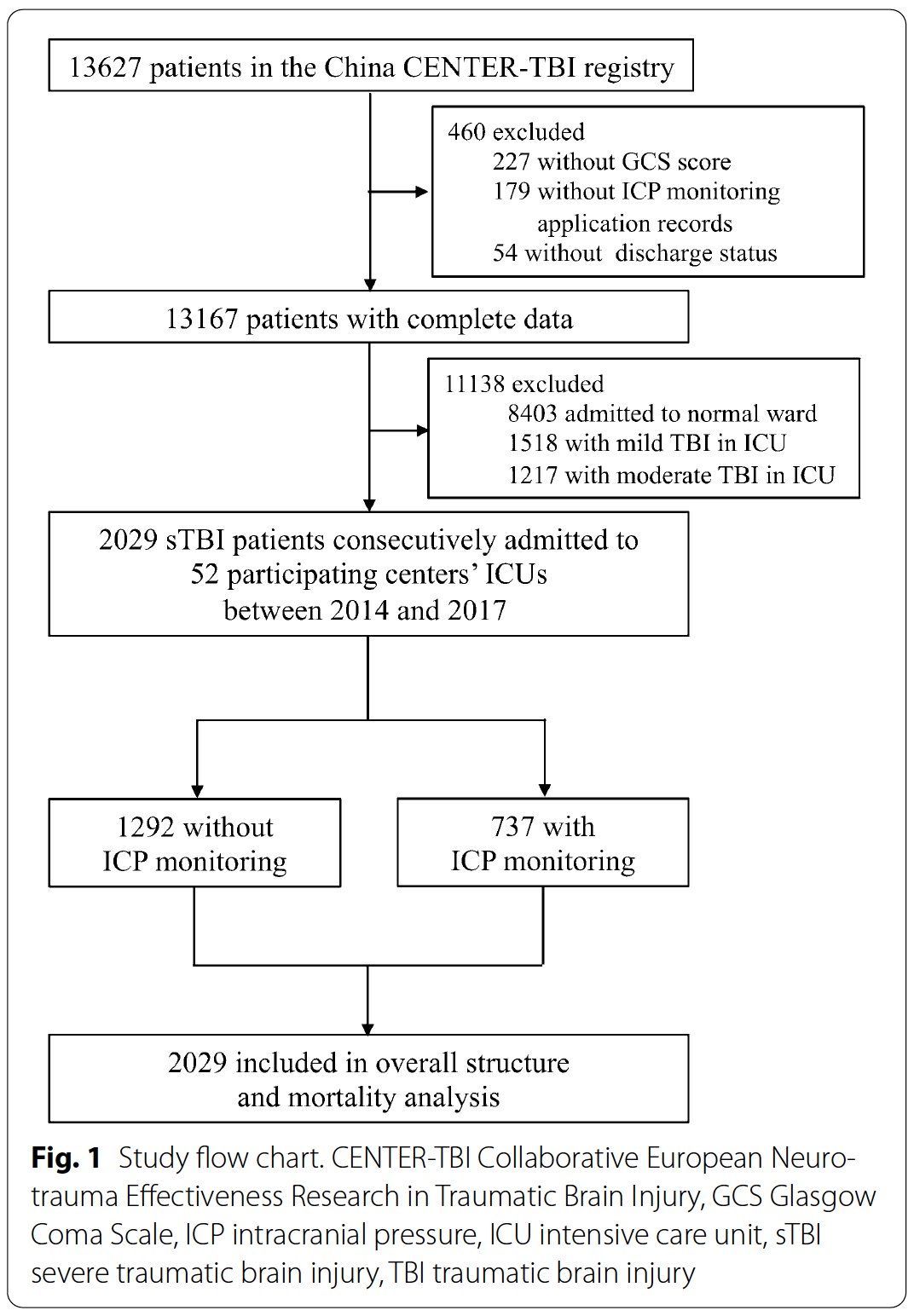
This study assessed ICP monitoring in ICU patients with sTBI, examining associations with in-hospital mortality and length of stay (LOS). Data came from the prospective, multicentre, longitudinal observational CENTER-TBI China Registry, conducted between 22 December 2014 and 1 August 2017. The analysis included 2,029 sTBI patients in 52 ICUs with complete admission GCS, ICP monitoring and discharge data: 1,292 without monitoring and 737 with monitoring. The analytical flowchart follows.
Results
1. Comparison of baseline characteristics.
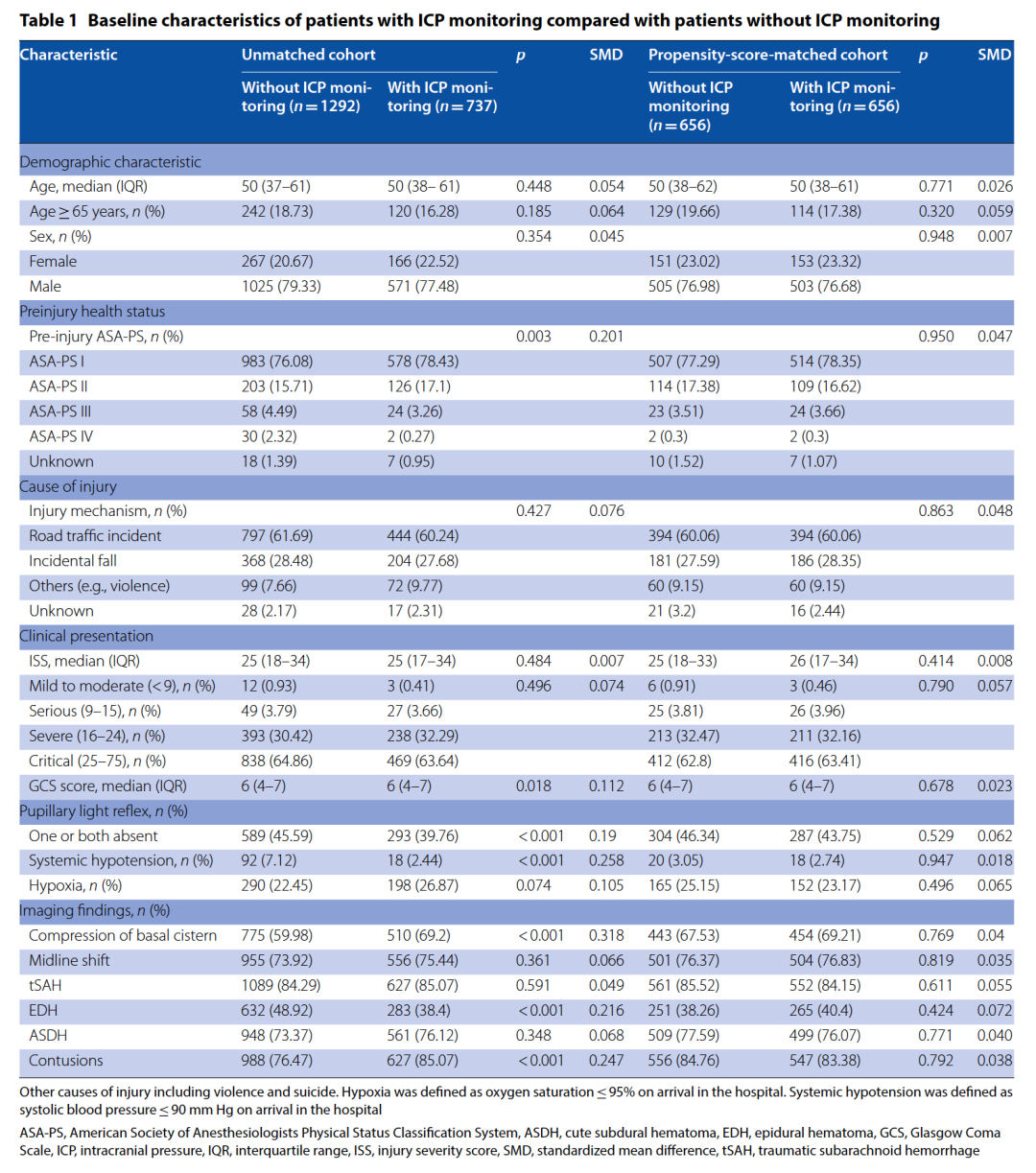
Before propensity-score matching, monitored and unmonitored patients differed significantly at baseline. Those without monitoring less often had abnormal pupillary responses, systemic hypotension and epidural haematoma on admission (all p<0.001). Monitored patients more often had compressed ambient cisterns and brain contusions (both p<0.001; Table 1).
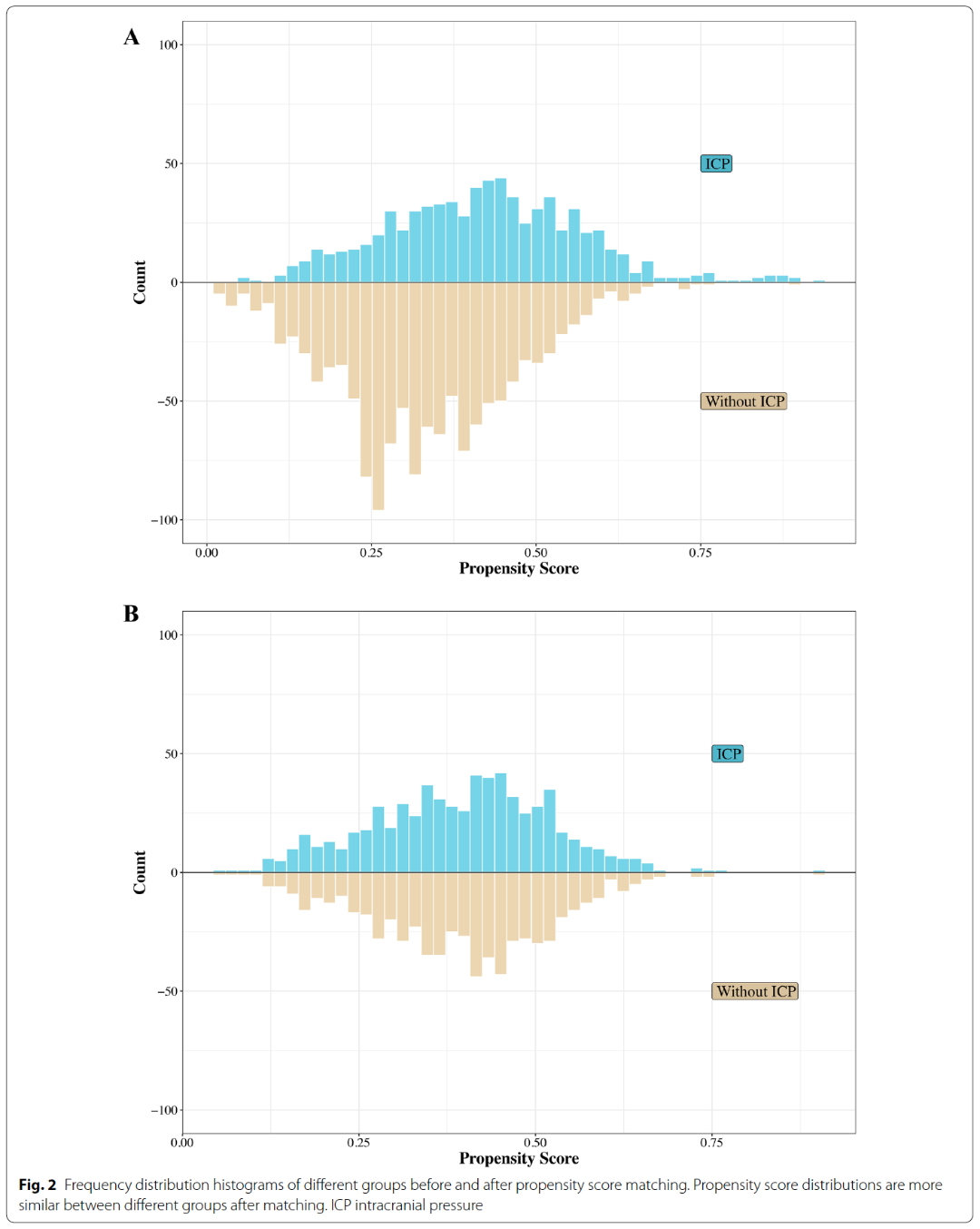
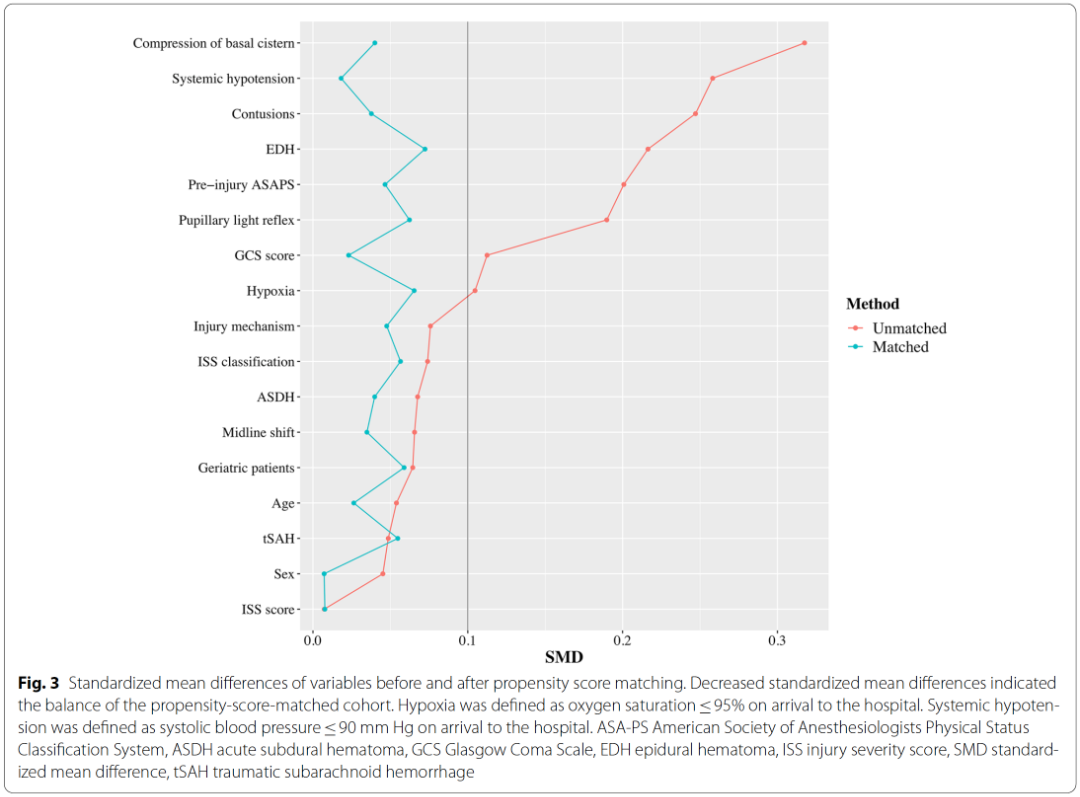
Propensity scores were used to match baseline differences according to monitoring status, reducing possible bias and confounding. Matching produced 656 monitored and 656 unmonitored patients at a 1:1 ratio. Their propensity-score distributions were closer after matching (Figure 2), and standardised mean differences for baseline variables fell below 0.1 (Figure 3). No statistically significant baseline differences remained (Table 1).
2. In-hospital mortality and discharge destination.
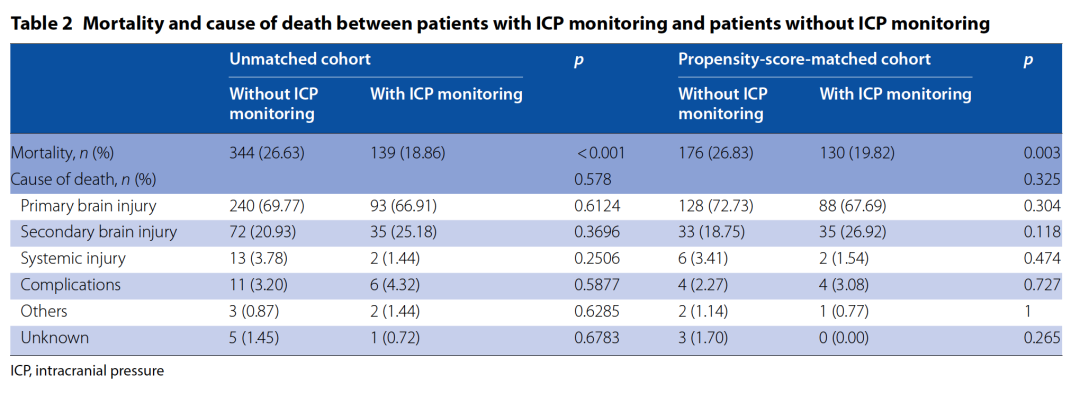
Before matching, mortality was 26.63% without monitoring and 18.86% with monitoring (p<0.001). After matching, the figures were 26.83% and 19.82%, respectively (p=0.003; Table 2). Causes of in-hospital death did not differ significantly between groups before or after matching.
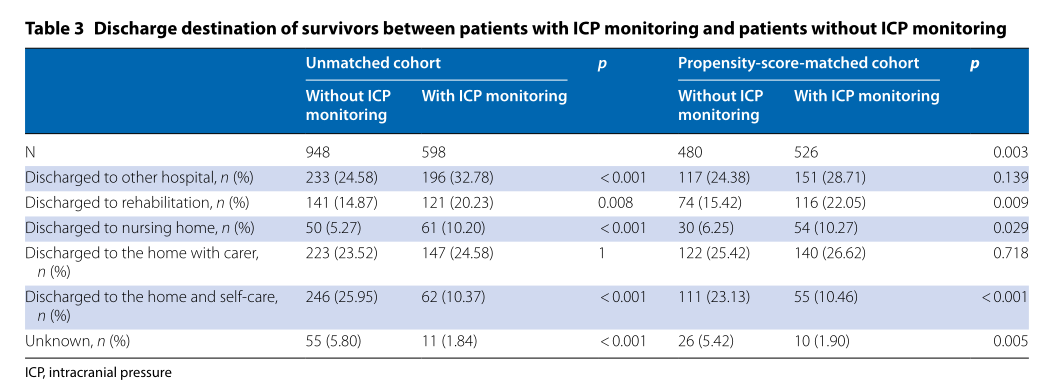
Before matching, more monitored survivors were discharged to rehabilitation hospitals (20.23% versus 14.87%, p<0.001), but fewer returned home able to care for themselves (10.37% versus 25.95%, p<0.001). Similar patterns remained after matching (Table 3).
3. Risk factors for in-hospital death.
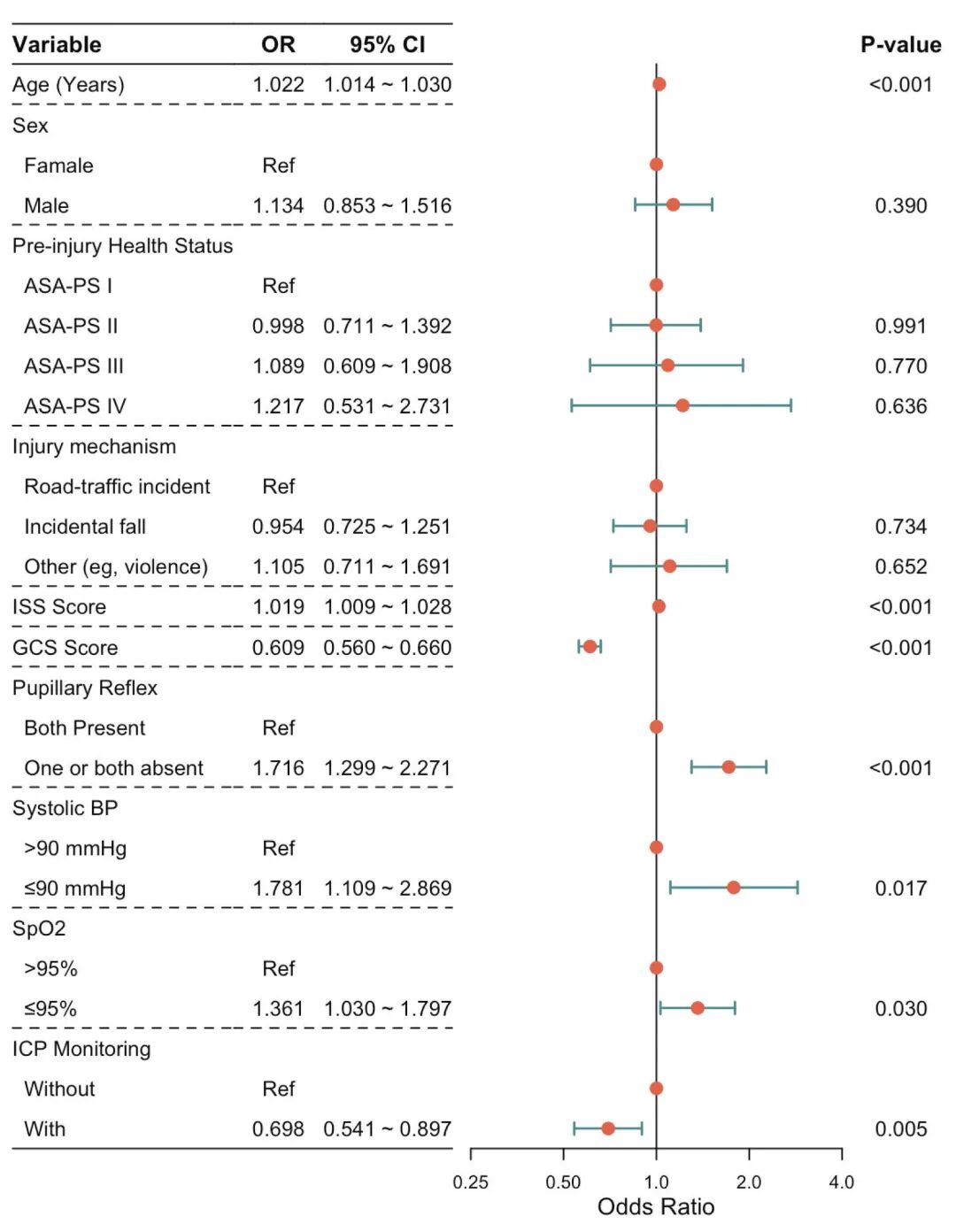
Monitoring was associated with lower in-hospital mortality, with an odds ratio of 0.698 relative to no monitoring. Higher age (OR=1.022), higher ISS (OR=1.019), lower admission GCS (reported OR=0.609 for the score), abnormal pupillary light responses (OR=1.716), systemic hypotension (OR=1.781) and hypoxia on admission (OR=1.361) were associated with higher mortality.
4. Survival time among patients who died in hospital.
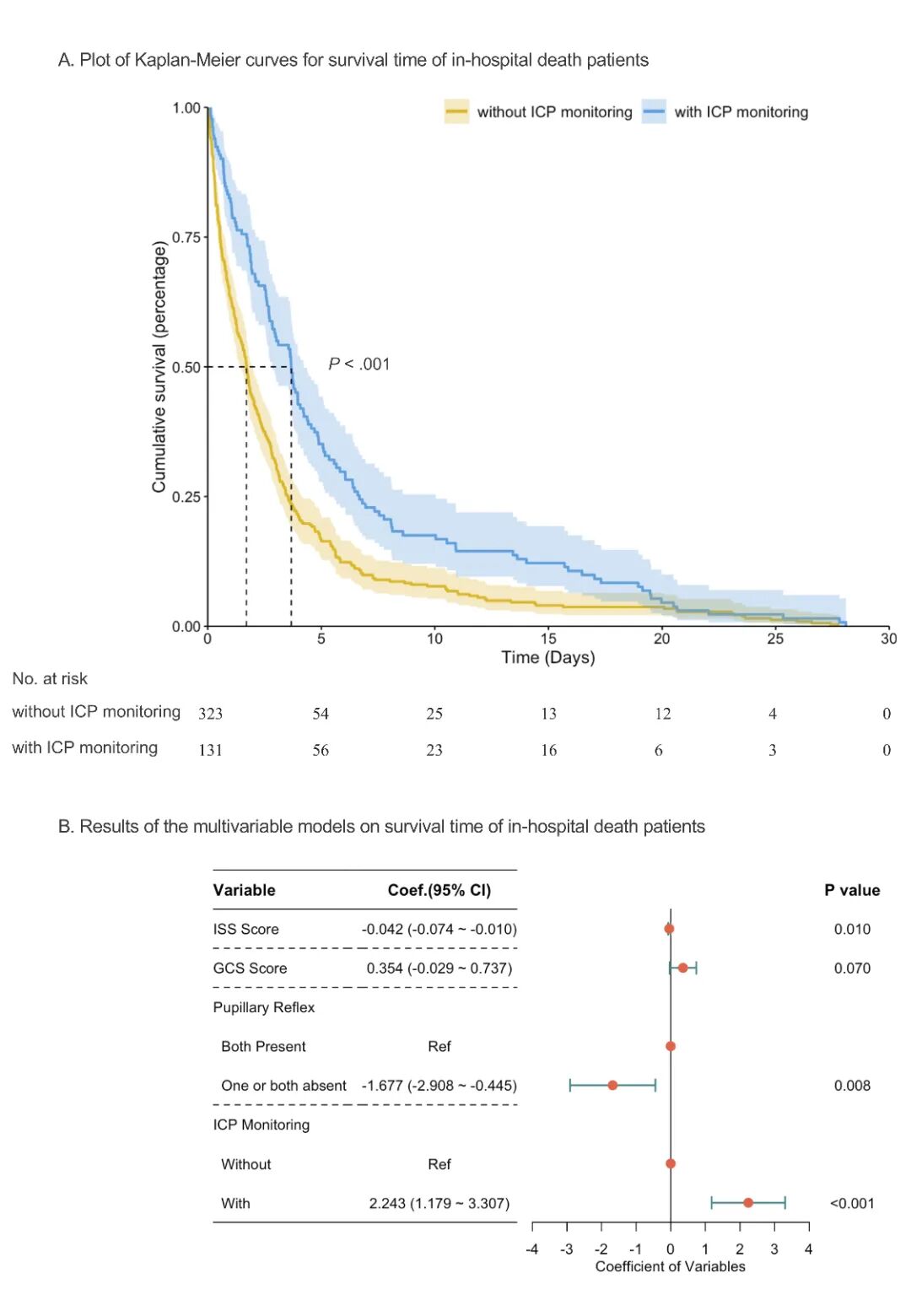
Monitored patients who died survived longer both before and after matching. Kaplan–Meier analysis covered 454 patients dying within 30 days, 94% of all in-hospital deaths. Median survival was 3.7 days with monitoring and 1.7 days without (p<0.001; Figure 5A). Multivariable linear regression associated monitoring with longer survival and abnormal admission pupillary responses with shorter survival (Figure 5B).
5. Length of hospital stay.
Among survivors, monitored patients had significantly longer ICU and total hospital stays, including ICU and general ward time, before and after matching. Multivariable linear regression in the unmatched population associated monitoring with 4.7 additional ICU days (Figure 6A) and 5.7 additional hospital days (Figure 6B).
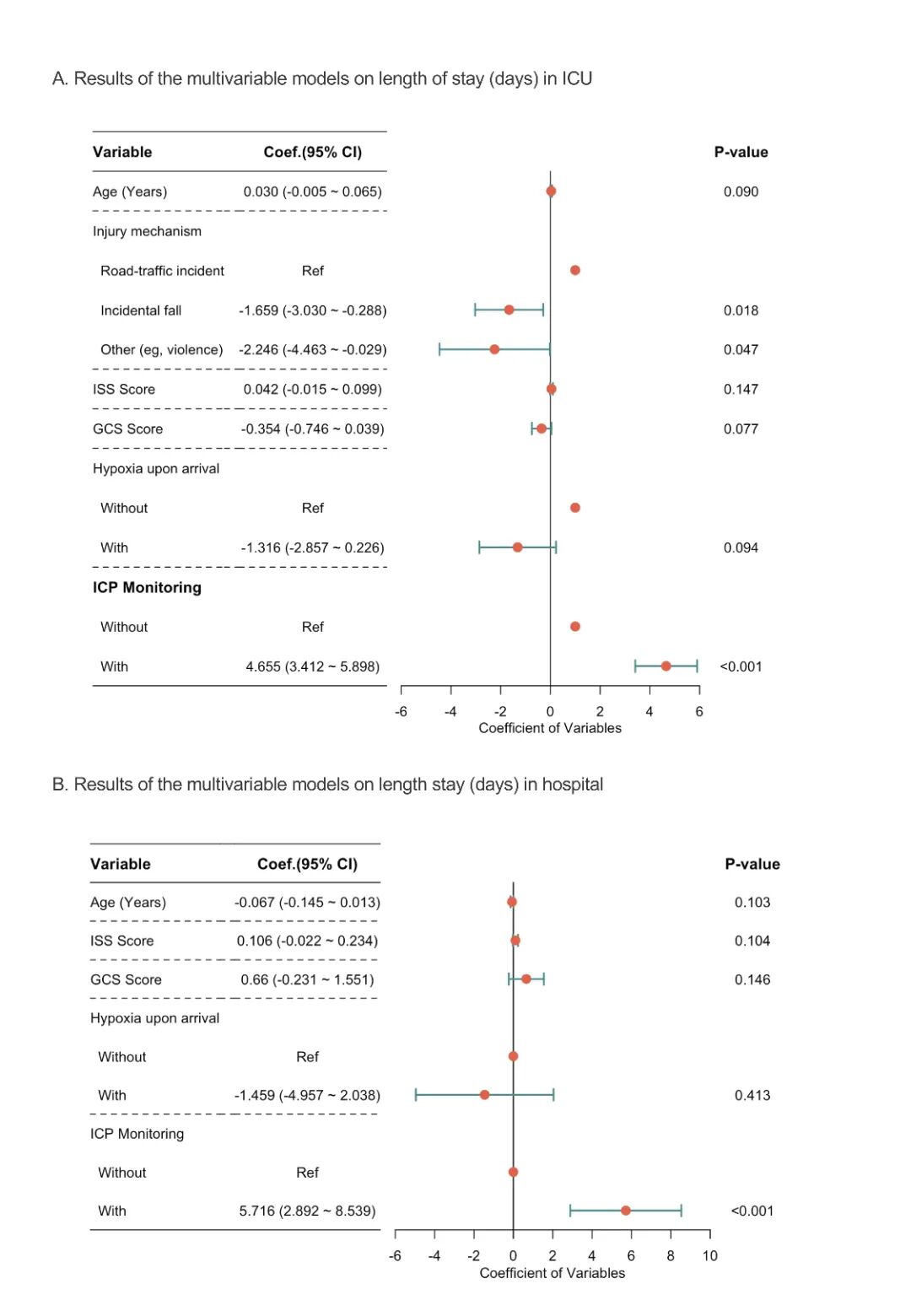
Figure 6. Multivariable linear models for ICU and total hospital stays in survivors.
Discussion
Using CENTER-TBI China Registry data, this study assessed ICP monitoring in Chinese ICU patients with sTBI. Compared with unmonitored patients, monitored patients had lower in-hospital mortality but longer ICU and total hospital stays.
Higher ICP is associated with increased TBI mortality and poorer outcomes. Although controlling ICP may help outcomes, monitoring can involve intraparenchymal haemorrhage or infection. Its effectiveness remains contested: some studies support lower mortality, while others find no survival improvement.
In practice, monitoring is difficult to separate from treatments used to reduce ICP. Even without invasive monitoring, clinicians may treat to prevent or control suspected elevations. Invasive monitoring remains the most reliable way to obtain rapid, precise, real-time ICP information. All monitored patients in this study had invasive monitoring, using intraparenchymal probes or intraventricular monitoring. Monitoring is only a tool guiding TBI management; outcomes depend on timely, effective, precise treatment informed by its information, rather than monitoring alone. Lower mortality in monitored patients may therefore reflect more effective management.
Although indications are established, clinical use remains low and varies widely between teams. Only 36.3% of the study's ICU sTBI patients were monitored, below rates in overseas studies. Many centres may manage ICP through symptoms and imaging rather than direct monitoring. China's actual use may be still lower, since most participating centres were research hospitals potentially more interested in monitoring research. We identified differences between monitored and unmonitored patients but could not determine the direct reasons for monitoring. Decisions involve costs, treatment strategies, hospital facilities and even clinicians' preferences, all contributing to substantial variation. Further work is needed to understand these influences.
We analysed hospital stays and survival time among in-hospital deaths. Monitored patients had longer ICU and hospital stays, and monitored patients who died survived longer. Longer stays may reflect monitoring constraints, such as probe duration, or disease progression. Longer survival before death can add costs but may also increase the chance of survival. Future studies should identify monitoring-related factors affecting LOS, which may be important when assessing healthcare costs. Although outcome scores and long-term follow-up were unavailable, more unmonitored patients returned home independently and fewer entered rehabilitation facilities. This may suggest better recovery among the less severely ill patients in that group.
The study has limitations. Long-term data, complications and medical costs were unavailable, preventing a more objective effectiveness assessment. We could not determine why baseline characteristics differed between groups. The database did not record ICP fluctuations, and we could not assess direct relationships between particular interventions and outcomes. Not every ICU sTBI patient was included: incomplete records were excluded. These limitations may cause selection bias and potentially underestimate mortality.
Conclusion
This broad assessment of ICP monitoring in Chinese ICU sTBI patients found that monitoring may lower hospital mortality. However, it makes management more complex, lengthens ICU and hospital stays and increases costs. Larger randomised controlled trials are needed to confirm the findings, along with further investigation of factors influencing monitoring decisions.
First authors: Chun Yang and Yuxiao Ma.
Corresponding authors: Guoyi Gao and Junfeng Feng.

Article translation and adaptation: Qiyuan Feng, doctoral student in Shanghai Jiao Tong University's eight-year programme.
说明
Neurocritical Care杂志于2022年3月4日在线发表江基尧教授团队成果。
数据来源于国内56家单位共同完成的CENTER-TBI中国注册研究。
ICU内重型颅脑创伤患者行颅内压监测降低住院死亡率,延长住院时间。
背景
颅内压升高的管理是脑外伤治疗和神经重症的重要部分。美国颅脑创伤基金会指南提出了重型颅脑创伤(severe traumatic brain injury,sTBI)的颅内压(intracranial pressure,ICP)监测适应症,但是并没有提供颅脑创伤患者从ICP监测远期获益的临床循证证据。此外,ICP监测在降低sTBI死亡率方面的有效性也存在争议。在中国,当前仍缺乏评估ICP监测对sTBI患者影响的大样本、前瞻性研究。
数据收集
本研究旨在评估重症监护病房(intensive care unit,ICU)中颅内压监测对sTBI患者的影响,探讨颅内压监测与患者住院死亡率的关系及其对患者住院时间(length of stay,LOS)的影响。本研究数据来源于CENTER-TBI中国注册研究,这是一项前瞻性、多中心、纵向、观察性队列研究,该项目于2014年12月22日至2017年8月1日期间进行。本研究纳入分析了CENTER-TBI中国注册研究中52个ICU、共计2029例有完整的入院GCS评分、颅内压监测应用记录和出院记录数据的sTBI患者,其中未进行颅内压监测患者1292例,接受颅内压监测患者737例。具体研究分析流程图如下:
研究结果
1. 患者基线特征对比
未进行倾向性评分匹配时,接受ICP监测的患者与未接受的患者基线各项指标存在统计学差异。包括,未接受监测的患者入院时瞳孔异常反应、全身性低血压和硬膜外血肿的比例较低(均p<0.001),接受ICP监测组的患者存在环池受压和脑挫伤比例较高(均p<0.001)(表1)。
研究分析针对患者是否接受ICP监测这一结果,采取倾向性评分对两组患者的基线差异进行匹配,以减少可能的偏倚及混杂因素影响。在倾向性评分匹配后,根据相关匹配参数,对656例接受ICP监测的患者及656例未接受ICP监测的患者进行对比(匹配比例为1:1)。匹配后两组的倾向评分较匹配前的分布更接近(图2),其各项基线指标的标准化均数差(standardized mean difference,SMD)也在匹配后减小,均小于0.1(图3)。匹配后两组患者基线特征未见统计学显著性差异(表1)。
2. 在院死亡率及出院后去处
倾向性评分匹配前,未行ICP监测组患者的住院病死率和ICP监测组分别为26.63%及18.86%,其差异有统计学意义(p<0.001)。在倾向性评分匹配后未行ICP监测组患者和ICP监测组患者住院病死率分别为26.83%及19.82%,差异也具有统计学意义(p=0.003)(表2)。在院死亡死因方面,匹配前后,两组患者的死因差异并无统计学意义(表2)。
匹配前,ICP监测组存活患者出院后去往康复医院比例较高(20.23% vs 14.87, p<0.001),但出院后回家且有自理能力的患者比例较低(10.37% vs 25.95%, p<0.001)。匹配后,相关数据差异趋势类似(表3)。
3. 患者在院死亡的危险因素
结果显示行ICP监测与较低在院死亡率相关,其在院死亡的OR值约为未接受ICP监测的0.698倍。而越高的年龄(OR=1.022)、越高的ISS评分(OR=1.019)、以及越低的入院GCS评分(OR=0.609)、存在瞳孔对光反射异常(OR=1.716)、入院时全身性低血压(OR=1.781)和入院时缺氧(OR=1.361)均与更高的住院死亡率相关。
4. 院内死亡患者生存时间
在院死亡患者中,匹配前后,ICP监测组患者的生存时间均更长。对入院后30天内死亡患者的存活时间进行K-M分析(共454例患者,占总在院死亡患者的94%),ICP监测组的存活时间中位数为3.7天,而非ICP监测组的存活时间中位数为为1.7天,两组之间有统计学显著差异(p<0.001)(图5A)。多因素线性回归模型显示,ICP监测与存活时间的延长相关,而入院时瞳孔对光反应异常与存活时间缩短相关(图5B)。
5. 患者住院时间
匹配前后,出院时存活患者中,接受ICP监测患者在ICU的住院时间及住院总时间(包括ICU及普通病房)均明显长于未接受ICP监测的存活患者。未匹配患者的多因素线性回归模型显示,接受ICP监测使得患者ICU住院天数增加了4.7天(图6A),而接受ICP监测使得患者住院总时间增加了5.7天(图6B)。
图6. 存活患者ICU住院时间和住院总时间的多因素线性分析模型
讨论
本研究基于CENTER-TBI中国注册研究的数据,在ICP监测对中国ICU中sTBI患者的影响进行相关评估。与未进行ICP监测的患者相比,接受ICP监测的患者在院死亡率较低,但在ICU住院时间和住院总时间较长。
TBI患者死亡率上升、预后不良与颅内压的升高相关。虽然干预控制ICP的升高对患者预后有益,但考虑到行ICP监测可能导致脑实质内出血或感染等相关风险,ICP监测的有效性仍然存在分歧。一些研究支持ICP监测可以降低死亡率,而另有研究表明,行ICP监测后患者生存状况未得到改善。
实践中可能很难区分ICP监测和降低ICP的相关治疗手段间的联系。因为即便不进行有创ICP监测,临床医生也会采取治疗手段预防或控制可能存在的ICP升高。有创监测目前仍然是快速了解精确、实时ICP的最可靠方式,本研究中所有接受ICP监测的患者都是采取有创监测,其中包括脑室实质内探头置入和脑室内探头监测两种方法。ICP监测仅仅是指导脑外伤治疗管理的一项工具。影响预后的因素并非基于是否采用ICP监测这一措施本身,而是通过ICP监测后获得的信息及时、有效、精准地指导治疗。在本研究中,ICP监测的患者住院死亡率较低可能是由于ICP监测下更有效的治疗管理。
虽然ICP监测的适应症已经明确,但临床实践中的应用情况仍然较低,各治疗团队之间存在很大差异。在本研究中,ICU中仅有36.3%的sTBI患者接受了ICP监测,这一比例低于国外其他研究。这可能因为在许多中心,对颅内压的管理主要是基于临床症状和影像学检查而并非ICP监测。在中国,颅内压监测在sTBI管理中的实际使用率可能更低,因为参与这项研究的大多数中心都是研究型医院,这些医院可能对ICP监测的相关研究更感兴趣。我们的结果虽然发现接受ICP监测与否的患者间存在特征差异,但无法找出明确的接受ICP监测的直接原因。临床上决定是否进行ICP监测涉及许多因素,如经济成本、治疗策略、医院条件、乃至医生个人喜好,这些都可能会导致ICP监测的使用上,存在显著差异。当前研究表明,需要进一步了解不同因素对决定是否行ICP监测的影响。
本研究统计分析了患者的住院时间和死亡患者的院内生存时间,发现接受ICP监测的sTBI患者在ICU和医院的住院时间更长;在院死亡的患者中,接受ICP监测的患者生存时间也更长。住院时间的延长可能是因为监测方法的限制(如探头的放置时间)或疾病进展。死亡患者生存时间的延长可能会带来负担,比如更多的医疗费用,但也可能会增加生存的几率。未来还应进一步考虑ICP监测中与住院时间有关的具体因素,这些因素在衡量医疗卫生成本时可能发挥关键作用。此外,虽然没有预后评分和长期预后随访的结果,但未行ICP监测组有更多的患者出院回家并可自理,更少的患者出院到康复疗养院,这可能表明未行ICP监测组大部分病情较轻的患者康复较好。
本研究也有自身的局限性。首先,缺少患者长期预后的相关数据,如并发症和医疗费用。因此,我们不能更客观地评价监测的有效性。其次,我们无从分析接受和不接受ICP监测的患者基线差异的原因。由于数据库的限制,监测过程中ICP的变化博动也没有记录。此外,我们不能评估具体措施与治疗效果之间的直接关系。最后,并非每个住进ICU的sTBI患者都被纳入这项研究,部分信息缺失的患者从分析中排除。这些局限均可能导致选择偏倚和对死亡率的潜在低估。
结语
本研究是对中国ICU内sTBI患者进行的一项广泛的颅内压监测评估,研究发现对sTBI患者进行ICP监测可能会较低其住院死亡率。然而,使用颅内压监测使治疗管理变得更加复杂,延长患者在ICU及医院的时间,这也会增加医疗成本。目前仍需要更大规模的随机对照试验来证实这些结果,未来也需要对影响患者是否接受ICP监测的潜在因素进一步研究。
文章第一作者:杨春、马羽霄
文章通信作者:高国一、冯军峰
文章编译:冯启元
上海交通大学八年制在读博士研究生