A Shanghai medical science award recognises neurotrauma cohort research and treatment innovation
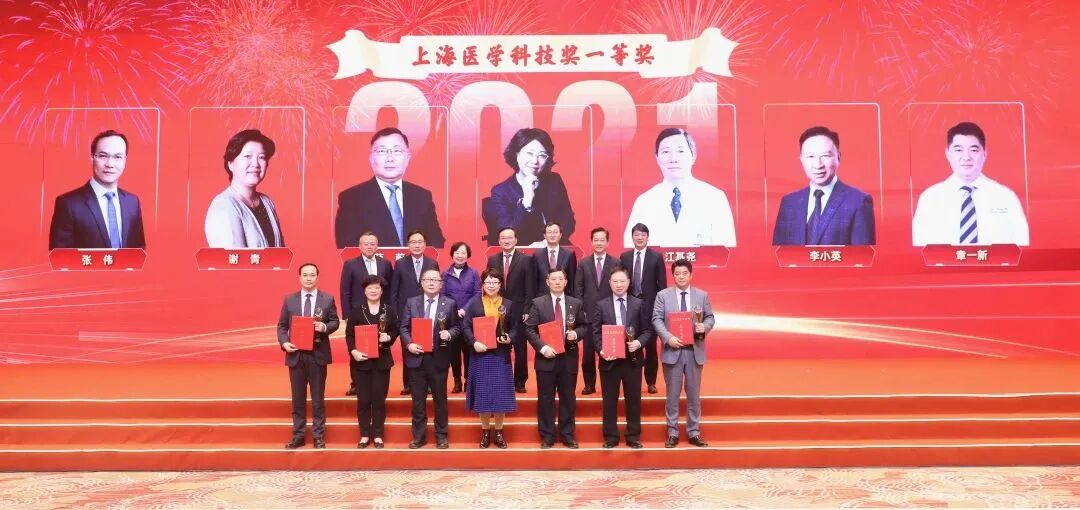
Shanghai Medical Science and Technology Awards.
The 2021 awards ceremony was recently held to recognise outstanding medical innovation in Shanghai's healthcare system. Six Renji projects received awards: two first prizes, three second prizes and one third prize. Here are the recognised projects.
First prize, 2021 Shanghai Medical Science and Technology Awards.
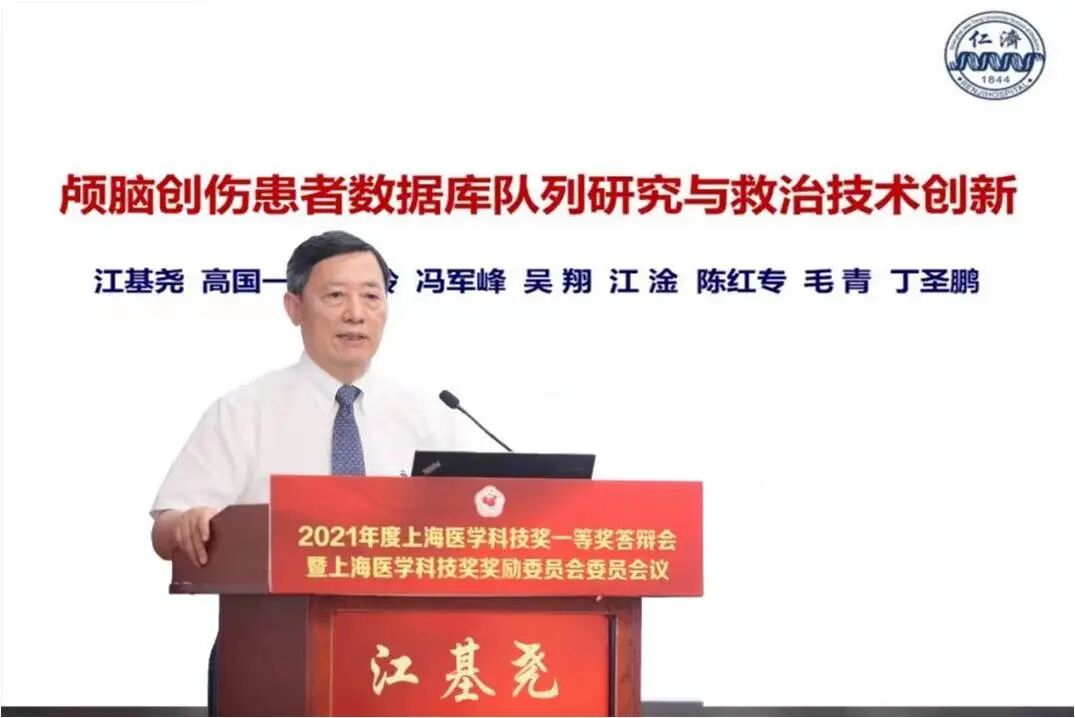
“Neurotrauma patient database cohort research and innovation in treatment technologies”.
Project contributors: Jiyao Jiang, Guoyi Gao, Xiaoling Gao, Junfeng Feng, Xiang Wu, Gan Jiang, Hongzhuan Chen, Qing Mao and Shengpeng Ding.
Project overview
Neurotrauma caused by traffic incidents, natural disasters and other events is a major cause of ill health, death and disability. Improving severe TBI outcomes remains difficult. Key problems include the absence of a large Chinese database for precise care, persistently high disability, lack of Chinese-owned brain compliance monitoring equipment, and poor passage of neuroprotective drugs across the blood–brain barrier. Through multidisciplinary and multicentre collaboration, the project addressed these challenges and reported the following innovations.
1. Establishing China's first acute TBI inpatient database and identifying Chinese injury characteristics and outcome-related factors. A prospective cohort of 13,627 inpatients in 22 provinces and municipalities found severe TBI mortality of 19.7%. Age, injury cause, GCS, ICP, fever, hypotension, hypoxaemia, brain injury severity and high-altitude environment were independent mortality-related factors. These data support improved care and fill a gap in global TBI databases.
2. A prospective randomised controlled study found greater recovery of consciousness with right median nerve electrical stimulation. Among 437 severe TBI patients still comatose two weeks after injury, six-month recovery was 59.8% in the stimulation group versus 46.2% in controls. The technique was included in the Chinese expert consensus on promoting recovery from post-traumatic coma and disseminated nationally.
3. Developing brain compliance monitoring equipment with Chinese intellectual property. Multidisciplinary collaboration produced what the source describes as the world's first device obtaining real-time ICP data and analysing PRx, RAP and IAAC. It received a Chinese utility-model patent and medical device registration, and had been used clinically in more than 70 hospitals.
4. Constructing lipid nanocarriers to address blood–brain barrier delivery of large lipophilic drugs. Metalloproteinase-sensitive targeting-peptide-modified lipid nanoparticles carried cyclosporine A efficiently, increasing drug concentration around the lesion 92-fold and improving post-traumatic cognition in the reported research. The work received an invention patent and support from a Shanghai Pharmaceuticals–Shanghai Jiao Tong University School of Medicine innovative-drug incubation project.
The project reported 49 papers in journals including The Lancet Neurology, with five in that journal, including two covers. Twenty representative papers had a combined reported impact factor of 263.382 and 299 citations by other papers, including in The Lancet. The team chief-edited five monographs, obtained two invention and seven utility-model patents, and led 12 Chinese treatment guidelines or expert consensuses. Findings were disseminated to 55 hospitals caring for 58,863 TBI patients, with substantial reported effects and contributions to China's overall treatment level. These figures reproduce the historical project report.
About the Head Trauma Centre.
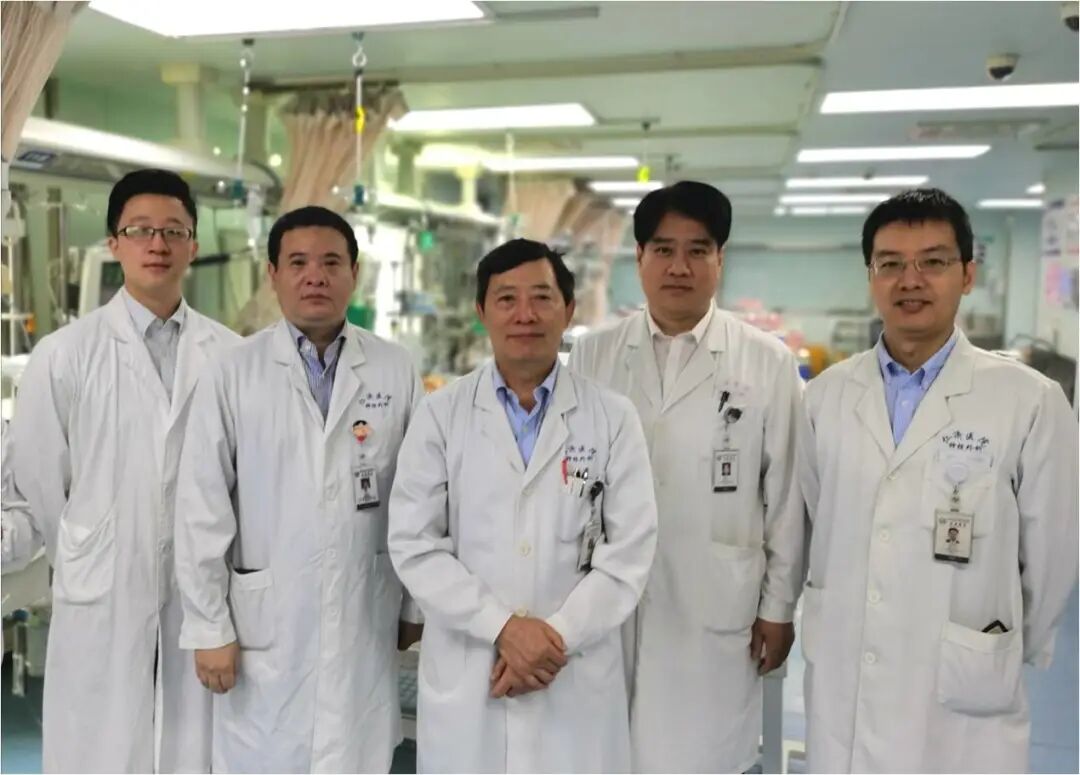
Renji's centre focuses on neurotrauma surgery, neurocritical care, recovery from coma, functional rehabilitation and complications after trauma and haemorrhage. Through the Shanghai Institute of Head Trauma it studies injury mechanisms, protection, repair and regeneration and conducts multicentre clinical research. At that time, it had 11 established clinical physicians and three full-time researchers, all with doctorates, including three doctoral and two master's supervisors.
The team had received three 973 Programme subprojects, national health special funding and 25 NSFC grants. Awards included second prize in the National Science and Technology Progress Award, first prizes in Shanghai and Ministry of Education Science and Technology Progress awards, the Wang Zhongcheng Neurosurgeon Award, Shanghai Leading Talent, Shanghai Outstanding Academic Leader and Silver Snake Award.
In recent years it had led 13 Chinese clinical expert consensuses, chief-edited 10 monographs including “现代颅脑损伤学” and “颅脑创伤诊断与治疗”, and published six Lancet Neurology papers and other findings. The source describes it as a nationally recognised leading centre for neurotrauma and neurocritical care, research and training.
Renji Hospital affiliated with Shanghai Jiao Tong University School of Medicine.
上海医学科技奖
为表彰在上海卫生健康系统中做出优异科技创新成果的医学工作者,2021年度上海医学科技奖颁奖大会于近日举行。
仁济医院共有6项科技成果荣获本届上海医学科技奖,其中一等奖2项,二等奖3项,三等奖1项。快来看看这些获奖项目吧!
2021年度上海医学科技奖一等奖
颅脑创伤患者数据库队列研究与救治技术创新
项目完成人
江基尧 高国一 高小玲
冯军峰 吴 翔 江 淦
陈红专 毛 青 丁圣鹏
项目简介
交通事故、自然灾害等因素造成的颅脑创伤是影响人类健康和造成死残的重要伤病之一,而如何提高重型颅脑创伤病人治疗效果一直是临床医学面临的重要难点。针对我们目前重型颅脑创伤病人救治存在的主要问题,包括:缺乏中国大样本数据库,难以实施临床精准救治;致残率仍然居高不下;缺乏中国自主知识产权的脑顺应性监测设备;脑保护药物无法有效透过血脑屏障。项目组针对以上关键难点,通过多学科合作和多中心合作,实施联合攻关,取得如下创新性成果:
(1)创建我国第一个急性颅脑创伤住院病人数据库、揭示了中国颅脑创伤特征和疗效相关因素:通过我国22省市13627例急性颅脑创伤住院患者前瞻性队列研究发现:重型颅脑创伤病死率为19.7%。患者的年龄、伤因、GCS评分、颅内压、高热、低血压、低氧血症、脑损伤程度、高原等是影响死亡率的独立因素,为提高颅脑创伤救治成功率提供了关键数据、填补了全球颅脑创伤数据库缺乏中国颅脑创伤数据的空白。
(2)前瞻性随机对照研究发现右正中神经电刺激术显著提高创伤性昏迷病人苏醒成功率:对437例重型颅脑创伤持续昏迷2周的患者进行随机对照试验, 6个月随访发现,右正中神经电刺激治疗组病人苏醒成功率(59.8%)显著高于对照组(46.2%)。该技术列入《颅脑创伤后昏迷催醒中国专家共识》向全国推广。
(3)研发中国自主知识产权脑顺应性监测设备:通过多学科合作,研发出全球首个实时获取颅内压数据并分析相关参数(PRx, RAP, IAAC)的脑顺应性监测设备,获得国家实用新型专利和国家医疗器械注册证。产品已在70余家医院临床使用。
(4)构建脂质纳米新剂型攻克大分子脂溶性药物无法通过血脑屏障的瓶颈:建立金属蛋白酶敏感靶向肽修饰的脂质纳米新剂型高效载带环孢素A,脑损伤灶周围其药物浓度升高92倍,显著改善脑创伤后认知功能。获得国家发明专利和上海医药-交医创新性药物孵化项目。
国际顶级期刊《柳叶刀神经病学》等发表论文49篇,包括《柳叶刀神经病学》论文5篇(封面2篇)。20篇代表性论文影响因子263.382 分、被《柳叶刀》等他引 299次。主编专著5部。获国家发明专利2项和实用新型专利7项。牵头制订12个颅脑创伤救治的中国《指南》或《专家共识》,引领我国脑创伤规范化诊治。成果推广到我国55家医院治疗58863例颅脑创伤患者,取得显著疗效,为整体提高我国颅脑创伤救治水平做出了重要贡献。
颅脑创伤中心介绍
仁济医院颅脑创伤中心聚焦于颅脑创伤相关手术、神经危重症、昏迷促醒与功能康复、创伤及出血后各类并发症的临床救治,依托上海市颅脑创伤研究所开展脑损伤机制、脑保护技术、神经修复再生研究以及多中心临床研究。目前正式在编临床医生11位,专职科研人员3位,全部具有博士学位。其中,博士生导师3位,硕士生导师2位。
团队曾获得973子课题(3项)、国家卫生专项基金、国家自然科学基金(25项)等资助,获国家科技进步二等奖、上海市科技进步一等奖、教育部科技进步一等奖等奖励,也获得王忠诚神经外科医师奖、上海市领军人才、上海市优秀学术带头人、银蛇奖等众多荣誉,在国内具有重要影响力。
近年来,团队牵头制定了13项临床救治相关的中国专家共识,主编了《现代颅脑损伤学》、《颅脑创伤诊断与治疗》等专著10部,发表《柳叶刀神经病学》论文6篇及其他成果,已经成为国内公认的、具有引领作用的颅脑创伤和神经危重症的救治高地、研究和培训基地。
上海交通大学医学院附属仁济医院
我知道你 在看 哦