A microglia-targeting nanoparticle hydrogel reduces inflammation in experimental TBI
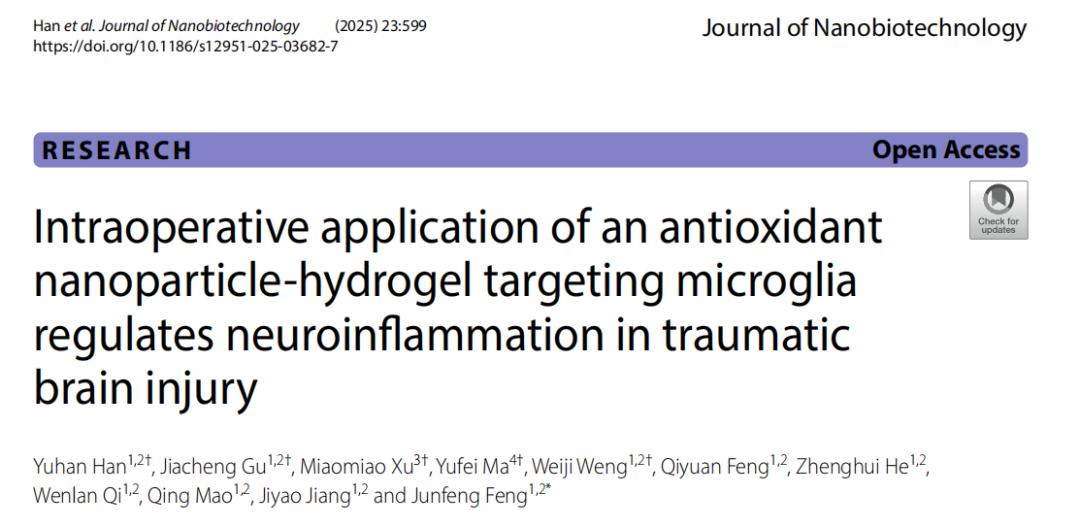
Professor Junfeng Feng’s team at Renji Hospital Neurosurgery, Shanghai Jiao Tong University School of Medicine, recently published “Intraoperative Application of an Antioxidant Nanoparticle-Hydrogel Targeting Microglia Regulates Neuroinflammation in Traumatic Brain Injury” online in Journal of Nanobiotechnology (Chinese Academy of Sciences category 1; impact factor 12.6). It designed a nanoparticle–hydrogel system that selectively depletes microglia at the brain injury site after TBI while providing antioxidant activity, offering a research strategy for TBI and other neurological diseases.
TBI is a leading global cause of death and disability, and neuroinflammation is a key mechanism of secondary injury. Microglia play a central role; excessive activation aggravates inflammatory cascades and damages neurological function. The colony-stimulating factor 1 receptor (CSF1R) inhibitor PLX5622 can suppress post-TBI inflammation by depleting microglia, but clinical translation has limitations: lack of local selectivity causes non-specific peripheral macrophage depletion and adverse effects; oral administration is affected by the gut and first-pass clearance; and postoperative fasting restricts its use.
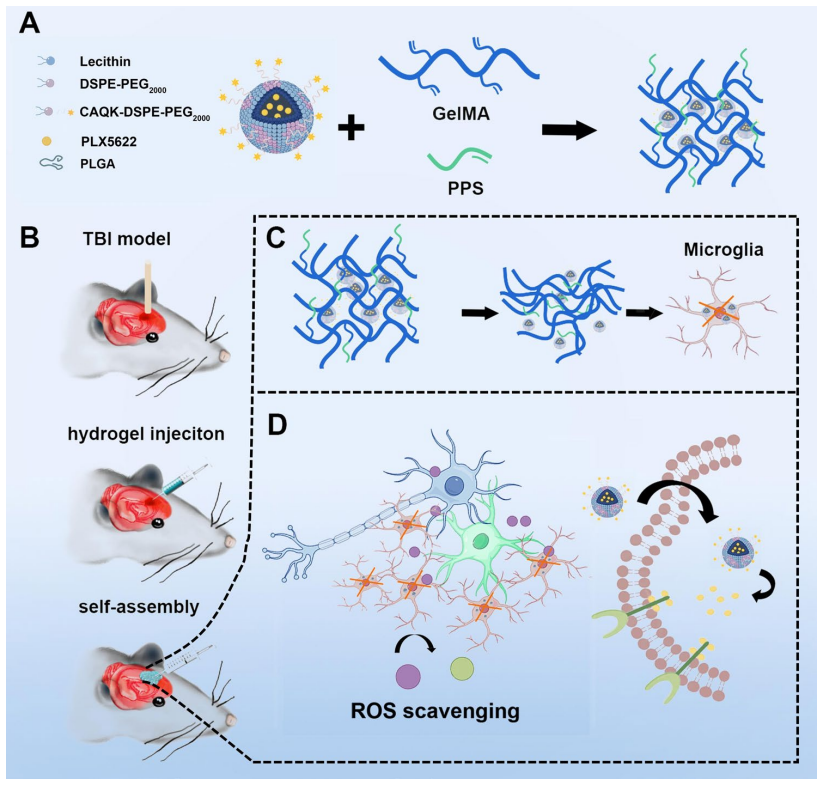
The team constructed the dual-function GelMA-PPS/P system for selective microglial depletion and antioxidant action in the injury region. After injection into the injury site, 405 nm blue light rapidly induces self-assembly into an adherent gel, enabling precise local action. It responds to and scavenges excess reactive oxygen species while continuously releasing encapsulated PLX5622 nanoparticles. CAQK surface peptides recognise and bind chondroitin sulphate proteoglycans highly expressed in the injury region, supporting targeted delivery.
Mouse PET-CT imaging allowed dynamic in vivo observation of microglial activation after treatment. GelMA-PPS/P significantly suppressed neuroinflammation and oxidative stress. It also showed advantages in preserving blood–brain barrier integrity and reducing oedema, ultimately improving neurological function in TBI mice.
This antioxidant nano-hydrogel targeting microglial depletion offers a new direction and potential tool for anti-inflammatory TBI treatment.
Renji Neurosurgery Director Junfeng Feng is corresponding author. Co-first authors are Renji doctoral students Yuhan Han and Jiacheng Gu; Miaomiao Xu of Nuclear Medicine at the Shanghai Clinical Research Centre; Yufei Ma, assistant researcher in Nuclear Medicine at Xinhua Hospital, Shanghai Jiao Tong University School of Medicine; and Renji physician Weiji Weng. Jiyao Jiang, Renji Chief Expert and Director of the Shanghai Institute of Head Trauma, provided important guidance.
Corresponding author
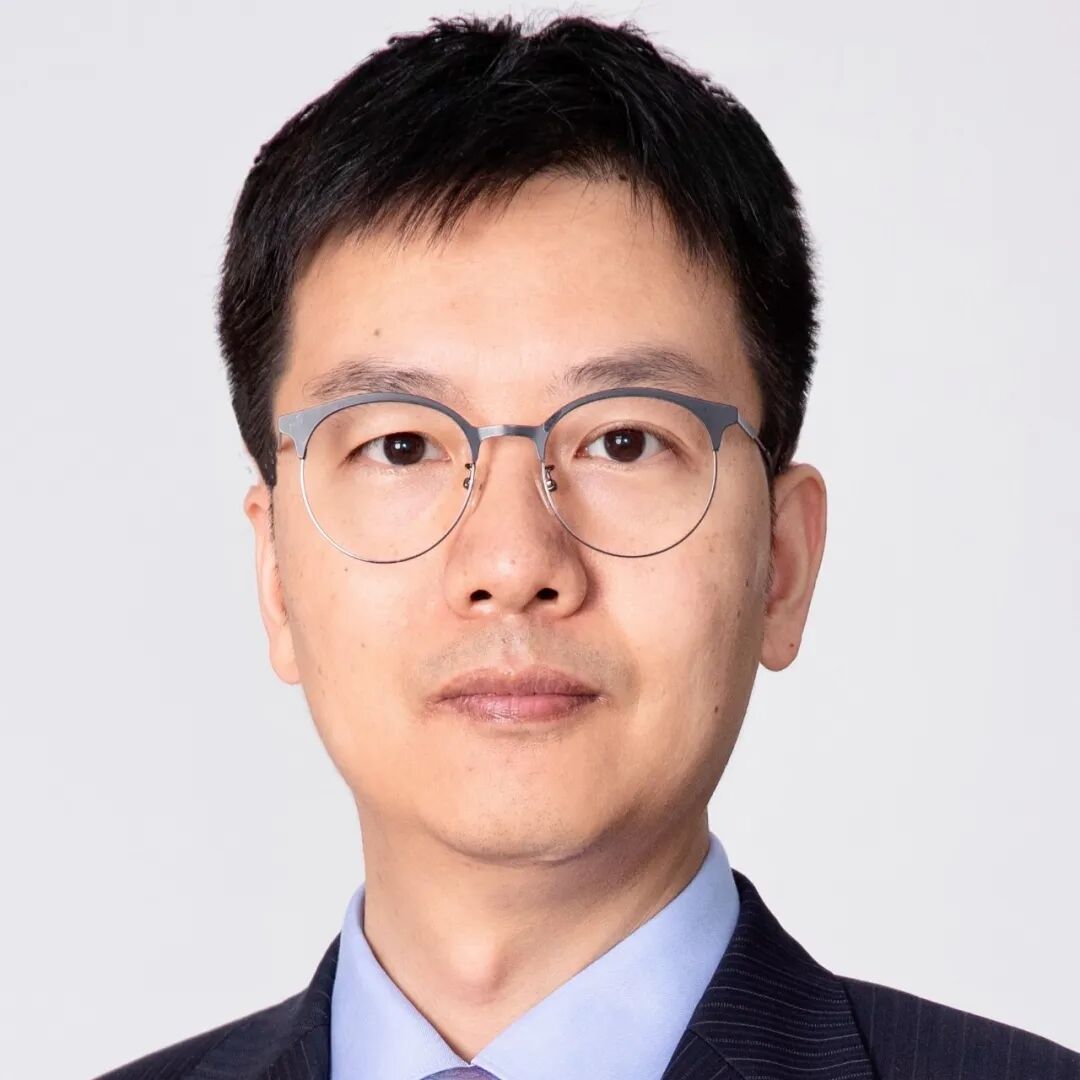
Junfeng Feng — Chief Physician
Renji Hospital, Shanghai Jiao Tong University School of Medicine
Chief physician, research professor and doctoral supervisor; Director of Renji Neurosurgery; Deputy Director of the Shanghai Institute of Head Trauma; member of a working group of the Chinese Medical Association’s Trauma Society; deputy head of the trauma working group of the Shanghai Medical Association’s Neurosurgery Society; committee member and secretary of the Shanghai Medical Doctor Association’s Neurosurgery Division.
His honours include the Wang Zhongcheng Chinese Young Neurosurgeon Award, the Innovation Award of the Wang Zhengguo Trauma Medicine Award, the Shanghai Silver Snake Award, Shanghai Outstanding Academic Leader (Young) and Shanghai Outstanding Young Medical Talent, and the inaugural National Outstanding Young Physician designation in the high-level medical talent programme.
He focuses on clinical surgery and comprehensive treatment for TBI and neurocritical illness, and studies brain protection and neural repair and regeneration. He has received five National Natural Science Foundation grants, holds 20 granted patents and has published over 30 SCI-indexed papers.
Professor Junfeng Feng
First authors
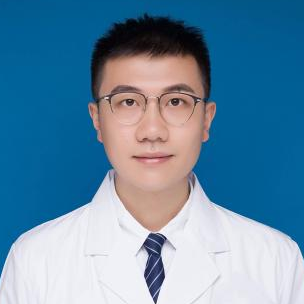
Yuhan Han — Shanghai Jiao Tong University School of Medicine
Doctoral student at Shanghai Jiao Tong University School of Medicine. Over the preceding five years, he published 12 SCI-indexed papers as first, co-first or co-corresponding author in Biomaterials, Journal of Nanobiotechnology, Cell Death and Differentiation, Advanced Healthcare Materials, ACS Applied Materials & Interfaces and other journals, with combined impact factors of 121.
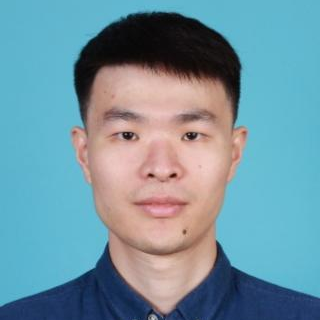
Jiacheng Gu — Resident Physician, Gongli Hospital, Pudong New Area, Shanghai
PhD from Shanghai Jiao Tong University School of Medicine; currently at Gongli Hospital Neurosurgery. Over the preceding five years, he published three SCI-indexed papers as first or co-first author in European Journal of Nuclear Medicine and Molecular Imaging, Journal of Nanobiotechnology and other journals.
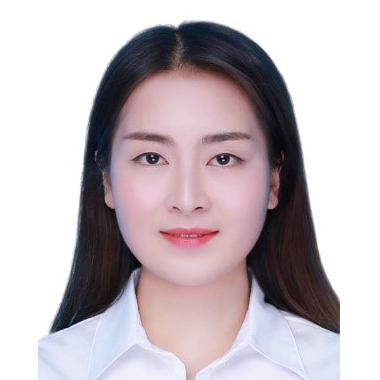
Miaomiao Xu — Resident Physician, Shanghai Clinical Research Centre
Nuclear Medicine Department; master’s degree from Shanghai Jiao Tong University School of Medicine. Focuses on nuclear medicine diagnosis and radiopharmaceutical development and application. Over the preceding five years, she published seven SCI-indexed papers as first or co-first author in European Journal of Nuclear Medicine and Molecular Imaging, Cellular & Molecular Biology Letters, Advanced Healthcare Materials and other journals.
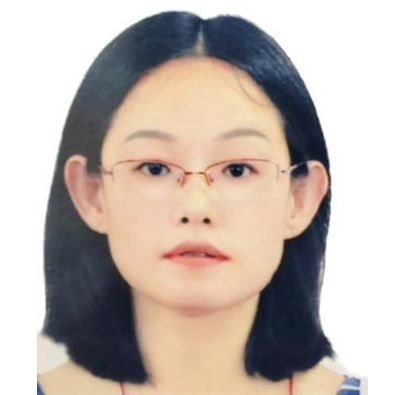
Yufei Ma — Assistant Researcher, Xinhua Hospital, Shanghai Jiao Tong University School of Medicine
Nuclear Medicine Department; PhD from the Shanghai Institute of Applied Physics, Chinese Academy of Sciences, and postdoctoral training at Xiamen University. Focuses on radiopharmaceutical labelling, development and application. Supported by an NSFC Young Scientists grant. Over the preceding five years, he published six SCI-indexed papers as first or co-first author in European Journal of Nuclear Medicine and Molecular Imaging, Cellular & Molecular Biology Letters and other journals.
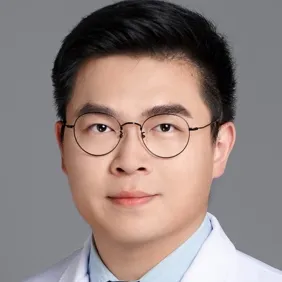
Weiji Weng — Resident Physician
Renji Hospital, Shanghai Jiao Tong University School of Medicine
Doctorate and postdoctoral training at Shanghai Jiao Tong University. His clinical focus is brain injury and neurocritical care, including emergency treatment of severe TBI, cerebral haemorrhage and large cerebral infarction, and individualised treatment of hydrocephalus, subdural haematoma and cranial defects.
Supported by an NSFC Young Scientists grant. Over the preceding five years, he published 11 SCI-indexed papers as first, co-first or co-corresponding author in Nature Communications, Cell Death and Differentiation, Advanced Science and other journals, with combined impact factors of 128. He holds two granted invention patents and has completed three research-result translation projects.
Weiji Weng — Resident Physician
Copyright notice: Intellectual property in content published by BrainMed’s Neurosurgery News, Neurointerventional News, Brain Medical Consultation and AiBrain belongs to BrainMed, the organisers, original authors and other rights holders. Republishing, excerpting, copying, cropping or recording without permission is prohibited. Authorised use must acknowledge the source. Forwarding and sharing are welcomed.
近日,上海交通大学医学院附属仁济医院神经外科冯军峰教授团队在国际知名期刊《Journal of Nanobiotechnology》(中科院一区,IF 12.6)在线发表了题为“Intraoperative Application of an Antioxidant Nanoparticle-Hydrogel Targeting Microglia Regulates Neuroinflammation in Traumatic Brain Injury”的研究成果。该研究设计了一种新型纳米颗粒-水凝胶系统,能够在颅脑创伤(TBI)后大脑损伤部位选择性清除小胶质细胞,同时发挥抗氧化作用。这一成果为TBI及其他神经系统疾病的治疗提供了新策略。
TBI是全球范围内导致死亡和致残的主要原因之一,其中神经炎症反应被认为是TBI后的关键继发性损伤机制。小胶质细胞在神经炎症过程中发挥核心作用,过度活化的小胶质细胞会加剧炎症级联反应并损害神经功能。集落刺激因子1受体(CSF1R)抑制剂PLX5622被发现可通过消耗小胶质细胞抑制TBI后的神经炎症,但其临床应用仍存在诸多局限性,例如:缺乏对损伤灶的局部选择性作用,导致外周巨噬细胞的非特异性清除及相关不良反应;常规口服给药存在肠道影响与首过代谢清除;TBI术后患者普遍需要禁食,口服给药存在临床应用局限性。
纳米颗粒-水凝胶系统的构建及其作用机制
在本研究中,研究团队首次构建了一种具有双重功能的新型纳米颗粒-水凝胶系统(GelMA-PPS/P),能够在损伤区域实现选择性清除小胶质细胞并同时发挥抗氧化作用。该系统在注射至脑损伤部位后,经405 nm蓝光照射可迅速自组装成凝胶,并牢固黏附于损伤区域,从而实现局部精准作用。该设计使其一方面能够对过量的活性氧作出响应并加以清除,另一方面能够持续释放所包载的PLX5622纳米颗粒。这些纳米颗粒的表面通过CAQK多肽修饰,能够特异性识别并结合损伤区域高表达的软骨素硫酸蛋白聚糖,从而实现对损伤区域的精准靶向。
研究团队特别通过小鼠PET-CT成像在体动态观察治疗后损伤区域小胶质细胞的活化情况,结果显示GelMA-PPS/P可显著抑制神经炎症反应,并降低TBI后的氧化应激水平。此外,该系统在保护血脑屏障完整性、减轻脑水肿方面也展现出一定优势,最终有效改善了TBI小鼠的神经功能。
本研究成功构建了靶向消耗小胶质细胞的抗氧化纳米-水凝胶系统,为TBI的抗炎治疗提供了新的思路和潜在手段。
上海交通大学医学院附属仁济医院神经外科主任冯军峰教授为通讯作者。仁济医院神经外科韩宇涵博士研究生、顾嘉程博士研究生、上海临床研究中心核医学科徐苗苗医师、上海交通大学医学院附属新华医院核医学科马玉飞助理研究员、仁济医院神经外科翁维吉医师为本研究的共同第一作者。仁济医院首席专家、上海市颅脑创伤研究所所长江基尧教授为本研究提供了重要指导。
通讯作者简介
冯军峰 主任医师
上海交通大学医学院附属仁济医院
主任医师、研究员、博士研究生导师
上海交通大学医学院附属仁济医院神经外科主任
上海市颅脑创伤研究所副所长
中华医学会创伤学分会学组委员
上海市医学会神经外科分会创伤学组副组长
上海市医师协会神经外科分会委员兼秘书
获王忠诚中国神经外科青年医师奖、王正国创伤医学奖创新奖、上海市银蛇奖、上海市优秀学术带头人(青年)、上海市杰出青年医学人才、第一届医学高层次人才“国家优秀青年医师”
专注于颅脑创伤、神经重症相关临床手术及综合救治,开展脑损伤保护和神经修复再生研究。获国家自然科学基金5项、授权专利20项、发表30余篇SCI论文
冯军峰 教授
第一作者简介
韩宇涵
上海交通大学医学院
上海交通大学医学院博士研究生在读
近五年以第一、共同第一或共同通讯作者在Biomaterials、Journal of Nanobiotechnology, Cell Death and Differentiation、Advanced Healthcare Materials、ACS Applied Materials & Interfaces等SCI杂志发表论文12篇,累计影响因子121分
顾嘉程 住院医师
上海市浦东新区公利医院
上海交通大学医学院博士,现就职于上海市浦东新区公利医院神经外科
近五年以第一或共同第一作者在European Journal of Nuclear Medicine and Molecular Imaging、Journal of Nanobiotechnology等SCI杂志发表论文3篇
徐苗苗 住院医师
上海临床研究中心
上海临床研究中心核医学科
上海交通大学医学院硕士
专注核医学诊断、放射性药物的研发与应用
近五年以第一或共同第一作者在European Journal of Nuclear Medicine and Molecular Imaging、Cellular & Molecular Biology Letters、Advanced Healthcare Materials等SCI杂志发表论文7篇
马玉飞 助理研究员
上海交通大学医学院附属新华医院
上海交通大学医学院附属新华医院核医学科
中国科学院上海应用物理研究所博士,厦门大学博士后
专注放射性药物的标记、研发与应用
获得国家自然科学基金青年项目支持
近五年以第一或共同第一作者在European Journal of Nuclear Medicine and Molecular Imaging、Cellular & Molecular Biology Letters等SCI杂志发表论文6篇
翁维吉 住院医师
上海交通大学医学院附属仁济医院
上海交通大学医学院博士、博士后
专注于颅脑损伤和神经危重症的救治,包括对重型脑外伤、脑出血、大面积脑梗的急救和对脑积水、硬膜下血肿、颅骨缺损的个体化治疗
获得国家自然科学基金青年项目支持
近五年以第一、共同第一或共同通讯作者在Nature Communications、Cell Death and Differentiation、Advanced Science等SCI杂志发表论文11篇,累计影响因子128分
授权发明专利2项,实现科技成果转化3项
翁维吉 住院医师
声明:脑医汇旗下神外资讯、神介资讯、脑医咨询、AiBrain所发表内容之知识产权为脑医汇及主办方、原作者等相关权利人所有。未经许可,禁止进行转载、摘编、复制、裁切、录制等。经许可授权使用,亦须注明来源。欢迎转发、分享。