Mild hypothermia promotes neuronal differentiation through RBM3–SOX11
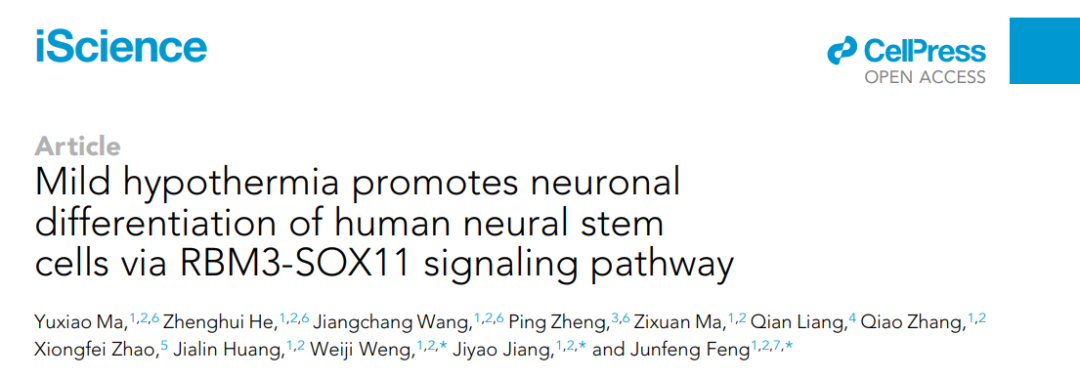
Professor Junfeng Feng’s team at the Renji Head Trauma Centre, Shanghai Jiao Tong University School of Medicine, recently published “Mild hypothermia promotes neuronal differentiation of human neural stem cells via RBM3-SOX11 signaling pathway” online in the Cell-family journal iScience. Mild hypothermia increased neuronal differentiation of human neural stem cells (hNSCs) through RBM3–SOX11, offering an approach for neural regeneration and repair research.
Difficulty with regeneration and repair after TBI has long troubled patients. Many studies consider neural stem-cell transplantation a promising option. Increasing the proportion of stem cells differentiating into neurons has consequently become a focus in transplantation research.
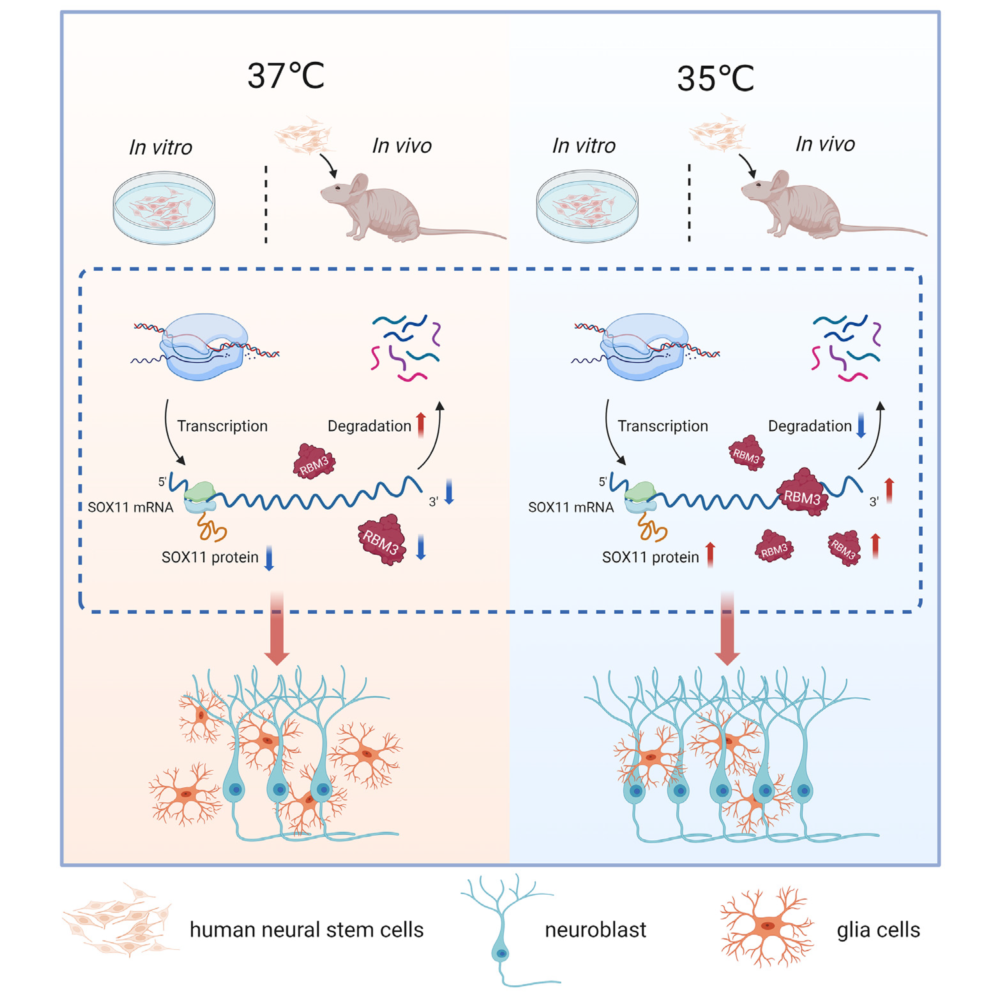
At 35°C, neuronal differentiation in cultured hNSCs rose significantly from 33% to 45%. Single-cell sequencing showed increased cold-inducible RBM3 expression; overexpression or knockdown altered the effects of hypothermia. RBM3 is an RNA-binding protein involved in splicing, transport, stability and translational regulation. Crosslinking immunoprecipitation identified SOX11 as a target. RBM3 binds the SOX11 mRNA 3′UTR, improving mRNA stability and increasing protein expression. Hypothermia also promoted neuronal differentiation of hNSCs transplanted into mouse brains, supporting in vivo regeneration potential. These findings clarify the mechanism and provide a basis for studying hypothermia and stem-cell transplantation in repair after TBI.
Professor Junfeng Feng, Director of the Renji Head Trauma Centre, is corresponding author; Jiyao Jiang and Weiji Weng are co-corresponding authors. Co-first authors are Yuxiao Ma of the centre, now at Ruijin Hospital; Zhenghui He; Jiangchang Wang; and Ping Zheng of Pudong New Area People’s Hospital. The study received NSFC and Shanghai Outstanding Academic Leader (Young) funding.
Full text: https://www.sciencedirect.com/science/article/pii/S2589004224006564
Corresponding authors
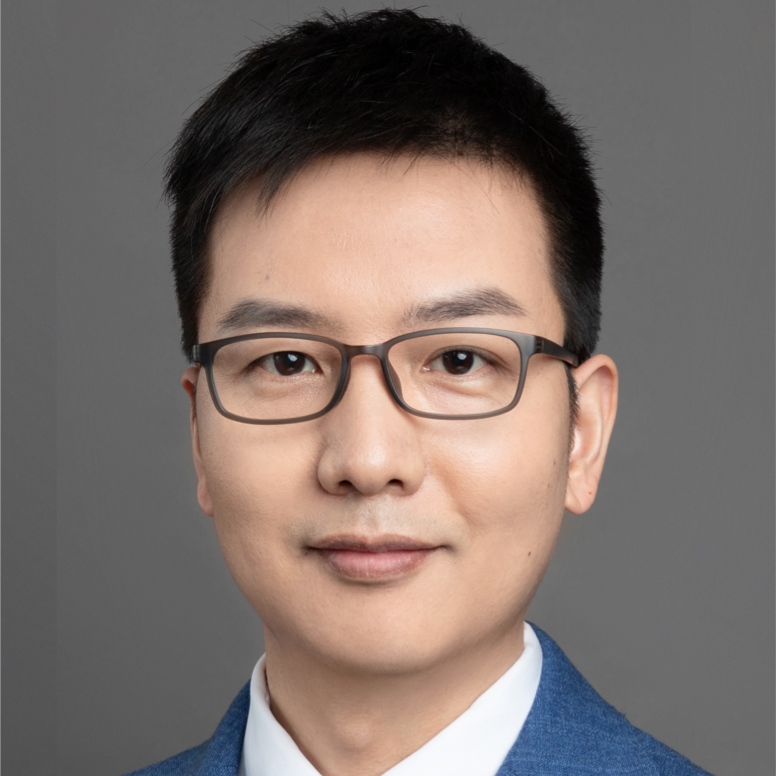
Professor Junfeng Feng
Renji Hospital, Shanghai Jiao Tong University School of Medicine
Chief physician, research professor and doctoral supervisor; Director of the Renji Head Trauma Centre and concurrently Deputy Director of Renji Neurosurgery; Deputy Director of the Shanghai Institute of Head Trauma; working-group member of the Chinese Medical Association’s Trauma Society; youth committee member of the Shanghai Medical Association’s Trauma and Neurosurgery Societies.
Honours include the Wang Zhongcheng Chinese Young Neurosurgeon Award, the Innovation Award of the Wang Zhengguo Trauma Medicine Award, the Shanghai Silver Snake Award, Shanghai Outstanding Academic Leader (Young) and Shanghai Outstanding Young Medical Talent.
He focuses on clinical surgery and comprehensive TBI and neurocritical care, and studies brain protection and neural repair and regeneration. He has received five NSFC grants, holds 20 granted patents and has published 30 SCI-indexed papers.
Professor Junfeng Feng
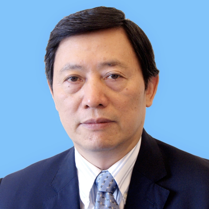
Professor Jiyao Jiang — Renji Hospital, Shanghai Jiao Tong University School of Medicine
Chief physician and doctoral supervisor; recipient of the State Council Special Allowance and Ministry of Health designation for Young and Middle-Aged Experts with Outstanding Contributions; Chief Expert at Renji and Director of the Shanghai Institute of Head Trauma. WFNS Executive Committee member; former INTS President; Chair of the Chinese Medical Association’s Trauma Society; Vice President of the fifth committee of the Chinese Medical Doctor Association’s Neurosurgery Division.
As principal contributor, recipient of second prize in the National Science and Technology Progress Award and first prizes in the Ministry of Education and Shanghai Science and Technology Progress Awards.
Professor Jiyao Jiang
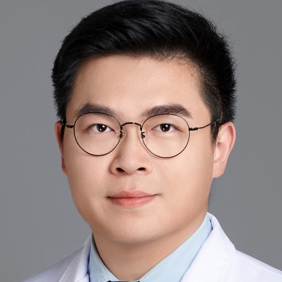
Weiji Weng — Resident Physician
Renji Hospital, Shanghai Jiao Tong University School of Medicine
Doctorate and postdoctoral training at Shanghai Jiao Tong University; Outstanding Graduate of Shanghai Jiao Tong University; recipient of the National Scholarship for Graduate Students and first prize in Shanghai’s Resident Physician Monthly Science Education Competition.
As first, co-first or co-corresponding author, he has published multiple SCI-indexed papers in Nature Communications, Cell Death and Differentiation, Science Advances, Biomaterials and Cell Reports, with combined impact factors of 89. He holds one granted invention patent and more than ten granted utility model patents.
Copyright notice: Intellectual property in content published by BrainMed’s Neurosurgery News, Neurointerventional News, Brain Medical Consultation and AiBrain belongs to BrainMed, the organisers, original authors and other rights holders. Republishing, excerpting, copying, cropping or recording without permission is prohibited. Authorised use must acknowledge the source. Forwarding and sharing are welcomed.
近日,上海交通大学医学院附属仁济医院颅脑创伤中心冯军峰教授团队在Cell杂志子刊《iScience》在线发表了题为“Mild hypothermia promotes neuronal differentiation of human neural stem cells via RBM3-SOX11 signaling pathway”的研究成果。该研究发现亚低温提高人源神经干细胞(hNSCs)向神经元分化的比例,且该过程是由RBM3-SOX11通路介导。该研究提出了一种促进神经干细胞向神经元分化的新方法,为神经再生和修复提供了新思路。
颅脑创伤(TBI)后神经再生与修复困难是长期困扰TBI患者的难题。目前许多研究认为神经干细胞移植将是解决这一难题的最佳选择之一。因此,如何提高神经干细胞向神经元分化的比例成为了神经干细胞移植领域内的研究热点。
研究人员发现,35℃亚低温显著提高体外培养的人源神经干细胞的神经元分化(从33%提升至45%)。研究人员进一步通过单细胞测序发现,冷诱导蛋白RBM3在亚低温条件下表达明显上调;过表达或者敲减RBM3蛋白会改变亚低温对于hNSCs的影响。RBM3是一种RNA结合蛋白,被认为参与RNA的剪接、运输、稳定性和翻译调控等。研究人员通过交联免疫沉淀实验筛选出SOX11为RBM3调控靶蛋白,并解析出RBM3与SOX11 mRNA的3’UTR区域相结合,提高SOX11 mRNA的稳定性,进而上调SOX11的蛋白表达水平。最后,研究人员发现,亚低温可以促进小鼠脑内移植的hNSCs向神经元方向分化,进一步支持亚低温在体内神经再生和修复中的潜力。这一系列发现不仅阐明了亚低温促进hNSCs向神经元方向分化的机制,也为亚低温治疗和神经干细胞移植在TBI后神经再生和修复中的应用提供了新依据。
研究机制图
上海交通大学医学院附属仁济医院颅脑创伤中心主任冯军峰教授为本研究的通讯作者,江基尧教授、翁维吉医师为共同通讯作者。仁济医院颅脑创伤中心马羽霄博士(现工作于瑞金医院)、何征晖博士、王江畅博士、浦东新区人民医院郑平医师为本研究的共同第一作者。该研究得到国家自然科学基金、上海市优秀学术带头人(青年)基金的支持。
全文链接:
https://www.sciencedirect.com/science/article/pii/S2589004224006564
通讯作者简介
冯军峰 教授
上海交通大学医学院附属仁济医院
主任医师、研究员、博士研究生导师
上海交通大学医学院附属仁济医院颅脑创伤中心科主任
兼任仁济医院神经外科科室副主任
上海市颅脑创伤研究所副所长
中华医学会创伤学分会学组委员
上海市医学会创伤学分会、神经外科学分会青年委员
获王忠诚中国神经外科青年医师奖、王正国创伤医学奖创新奖、上海市银蛇奖、上海市优秀学术带头人(青年)、上海市杰出青年医学人才
专注于颅脑创伤、神经重症相关临床手术及综合救治,开展脑损伤保护和神经修复再生研究。获国家自然科学基金5项、授权专利20项、发表30篇SCI论文
冯军峰 教授
江基尧 教授
上海交通大学医学院附属仁济医院
上海交通大学医学院附属仁济医院主任医师、博士生导师。国务院特殊津贴专家、卫生部有突出贡献中青年专家。上海交通大学医学院附属仁济医院首席专家、上海市颅脑创伤研究所所长
世界神经外科医师联盟(WFNS)执委、国际神经创伤协会(INTS)前任主席、中华医学会创伤学分会主任委员、中国医师协会神经外科医师分会第五届委员会副会长
以第一完成人荣获国家科技进步二等奖、教育部科技进步一等奖和上海市科技进步一等奖
江基尧 教授
翁维吉 住院医师
上海交通大学医学院附属仁济医院
上海交通大学医学院博士、博士后
上海交通大学优秀毕业生
曾荣获研究生国家奖学金、“上海市住院医师科普月月讲”一等奖
以第一、共同第一或共同通讯作者在Nature Communications、Cell Death and Differentiation、Science Advances、Biomaterials、Cell Reports等SCI杂志发表论文多篇,累计影响因子达89分
授权发明专利1项,授权实用新型专利10余项
声明:脑医汇旗下神外资讯、神介资讯、脑医咨询、AiBrain所发表内容之知识产权为脑医汇及主办方、原作者等相关权利人所有。未经许可,禁止进行转载、摘编、复制、裁切、录制等。经许可授权使用,亦须注明来源。欢迎转发、分享。