Traumatic brain injury in older Chinese adults: a registry analysis
Note
The Journal of Neurotrauma recently published findings on the epidemiology of traumatic brain injury in older Chinese patients. Data came from the CENTER-TBI China Registry, completed jointly by 56 institutions.
Background
Traumatic brain injury (TBI) is an important cause of death and disability at all ages, posing a challenging global health problem and a substantial health and economic burden.
Population ageing is changing its epidemiology in older adults. The CENTER-TBI China Registry is a prospective, multicentre, longitudinal observational study. This analysis included registry patients aged ≥65 years and examined injury characteristics and outcomes to understand the contemporary epidemiological pattern of TBI in older Chinese adults.
Methods
Between 22 December 2014 and 1 August 2017, the registry collected cases at 56 Chinese neurosurgical centres. Eligibility required a clinical TBI diagnosis on admission and a clinical indication for head CT. Patients discharged directly from the emergency department were excluded. No other eligibility criteria were applied during registration.
Results
The registry included 13,627 cases, of whom 2,500 were aged ≥65. Overall, 460 patients were excluded for incomplete data, including 85 older patients (18.48%). The final analysis included 2,415 older patients, 18.34% of all participants.
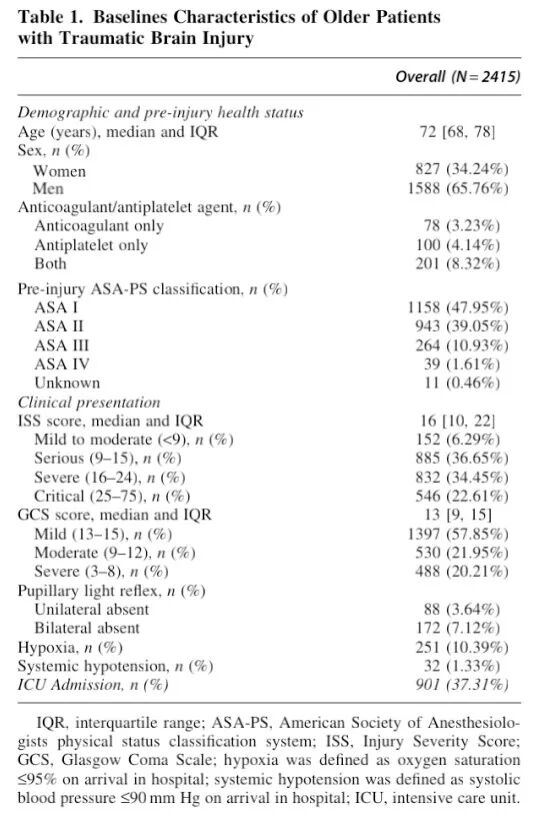
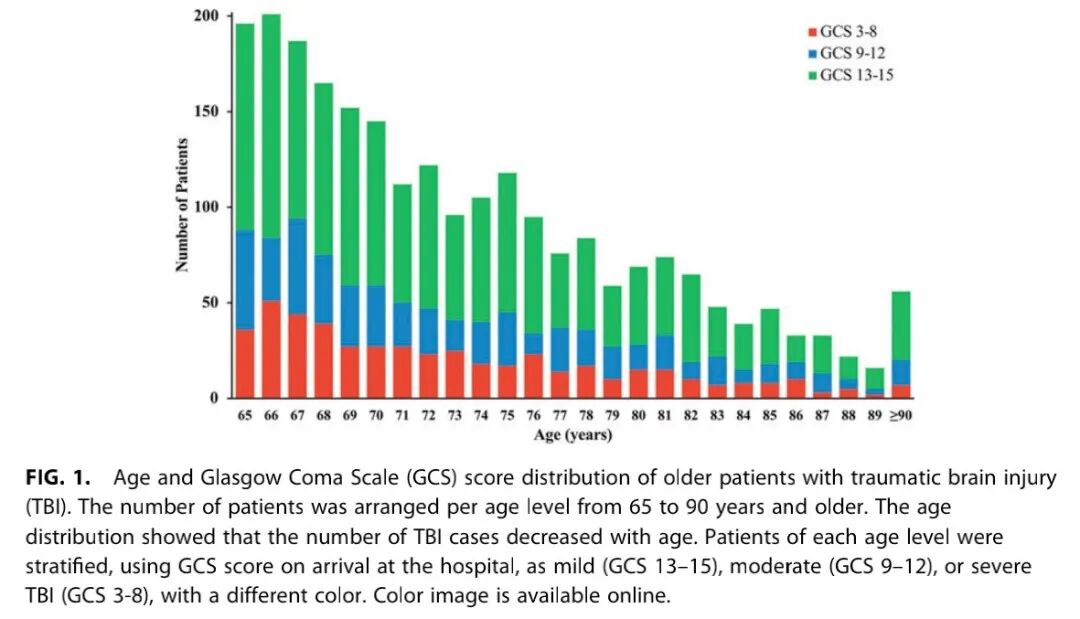
Median age was 72 years (IQR 68–78). Approximately two-thirds were men (n=1,588, 65.76%). Case numbers declined with increasing age (Figure 1). In total, 201 patients (8.32%) had been taking anticoagulant and antiplatelet medication before injury, as described in the source.
Nearly half were healthy before injury (n=1,158, 47.95%; ASA-PS class 1), 943 (39.05%) had mild systemic disease (class 2), and the remainder had class 3 or 4 disease. Median GCS was 13 (IQR 9–15). Mild, moderate and severe TBI accounted for 1,397 (57.85%), 530 (21.95%) and 488 (20.21%) cases respectively. In total, 901 patients (37.31%) received intensive care.
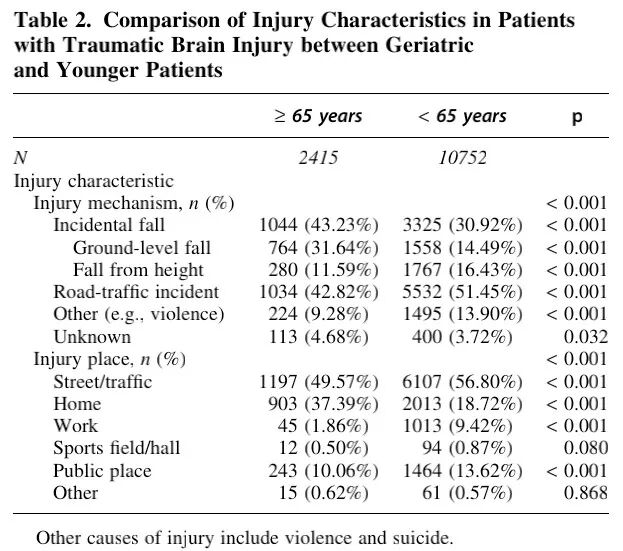
Accidental falls were the leading cause in older adults (n=1,044, 43.23%), about three-quarters being same-level falls. Road traffic incidents were second (n=1,034, 42.82%), but were the leading cause in patients younger than 65 (Table 2). With increasing age, falls accounted for a greater proportion and road traffic incidents for a smaller proportion.
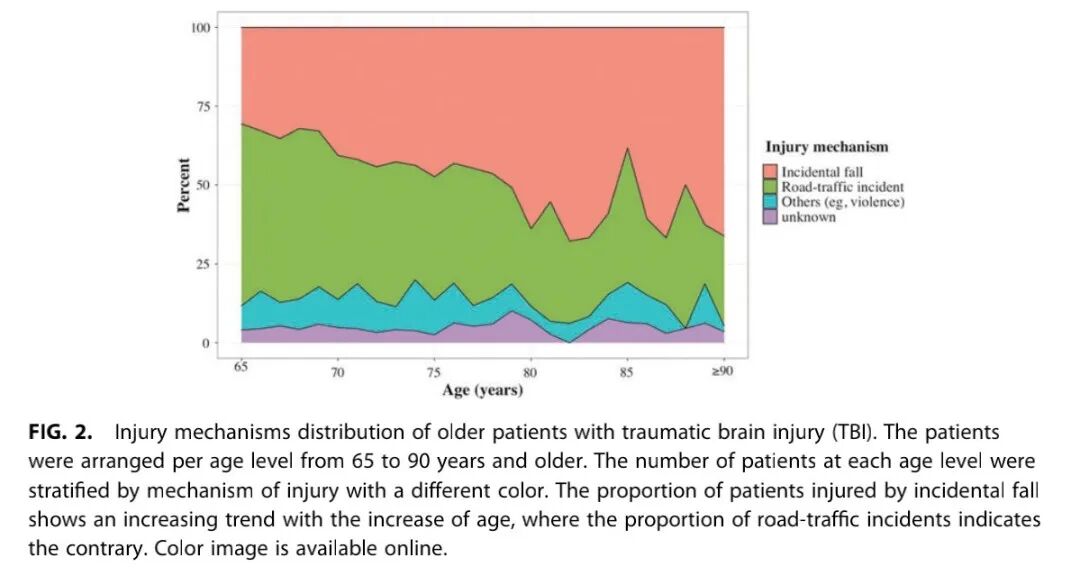
Roads and homes were the two most common injury locations across ages (Figure 2). Home (n=903, 37.39%) was the main location for same-level falls (n=535, 70.03%) and falls from height (n=189, 67.50%) among older adults, followed by roads and public places. Older patients injured in traffic incidents were mainly pedestrians (n=509, 49.23%). Median time from injury to hospital arrival was 2.17 hours (IQR 1.00–6.00), and most arrived within 24 hours.
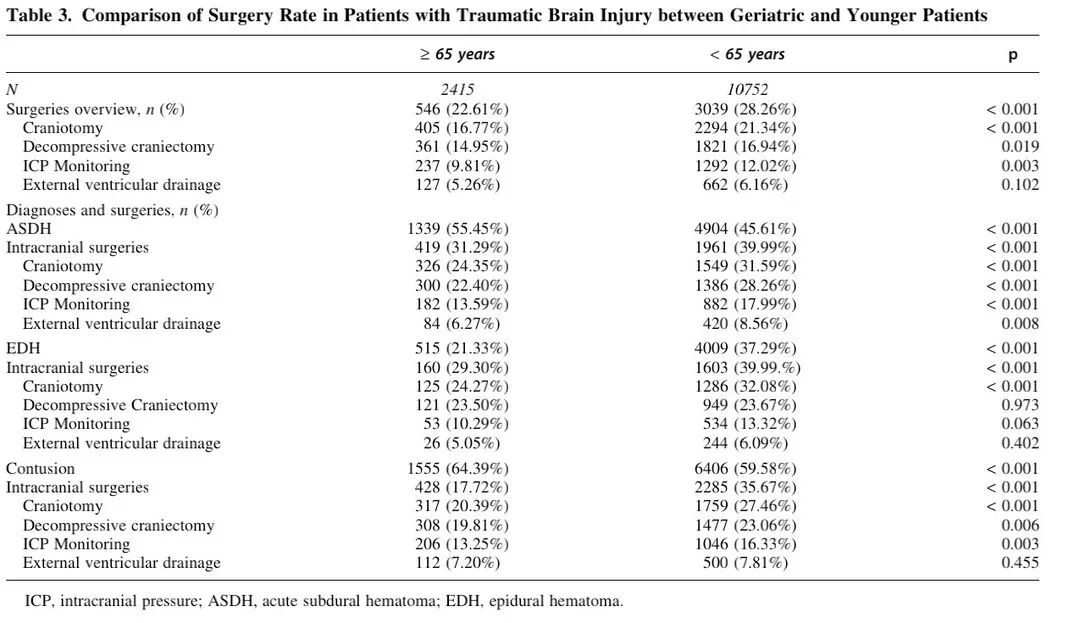
Intracranial surgery was performed in 546 older patients (22.61%). In total, 405 (16.77%) underwent craniotomy, including 361 decompressive craniectomies. ICP monitoring was used in 237 (9.81%) and external ventricular drainage in 127 (5.26%). Some received two or more intracranial procedures (Table 3).
Compared with younger patients, older adults more often had acute subdural haematoma (ASDH) and contusions, and less often epidural haematoma (EDH). They underwent intracranial surgery less often than patients under 65 (Table 3).
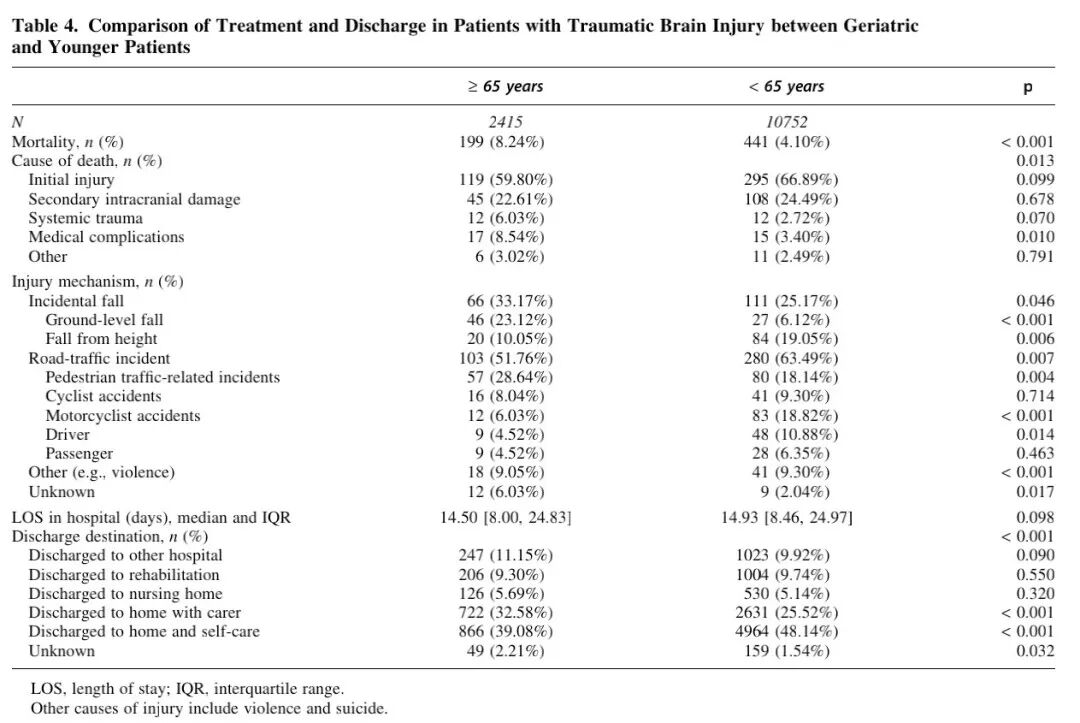
Overall in-hospital mortality in older adults was 8.24% (n=199), higher than in younger patients (Table 4). Primary brain injury was the main cause of death (n=119, 59.80%); 45 patients (22.61%) died from secondary intracranial injury. A greater proportion of older than younger patients died from medical complications.
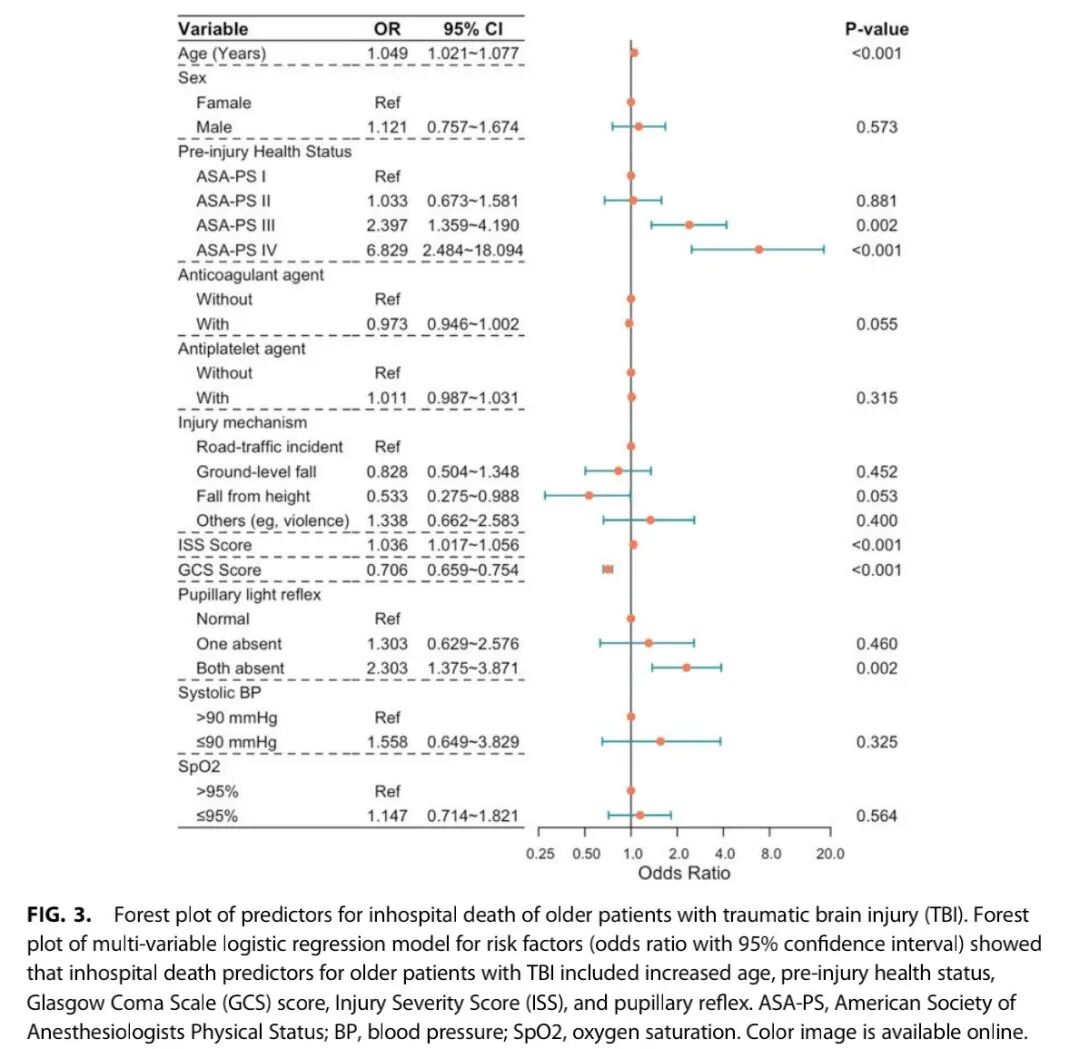
Multivariable logistic regression identified older age, poorer pre-injury health (ASA-PS class 3 or 4), higher ISS, lower GCS and absent pupillary light responses as associated with in-hospital mortality (Figure 3).
Discussion
With rapid growth of the oldest populations worldwide, several studies report increasing TBI incidence among older adults, sometimes faster than population ageing itself. Older patients comprised 18.34% in our analysis. China's population aged over 65 rose from 10.1% in 2014 to 11.4% in 2017. An observational study in 2008 found older patients represented less than 10% of TBI, nearly half the proportion in this study. Developing countries may eventually reach patterns similar to developed countries, sharply increasing public health burdens.
Traffic incidents remain the leading cause of TBI in China overall, followed by falls. In high-income countries, falls are the most common cause in older adults. Our study found an increasing proportion of falls and fewer traffic injuries with age. From age 70, falls overtook traffic incidents, earlier than the age of 75 in previous reports. Chronic illness, impaired balance and sensory neuropathy may contribute to increasing fall-related TBI. With population ageing and fewer traffic injuries, falls may become China's leading cause, resembling developed-country epidemiology. Further research into these increases is needed to develop effective fall-prevention interventions.
Older age has long been considered an independent risk factor for poorer TBI outcomes. In-hospital mortality in older patients was twice that of younger patients (Table 4). Pre-existing illness, indicated by pre-injury ASA-PS class 3–4, predicted higher mortality. Additional medical complications or comorbidity may further increase mortality.
Fortunately, improvements in TBI management over recent decades have reduced overall and older-adult mortality. A Chinese population study reported mortality among TBI patients over 75 declining from 6,229 to 4,860 per 100,000 between 2008 and 2013. However, lower in-hospital mortality does not necessarily mean better long-term outcomes. TBI is a lifelong condition that changes over time. Sequelae in older survivors may lead to later death, and moderate or severe injury carries greater post-discharge mortality risk.
Rehabilitation can substantially improve older patients' outcomes, yet very few older patients in our survey were transferred to rehabilitation centres; this was also true of younger patients. Several studies show age greatly influences referral, alongside complex factors such as expectations and finances. It is wrong to assume older adults have little rehabilitation potential. Rehabilitation should instead be assessed through its possible positive effects for them.
The study offers important guidance because China lacked sufficient research on epidemiological changes in older TBI patients over previous decades. It nevertheless has limitations. Participation by only 56 centres means the data do not fully represent Chinese hospitals. Important information was not recorded, including pre-existing diseases, specific complications, long-term functional outcomes and quality of life. Information and confounding biases affect statistical interpretation. These results are therefore preliminary and need further validation.
First authors: Chun Yang, Lijian Lang and Zhenghui He.
Corresponding authors: Guoyi Gao and Junfeng Feng.
Article translation and adaptation: Jiangchang Wang.

Jiangchang Wang.
Student in Shanghai Jiao Tong University School of Medicine's eight-year doctoral programme, 2017–2025, supervised by Professor Jiyao Jiang.
说明
Jouranl of Neurotrauma杂志新近发表中国老年脑外伤流行病学研究成果。
数据来源于国内56家单位共同完成的CENTER-TBI中国注册研究。
背景
创伤性颅脑损伤(traumatic brain injury,TBI)作为各年龄段致死及致残的重要原因,是一项极具挑战的全球健康性问题,给社会带来了巨大的健康和经济负担。
人口老龄化也促使老年TBI患者的流行病学数据变化。CENTER-TBI中国注册研究是一项前瞻性、多中心、纵向、观察性研究。在这项研究中,针对老年患者的特点,本文纳入了CENTER-TBI中国注册研究的老年TBI患者(年龄≥65岁),分析其发病特点和预后情况,以了解当下中国老年TBI的流行病学模式。
方法
CENTER-TBI中国注册研究自2014/12/22至2017/8/1,从中国的56个神经外科中心收集病例数据。根据设计方案,纳入标准为入院时有TBI的临床诊断且有头部CT扫描的临床指征,且排除直接从急诊出院的患者。除此之外,在数据登记时无其它纳入或排除标准。
研究结果
CENTER-TBI中国注册研究数据库共纳入病例13627例,其中2500例是老年人(年龄≥65岁)。共460个患者因资料数据不全被排除,其中85位(18.48%)是老年患者。最终,共有2415例老年患者纳入本研究分析,占所有参与患者的18.34%。
表1总结了TBI老年患者的基线特征。中位年龄72岁(IQR:68-78),男性( n = 1588, 65.76%)约占总人数的2/3。患者的年龄分布显示TBI病例数随年龄增加而减少(见图1)。总共有201位患者(8.32%)在受伤前同时在使用抗凝药物和抗血小板药物。
几乎一半的患者(n = 1158, 47.95%)在受伤前健康状况良好 (ASA-PS等级1),943位患者(39.05%)有轻度系统性疾病 (ASA-PS等级2),其余患者则处于疾病状态(ASA-PS等级3或4)。老年TBI患者的中位GCS评分为13分(IQR:9-15),1397位患者(57.85%)属于轻度TBI,530位患者(21.95%)属于中度TBI,488位患者(20.21%)属于重度TBI。共有901位患者(37.31%)在重症监护室(intensive care unit,ICU)中接受过治疗。
受伤的原因和地点中,意外跌倒(n=1044,43.23%)是老年TBI患者受伤的首要原因,其中约3/4属于同一平面的跌倒。其次的受伤原因是交通事故(n=1034,42.82%),该因素在年龄<65岁的TBI患者中是首要损伤因素(见表2)。除此之外,在老年患者中损伤原因随着年龄改变,年龄越大的TBI患者中,意外跌倒占比越高,道路交通相关事故占比越低。
至于受伤的地点,道路和家中是所有年龄段TBI患者中最常见的的两个受伤地点(见图2)。家中(n=903,37.39%)是平面跌倒(n=535,70.03%)和高处坠落(n=189,67.50%)的老年TBI患者中首要的受伤位置,其次是摔倒所在的道路和公共场所。在交通事故中受伤的老年TBI患者主要是行人(n=509,49.23%)。老年TBI患者从受伤至抵达医院的中位数时长是2.17小时(IQR:1.00-6.00),且绝大多数患者在受伤后24小时内抵达医院。
有关手术方面,共546位老年TBI患者进行了颅内手术,占比22.61%。共405人(16.77%)接受开颅手术的患者,其中共361例行去骨瓣减压手术。共237例(9.81%)行颅内压监测,共127例(5.26%)行脑室外引流(见表3)。其中部分患者同时进行了两种及以上的颅内手术治疗。
老年TBI患者较年轻患者发生急性硬膜下血肿(acute subdural hematoma ,ASDH)和挫裂伤的概率较高,而发生硬膜外血肿(epidural hematoma,EDH)的概率较低。相较于年轻患者(年龄小于65周岁),老年TBI患者进行颅内手术的比例较低(见表3)。
死亡率方面,老年患者的总体院内死亡率为8.24%(n=199),高于年轻患者(见表4)。造成老年TBI患者死亡的首要原因是原发性脑损伤(n=119,59.80%),而45位患者(22.61%)死于继发性颅内损伤。与年轻患者相比,老年患者死于医疗并发症的比例更高。
对于院内死亡的多项预测指标做多变量逻辑回归分析后提示,下列变量与老年患者院内死亡相关:更高的年龄、损伤前较差的身体状况(ASA-PS等级3或4)、更高的ISS评分、更低的GCS评分以及丧失瞳孔对光反射(见图3)。
讨论
随着全球高龄人口的迅猛增加,多项研究提示老年TBI的发病率正在上升。在一些研究当中,老年TBI发病率增长速率甚至超过了老年人口的增长速率。在本研究中,老年TBI的发病率占18.34%,而我国年龄大于65岁的人口数从2014年的10.1%增加到2017年的11.4%。与2008年的一项观察性研究对比可以发现,当时老年TBI的发病率低于10%,而在本研究当中,这个数字接近翻倍。可以预见的是,发展中国家TBI患者的发病率在未来可能会达到发达国家相似的水平,造成公共卫生负担急剧增加。
在中国,交通事故仍然是造成TBI的首要因素,其次是意外跌倒。相反,在高收入国家中,跌倒是老年TBI患者受伤最常见的原因。在我们的研究中,我们发现跌倒老年人占比随年龄增加而升高,而交通事故占比则逐渐降低。此外,从70岁开始,跌倒逐渐超过交通事故,成为TBI患者的主要病因,这比以往研究报道的75岁有所提前。在老年人中更为常见的慢性疾病、平衡能力障碍和感觉神经病可能促成了跌倒相关的TBI数量增加。鉴于人口老龄化的加剧和交通事故伤的减少,跌倒很可能成为未来我国TBI的主要原因,这与发达国家的流行病学特征是匹配的。因此要进一步的研究老年病人中跌倒相关TBI增加的原因以采取有效的干预措施防范跌倒损伤。
治疗方面,高龄一直被认为是与TBI预后相关的一项独立危险因素。本研究中,老年患者院内死亡率是年轻患者的两倍(表4)。我们的研究表明,对受伤前ASA-PS评分3-4的患者而言,预先存在的疾病是预测死亡率增加的指标之一。此外,额外的医疗并发症或合并症可能导致更高的死亡率。
幸运的是,近几十年TBI管理的提高已经减少了TBI总体的死亡率以及老年TBI患者的死亡率。一项基于中国人口研究的报告评估了TBI患者的死亡率变化趋势,2008-2013年间年龄大于75岁的TBI患者死亡率从十万分之6229降低到十万分之4860。但更低的院内死亡率并不代表更好的长期预后,TBI是一种终身性疾病并随着时间的推移会发生多种变化。在老年TBI幸存者中出现的后遗症可能会导致后续的死亡,且中重度TBI患者出院后的死亡风险会更高。
康复可以大大改善老年TBI患者的预后。然而在我们的调查中,只有很少的老年TBI患者被转运至康复中心,在年轻患者中也是如此。几项研究显示,患者的年龄极大地影响了转诊策略,同时预后的期望和经济问题这些生活中较为复杂的因素也会产生影响。必须认识到,老年患者康复潜力较差的观点是错误的。相反,应该根据老年患者康复后的潜在积极作用来评估康复的效果。
本研究具有重要指导作用,在过去几十年间,中国缺乏足够的评估老年TBI患者流行病学转变的相关研究。然而本研究结果仍具有一定局限性。首先,研究数据不能够很好的代表我国医院的整体情况,因为只有56家中心参与了研究。其次,本研究没有记录一些关键信息,如预先存在的疾病、具体并发症、长期功能结果和生活质量等。这些信息偏差和混杂偏差影响了统计学意义。因此本研究结果是初步的,仍然需要进一步的研究验证。
第一作者:杨春、郎力键、何征晖
通讯作者:高国一、冯军峰
文章编译:王江畅
王江畅
上海交通大学医学院八年制博士研究生(2017-2025),师从江基尧教授