PREDICT-AEDH questions routine preventive decompressive craniectomy in massive epidural haematoma
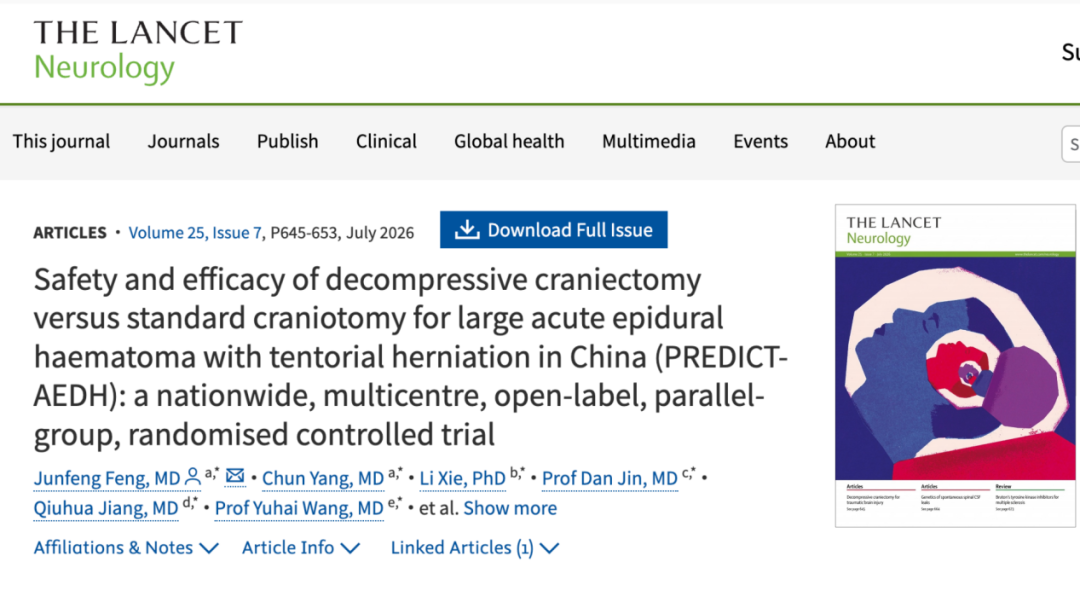
On 18 June 2026, The Lancet Neurology (impact factor 54.6) published online as a cover article a multicentre randomised controlled study of the efficacy and safety of decompressive craniectomy in patients with acute massive epidural haematoma and brain herniation. Led by Professor Jiyao Jiang, Honorary Chief Expert at Renji Hospital, Shanghai Jiao Tong University School of Medicine, and Director of the Shanghai Institute of Head Trauma, it involved 28 hospitals across China. The source describes this as the first prospective randomised trial worldwide to address decompressive craniectomy in this population.
Junfeng Feng, Director of Renji Neurosurgery, explained that decompressive craniectomy is widely used in emergency TBI surgery when non-operative treatment cannot control malignant intracranial hypertension. International evidence on its efficacy and safety in acute subdural and intracerebral haematomas has entered the latest US TBI guidelines. For acute massive epidural haematoma with herniation, however, whether to remove the bone flap or replace it during the same operation lacked high-level evidence.
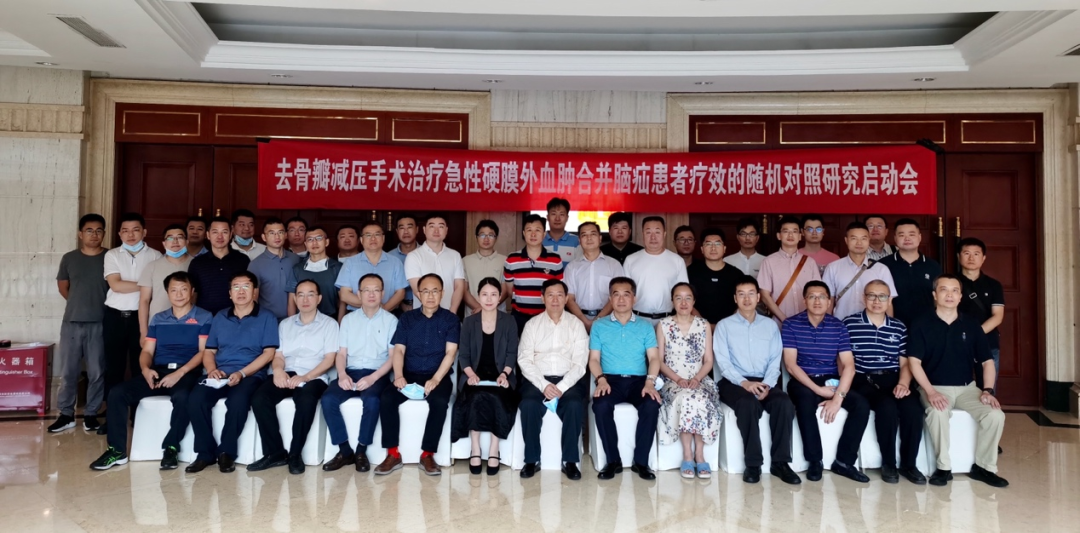
Clinicians had assumed that herniation and pupillary dilation caused by a massive epidural haematoma lead to severe compression and cerebral ischaemia. After evacuation, secondary infarction and oedema may cause renewed intracranial hypertension or herniation, requiring another operation to remove the bone flap. To avoid this return to surgery, teams commonly performed preventive decompressive craniectomy after haematoma evacuation. In 2020, Jiyao Jiang and Junfeng Feng of Renji and Xianjian Huang, chief physician at Shenzhen Second People’s Hospital Neurosurgery, launched the multicentre randomised study in Shenzhen, with 28 hospitals and the Institute of Clinical Medicine of Shanghai Jiao Tong University School of Medicine participating.
After six years of clinical research, decompressive craniectomy did not reduce death or disability in patients with acute massive epidural haematoma and herniation, and significantly increased postoperative intracranial rebleeding. The report states that these findings change conventional thinking: patients in this specific population do not require routine preventive decompressive craniectomy during haematoma evacuation. Avoiding bone-flap removal also avoids later cranioplasty and its complications and reduces the psychological and financial burden of another operation. The authors present the study as high-level Chinese evidence for standardising surgery in this population internationally.
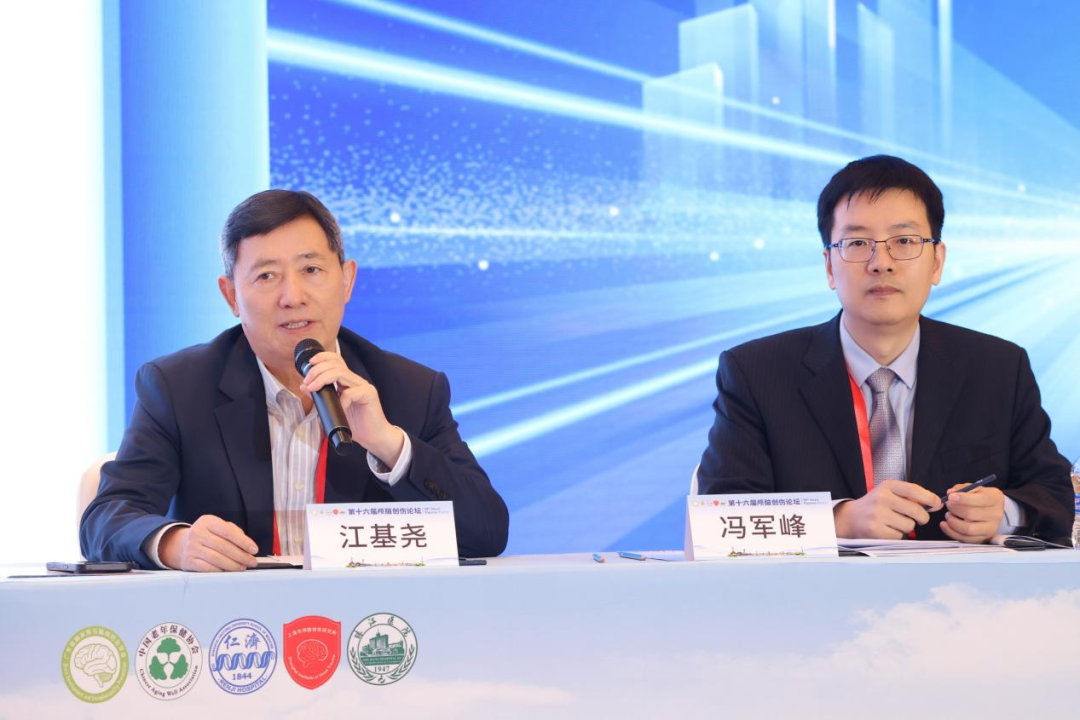
Professor Jiyao Jiang is the final corresponding author. Director Junfeng Feng is first and co-corresponding author. Co-first authors include Renji neurosurgeon Chun Yang; Li Xie, associate researcher at the Institute of Clinical Medicine of Shanghai Jiao Tong University School of Medicine; Dan Jin, Director of Neurosurgery at Zhongshan Hospital of Traditional Chinese Medicine, Guangdong; Qiuhua Jiang, chief physician at Ganzhou People’s Hospital, Jiangxi; and Yuhai Wang, Director of Neurosurgery at the PLA Joint Logistics Support Force No. 904 Hospital.
Since 2019, Jiyao Jiang, the tenth President of the International Neurotrauma Society, has published nine papers in The Lancet Neurology as sole or lead corresponding author. The report highlights Renji Neurosurgery and the Shanghai Institute of Head Trauma’s international academic influence and the contribution of China’s clinical neurotrauma research teams.
DOI: 10.1016/S1474-4422(26)00143-2
Acknowledgements: all PREDICT-AEDH contributors
Renji Hospital, Shanghai Jiao Tong University School of Medicine: Jiyao Jiang, Junfeng Feng, Chun Yang, Jiyuan Hui, Zhenghui He.
Institute of Clinical Medicine, Shanghai Jiao Tong University School of Medicine: Zhangsheng Yu, Li Xie, Wenwen Lü, Zhongxun Dong.
Shanghai East Hospital: Chunlong Zhong, Min Liu.
Shenzhen Second People’s Hospital: Xianjian Huang, Weiping Li, Jie Gao.
Fuyong People’s Hospital, Bao’an District, Shenzhen: Jingli Zhang, Liangliang Zhang.
Bao’an Central Hospital, Shenzhen: Yun Zhen, Shaojie Hu.
Longgang Central Hospital, Shenzhen: Jie Mao, Xiaofeng Shi, Zhengxian Huang.
Shenzhen Hospital of Integrated Traditional Chinese and Western Medicine: Li Zhang, Tongjun Song, Haojian Mai.
Longgang District People’s Hospital, Shenzhen: Jun Jia, Chunbo Wu.
Songgang Hospital, Shenzhen: Wanli Zhao, Rui Yuan.
Shenzhen Hospital, University of Chinese Academy of Sciences: Xuezheng Fan, Chuanjiang Wei.
Shiyan People’s Hospital, Bao’an District, Shenzhen: Yu Song, Yanrui Zhang.
Pingshan District People’s Hospital, Shenzhen: Jinxian Pan, Maoming Wang.
Longhua District Central Hospital, Shenzhen: Qiang Yun, Wen Si, Hongwei Cui.
Shekou People’s Hospital, Nanshan District, Shenzhen: Zhiwei Wang, Chuankai Xu.
Fourth Affiliated Hospital of China Medical University: Yijun Bao, Feng Zhang, Lishuai Li.
PLA Joint Logistics Support Force No. 904 Hospital: Yuhai Wang, Likun Yang, Shuai Hu.
Huzhou Nantaihu Hospital: Liansheng Long, Wei Wang, Hu Xie.
Zhujiang Hospital, Southern Medical University: Qinghua Wang, Feng Li, Chunyu Tan.
Nanning Second People’s Hospital: Jianrong Huang, Jiemin Yao, Huangde Fu, Kai Luo.
First Hospital of Jilin University: Li Bie, Zhiyang Xu.
First Affiliated Hospital of Fujian Medical University: Wenhua Fang, Huangcheng Shangguan.
Ganzhou People’s Hospital: Qiuhua Jiang, Qianliang Huang.
Linquan County People’s Hospital: Jinlong Liu, Hongwei Xing.
Chancheng Hospital, Foshan First People’s Hospital: Dong Luo, Nansheng Li.
Zhongshan Hospital of Traditional Chinese Medicine: Dan Jin, Bin Han.
Anhui No. 2 People’s Hospital: Yongming Zhang, Pengcheng Deng.
Second Affiliated Hospital of the University of South China: Richu Liang, Tao Wang.
Heshan People’s Hospital: Huachao Hao, Zhenchao Ren.
Luoding People’s Hospital: Weitai Tang, Jiepei Liang.
Corresponding authors
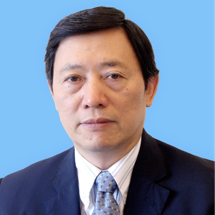
Professor Jiyao Jiang — Renji Hospital, Shanghai Jiao Tong University School of Medicine.
Chief physician and doctoral supervisor; recipient of the State Council Special Allowance and the Ministry of Health designation for Young and Middle-Aged Experts with Outstanding Contributions. Honorary Chief Expert at Renji Hospital and Director of the Shanghai Institute of Head Trauma. Former Executive Committee member of the World Federation of Neurosurgical Societies (WFNS), President of the International Neurotrauma Society (INTS), Vice President of the Chinese Medical Doctor Association’s Neurosurgery Division and Chair of the Chinese Medical Association’s Trauma Society.
He has treated more than 4,000 difficult and critically ill neurotrauma patients and led the development of 14 Chinese guidelines and expert consensuses for TBI diagnosis and treatment. As sole corresponding author he has published nine Lancet Neurology papers, including four cover articles; as first or corresponding author he has published more than 60 SCI-indexed papers, including in The Lancet Neurology and eClinicalMedicine, with over 12,000 citations. As principal contributor he received second prize in the National Science and Technology Progress Award, first prize in the Shanghai Science and Technology Progress Award and first prize in the Ministry of Education Science and Technology Progress Award, among other honours.
Professor Jiyao Jiang
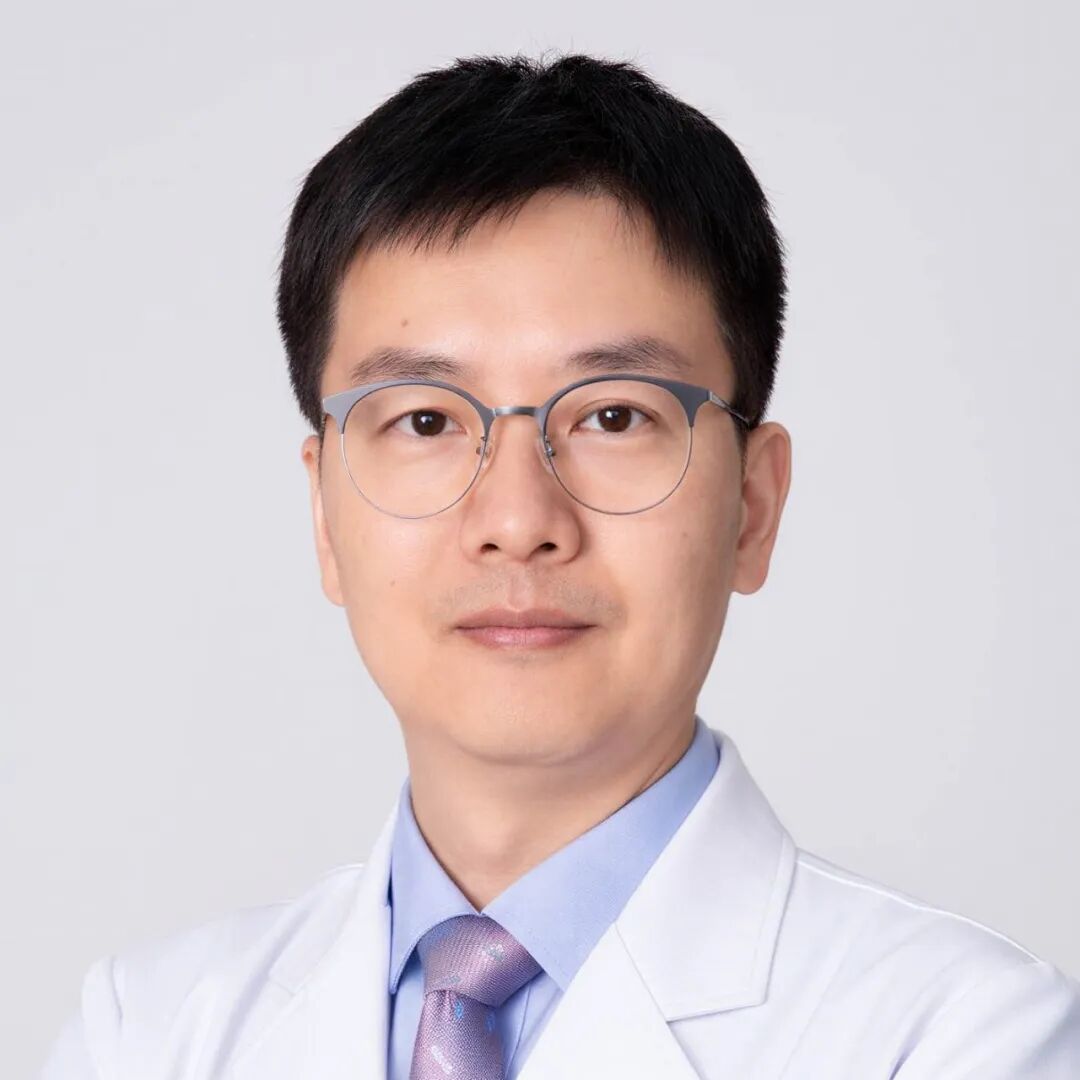
Junfeng Feng — Chief Physician, Renji Hospital, Shanghai Jiao Tong University School of Medicine.
Chief physician, research professor and doctoral supervisor; Director of Renji Neurosurgery; Deputy Director of the Shanghai Institute of Head Trauma; deputy head of the Neurocritical Care Working Group of the Chinese Medical Doctor Association’s Neurosurgery Division; committee member of the Chinese Medical Association’s Trauma Society; deputy head of the trauma working group of the Shanghai Medical Association’s Neurosurgery Society; committee member and secretary of the Shanghai Medical Doctor Association’s Neurosurgery Division; member of the WFNS Neurotrauma Committee (NTC).
His honours include the Wang Zhongcheng Chinese Young Neurosurgeon Award, the Innovation Award of the Wang Zhengguo Trauma Medicine Award, the Shanghai Silver Snake Award, Shanghai Outstanding Academic Leader (Young), Shanghai Outstanding Young Medical Talent and the inaugural National Outstanding Young Physician designation in the high-level medical talent programme.
He focuses on clinical surgery and comprehensive treatment for TBI and neurocritical illness, and studies brain protection and neural repair and regeneration. He has received five National Natural Science Foundation grants, holds 20 granted patents and has published over 30 SCI-indexed papers.
Junfeng Feng — Chief Physician
Copyright notice: Intellectual property in content published by BrainMed’s Neurosurgery News, Neurointerventional News, Brain Medical Consultation and AiBrain belongs to BrainMed, the organisers, original authors and other rights holders. Republishing, excerpting, copying, cropping or recording without permission is prohibited. Authorised use must acknowledge the source. Forwarding and sharing are welcomed.
2026年6月18日,国际顶尖学术期刊《柳叶刀神经病学》(The Lancet Neurology)(影响因子IF:54.6)以封面论文在线发表题为《急性巨大硬膜外血肿脑疝患者去骨瓣减压术疗效与安全性多中心随机对照研究》的研究论文。该临床研究由上海交通大学医学院附属仁济医院荣誉首席专家、上海市颅脑创伤研究所所长江基尧教授牵头,全国28家医院共同参与。这是全球首次对去骨瓣减压术在救治急性巨大硬膜外血肿脑疝病人的疗效和安全性开展的前瞻性随机对照研究。
仁济医院神经外科主任冯军峰介绍,在急诊脑外伤的开颅手术救治中,去除颅骨的手术(去骨瓣减压手术)广泛应用于非手术治疗无法控制的恶性颅内高压患者。国外学者已经开展了去骨瓣减压术治疗急性硬膜下血肿和脑内血肿患者疗效和安全性循证医学研究,研究成果已经写入最新版《美国颅脑创伤救治指南》。而对于急性巨大硬膜外血肿脑疝的病人来说,是否需要去骨瓣,还是采用同期骨瓣复位?目前,学界和临床上尚无高级别循证医学研究。
临床医生经验性认为:急性巨大硬膜外血肿导致脑疝瞳孔散大会导致严重脑受压脑缺血,血肿清除后容易发生继发性脑梗塞水肿,导致再次颅内压升高甚至脑疝,医生只能“二进宫”再次去骨瓣。为了避免“二进宫”,医疗团队通常会在血肿清除术后经验性行去骨瓣减压手术。基于此,2020年,仁济医院江基尧教授和冯军峰主任、深圳市第二人民医院神经外科主任医师黄贤键在深圳市启动多中心随机对照研究,全国28家医院和上海交通大学医学院临床医学研究院参加。
PREDICT-AEDH临床研究启动会(2020,深圳)
通过6年的临床研究发现:去骨瓣减压术不能降低急性巨大硬膜外血肿脑疝病人死残率、还显著增加了术后颅内再出血发生率。临床研究结果彻底改变了临床传统思维和手术方式:急性巨大硬膜外血肿脑疝患者不需要常规预防性同期行去骨瓣减压术。不做去骨瓣减压还避免了二期行颅骨修补术及其相关并发症、减轻患者再次手术精神压力和经济负担。该研究结论将改变全球颅脑创伤急性巨大硬膜外血肿脑疝患者的手术方式,向全球颅脑创伤规范化手术提供中国高级别循证医学证据。
上海交通大学医学院附属仁济医院荣誉首席专家、上海市颅脑创伤研究所所长江基尧教授为最后通讯作者,上海交通大学医学院附属仁济医院神经外科主任冯军峰为第一作者兼共同通讯作者,上海交通大学医学院附属仁济医院神经外科医师杨春、上海交通大学医学院临床医学研究院副研究员谢丽、广东省中山市中医院神经外科主任金丹、江西省赣州市人民医院神经外科主任医师蒋秋华、中国人民解放军联勤保障部队第九〇四医院神经外科主任王玉海等为论文共同第一作者。
上海交通大学医学院附属仁济医院神经外科江基尧教授和冯军峰主任
2019年以来,第十届国际神经损伤协会主席江基尧教授以独立通讯/主通讯作者在《柳叶刀神经病学》发表9篇论文,展现了仁济医院神经外科和上海市颅脑创伤研究所在世界颅脑创伤学术领域的重要影响力,也展示了我国颅脑创伤临床研究队伍在国际舞台上的重要作用。
DOI: 10.1016/S1474-4422(26)00143-2
致谢:
PREDICT-AEDH研究的所有贡献者
上海交通大学医学院附属仁济医院
江基尧、冯军峰、杨春、惠纪元、何征晖
上海交通大学医学院临床医学研究院
俞章盛、谢丽、吕文文、董仲勋
上海市东方医院
钟春龙、刘珉
深圳市第二人民医院
黄贤键、李维平、高杰
深圳市宝安区福永人民医院
张景利、张亮亮
深圳市宝安区中心医院
甄云、胡少杰
深圳市龙岗中心医院
毛捷、石小峰、黄正贤
深圳市中西医结合医院
张力、宋同均、麦浩坚
深圳市龙岗区人民医院
贾军、吴春波
深圳市松岗医院
赵万里、袁锐
中国科学院大学深圳医院
范学政、魏川江
深圳市宝安区石岩人民医院
宋彧、张岩睿
深圳市坪山区人民医院
潘锦贤、王茂明
深圳市龙华区中心医院
云强、司文、崔红伟
深圳市南山区蛇口人民医院
王志伟、许传凯
中国医科大学附属第四医院
包义君、张峰、李立帅
联勤保障部队第904医院
王玉海、杨理坤、胡帅
湖州南太湖医院
龙连圣、王伟、谢虎
南方医科大学珠江医院
王清华、李峰、谭春玉
南宁市第二人民医院
黄建荣、姚洁民、符黄德、罗凯
吉林大学第一医院
别黎、徐志洋
福建医科大学附属第一医院
方文华、上官皇城
赣州市人民医院
蒋秋华、黄乾亮
临泉县人民医院
刘金龙、邢红伟
佛山市第一人民医院禅城医院
罗东、李南生
中山市中医院
金丹、韩斌
安徽省第二人民医院
张永明、邓鹏程
南华大学附属第二医院
梁日初、王涛
鹤山市人民医院
郝华超、任振超
罗定市人民医院
唐伟泰、梁杰培
通讯作者简介
江基尧 教授
上海交通大学医学院附属仁济医院
上海交通大学医学院附属仁济医院主任医师、博士生导师
国务院特殊津贴专家、卫生部有突出贡献中青年专家。上海交通大学医学院附属仁济医院荣誉首席专家、上海市颅脑创伤研究所所长、曾担任世界神经外科医师联盟(WFNS)执委、国际神经创伤协会(INTS)主席、中国医师协会神经外科医师分会副会长、中华医学会创伤学分会前任主委
救治各类疑难危重颅脑创伤4000余例
牵头制定14个颅脑创伤诊治《中国指南》和《专家共识》
以唯一通讯作者在《Lancet Neurology》刊登论文9篇(封面论文4篇)、第一作者/通讯作者在柳叶刀子刊《Lancet Neurology》和《EClinicalMedicine》等SCI杂志发表论文60余篇。引证12000余次。第一完成人荣获国家科技进步二等奖、上海市科技进步一等奖、教育部科技进步一等奖等
江基尧 教授
冯军峰 主任医师
上海交通大学医学院附属仁济医院
主任医师、研究员、博士研究生导师
上海交通大学医学院附属仁济医院神经外科主任
上海市颅脑创伤研究所副所长
中国医师协会神经外科医师分会神经重症学组副组长
中华医学会创伤学分会委员
上海市医学会神经外科分会创伤学组副组长
上海市医师协会神经外科分会委员兼秘书
世界神经外科联合会(WFNS)颅脑创伤专家委员会(NTC)委员
获王忠诚中国神经外科青年医师奖、王正国创伤医学奖创新奖、上海市银蛇奖、上海市优秀学术带头人(青年)、上海市杰出青年医学人才、第一届医学高层次人才“国家优秀青年医师”
专注于颅脑创伤、神经重症相关临床手术及综合救治,开展脑损伤保护和神经修复再生研究。获国家自然科学基金5项、授权专利20项、发表30余篇SCI论文
冯军峰 主任医师
声明:脑医汇旗下神外资讯、神介资讯、脑医咨询、AiBrain所发表内容之知识产权为脑医汇及主办方、原作者等相关权利人所有。未经许可,禁止进行转载、摘编、复制、裁切、录制等。经许可授权使用,亦须注明来源。欢迎转发、分享。