The sixth China Intracranial Pressure Conference takes place in Fuzhou
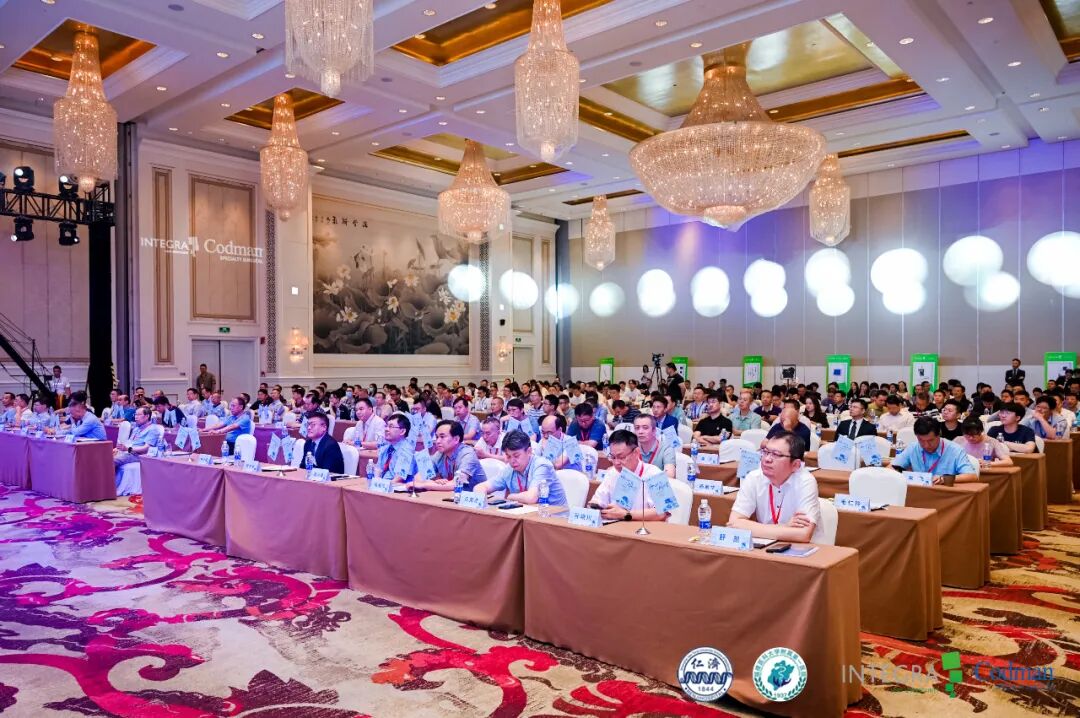
On 1 July 2023, the first day of the year’s second half, the sixth China Intracranial Pressure Conference, “Precision Monitoring, Understanding the Brain,” took place in Fuzhou. Renji Hospital, Shanghai Jiao Tong University School of Medicine; the Shanghai Institute of Head Trauma; and Integra LifeSciences (Shanghai) jointly organised it, with the First Affiliated Hospital of Fujian Medical University as host. Jiyao Jiang of Renji and Dezhi Kang of the host hospital chaired the conference. Experts from across China exchanged ideas through presentations and discussion. Jiang and Junfeng Feng participated throughout as keynote speakers, chairs, forum presenters and discussants, focusing on TBI, neurocritical care and intracranial pressure (ICP) monitoring.
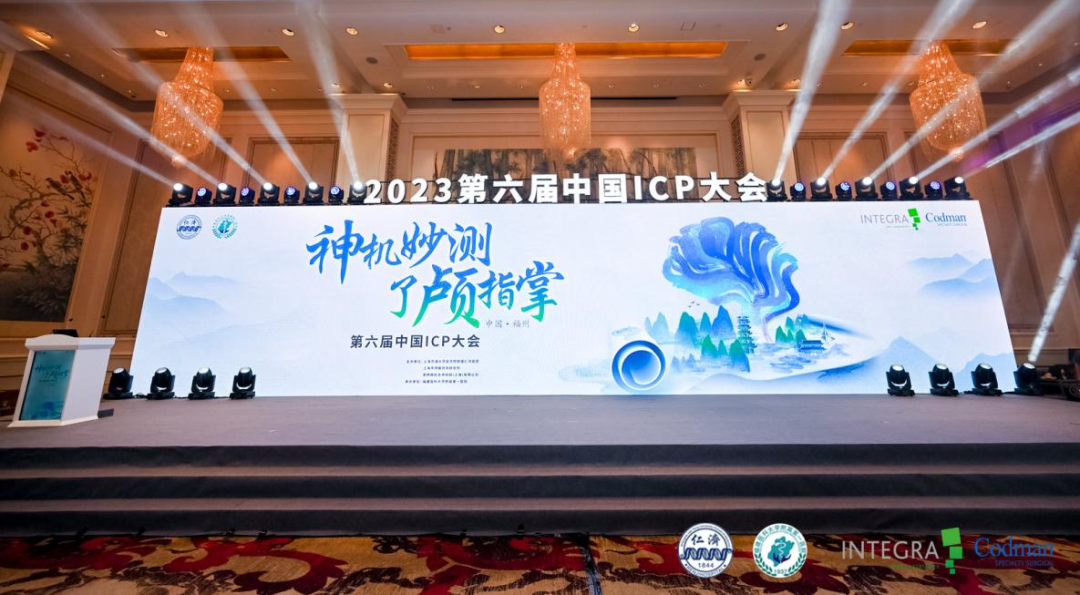
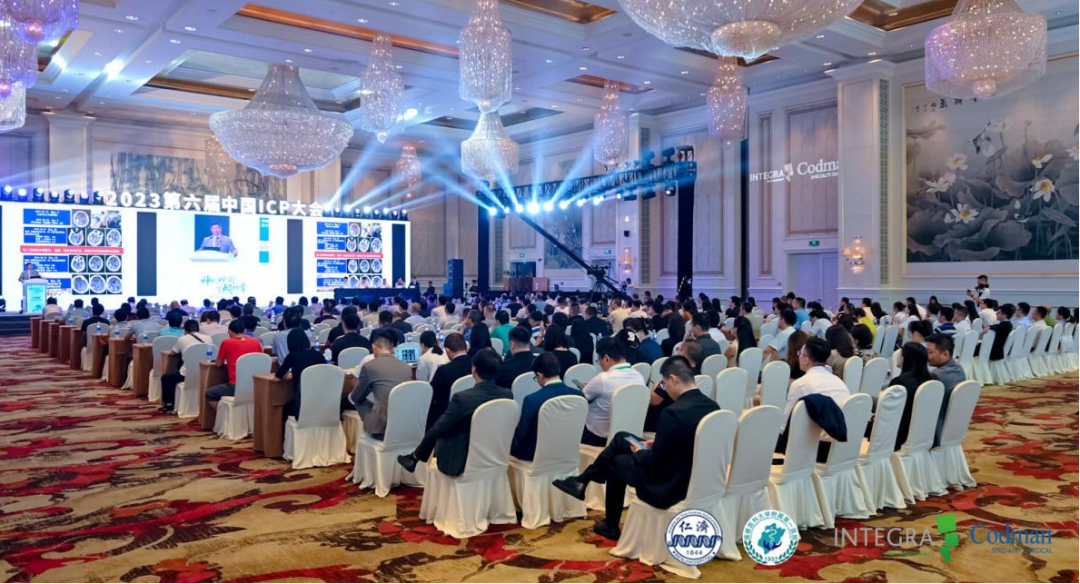

Opening ceremony
Yuanxiang Lin of the First Affiliated Hospital of Fujian Medical University chaired the opening.
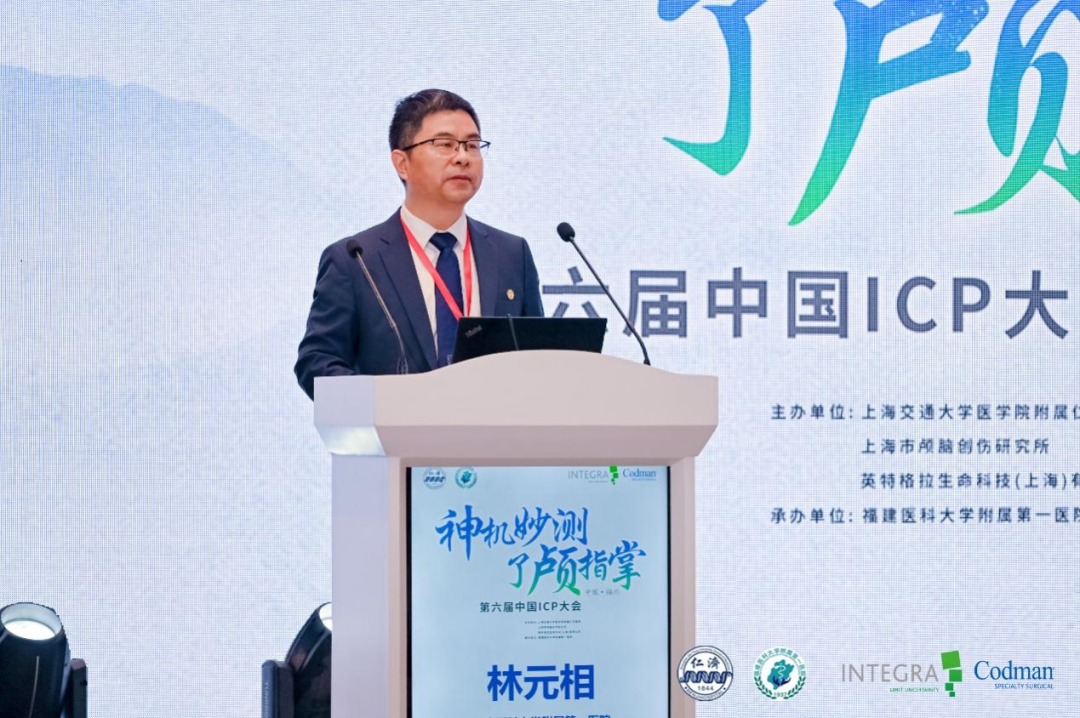
Lin welcomed neurosurgical colleagues from across China, introduced his hospital’s department and subspecialties and thanked experts who had supported its development.
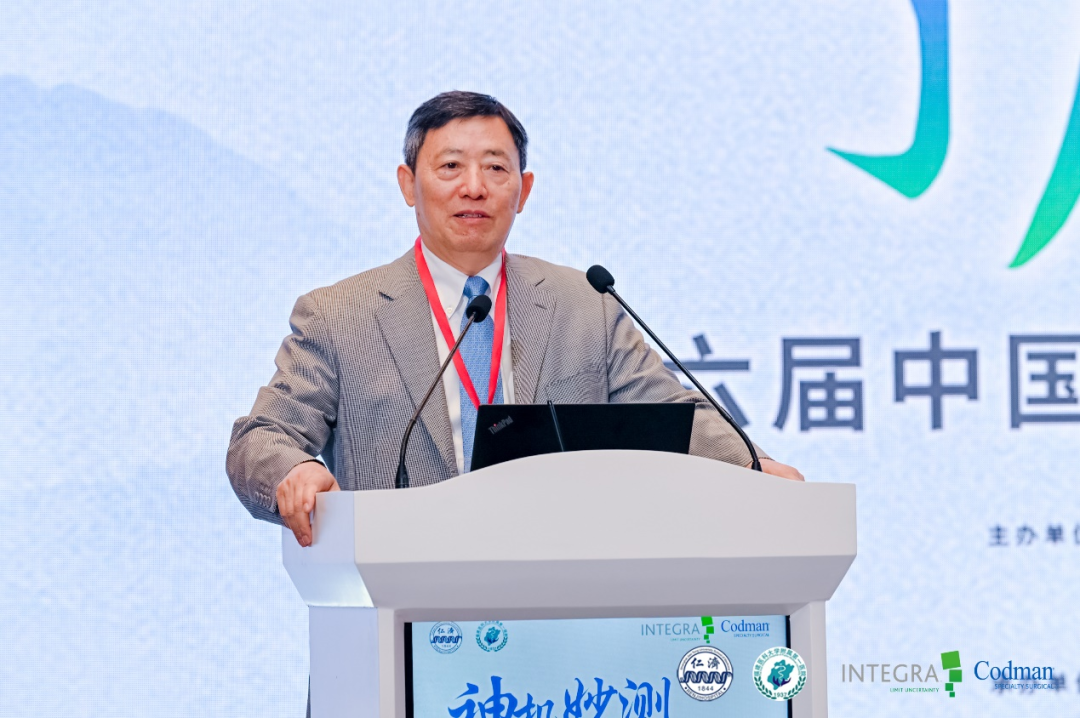
Jiyao Jiang thanked the host hospital and Integra for six months of preparations and long-term work toward precise, minimally invasive neurotrauma care. ICP monitoring is both an old and new topic. CODMAN invasive monitoring entered China only 20 years earlier, growing from no use to availability in most neurosurgical departments. Precise monitoring and Chinese large-data studies have advanced, with academic influence. Nevertheless, utilisation remains far below Europe and the US, regional development is uneven, and understanding of physiological changes behind ICP remains incomplete. Jiang called on experts to lead better understanding and standardised, precise monitoring in severe TBI, stroke and brain haemorrhage, reducing death and disability and improving quality of life.
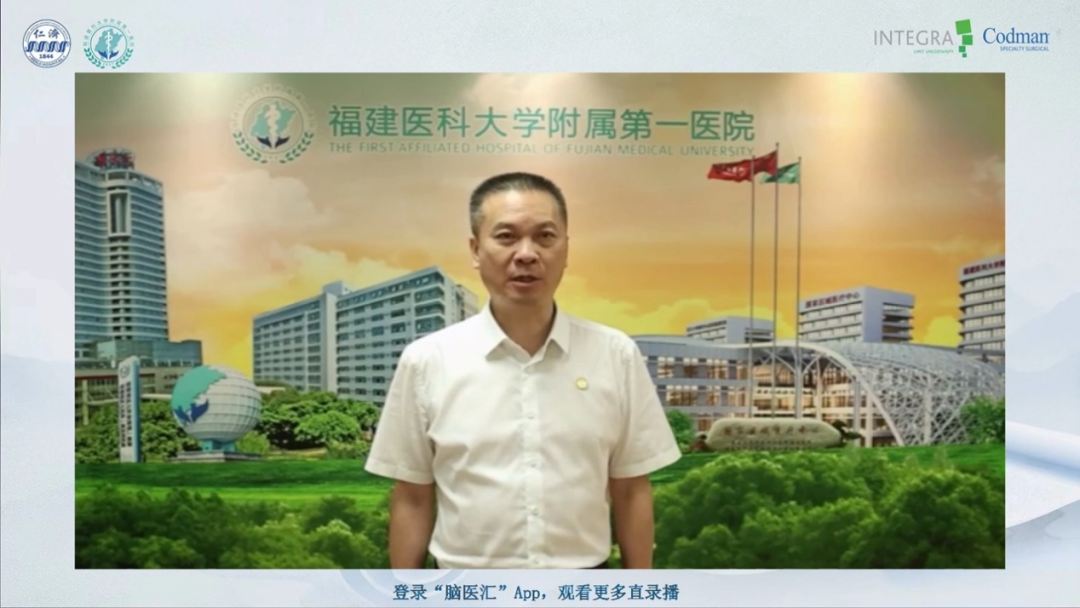
Hospital President Dezhi Kang welcomed visitors to Fuzhou and thanked the organisers. He reflected on 20 years of ICP monitoring development and the opportunity to work with national experts to advance precision neurosurgery, improve monitoring and meet clinical needs and patients’ expectations. He wished the meeting success.
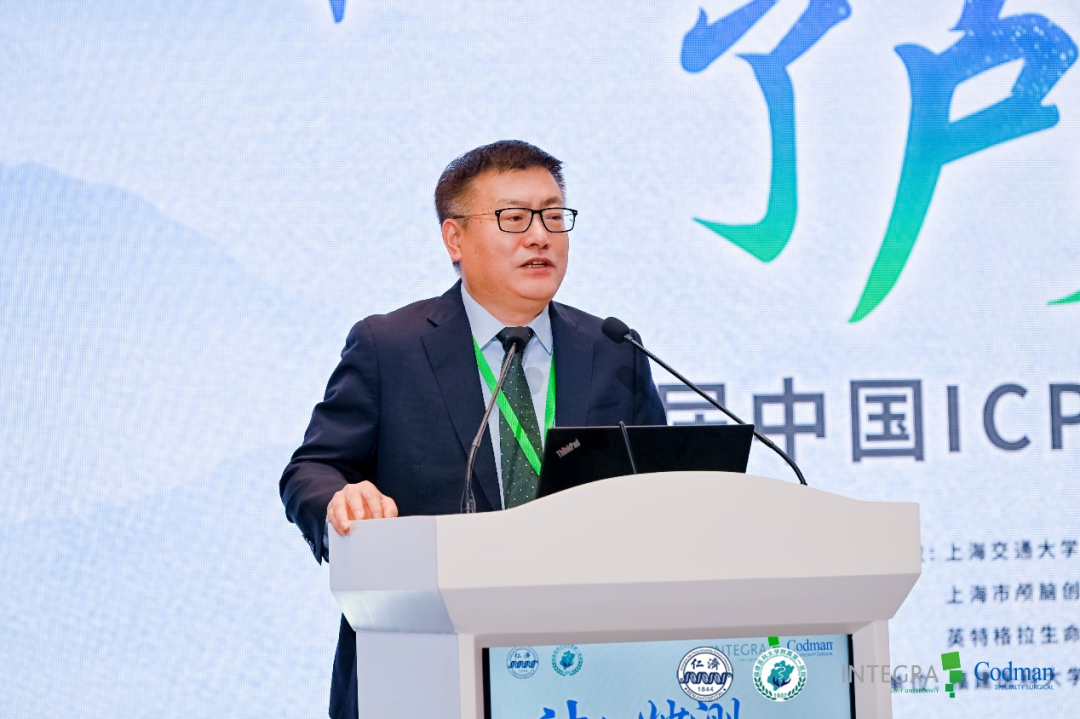
Wenjun Yan, General Manager of Integra LifeSciences (Shanghai), said INTEGRA CODMAN had worked with leading Chinese neurosurgical and critical-care teams for 20 years but the three shortcomings Jiang identified remained. The neurosurgery-focused company intended to continue supporting research, patient care and technology. It planned new monitoring and management technologies and had launched projects to manufacture ICP products in China, with long-term commitment to the market and collaboration with Chinese experts.
Establishment of the ISTI Kunpeng Academy for Precision ICP Research
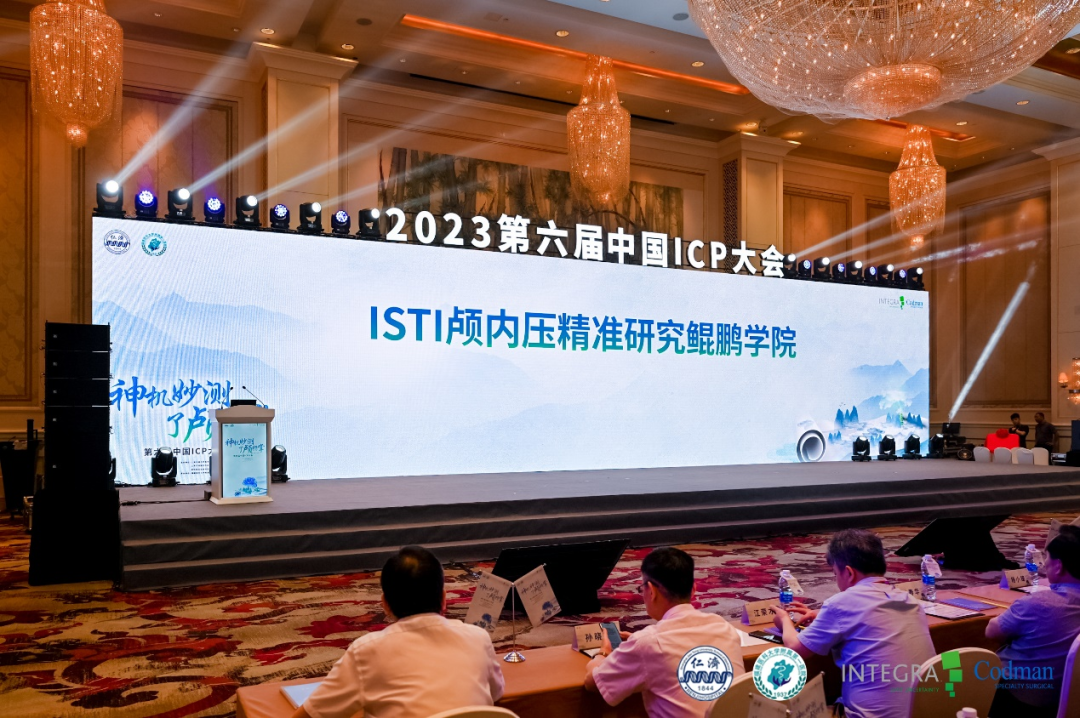
Yan thanked neurocritical care experts for treating critically ill patients. ICP monitoring is crucial in emergency care, and precise research and training are essential to improve diagnosis and treatment. The academy aims to strengthen technical capability and knowledge and develop neurocritical care. Multiparameter monitoring will support research and training, providing frontline clinicians with methods to assess pressure promptly and select suitable care. International and Chinese experts, scholars and leading clinicians will give lectures, practical guidance and research updates. Through precise monitoring and multiparameter biochemical research, it aims to develop an international perspective and investigate what lies behind the pressure numbers, pursuing broad academic horizons like the mythical Kunpeng.
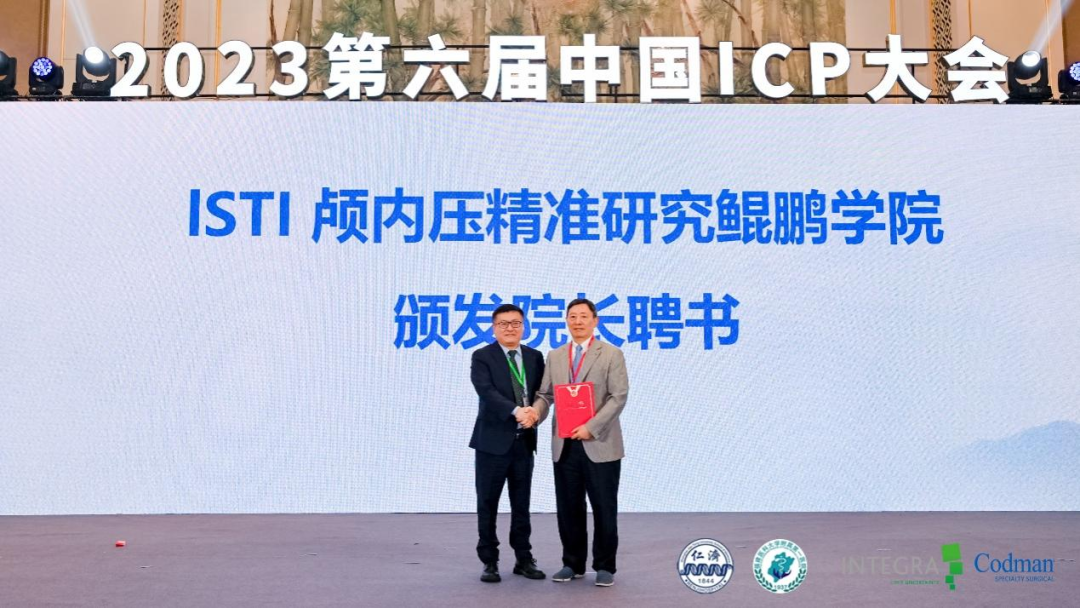
Jiyao Jiang, Renji neurosurgical expert and Director of the Shanghai Institute of Head Trauma, was appointed academy director. The partners aim to provide safer, more effective monitoring. Jiang announced its establishment and, with Yan, presented mentor certificates.
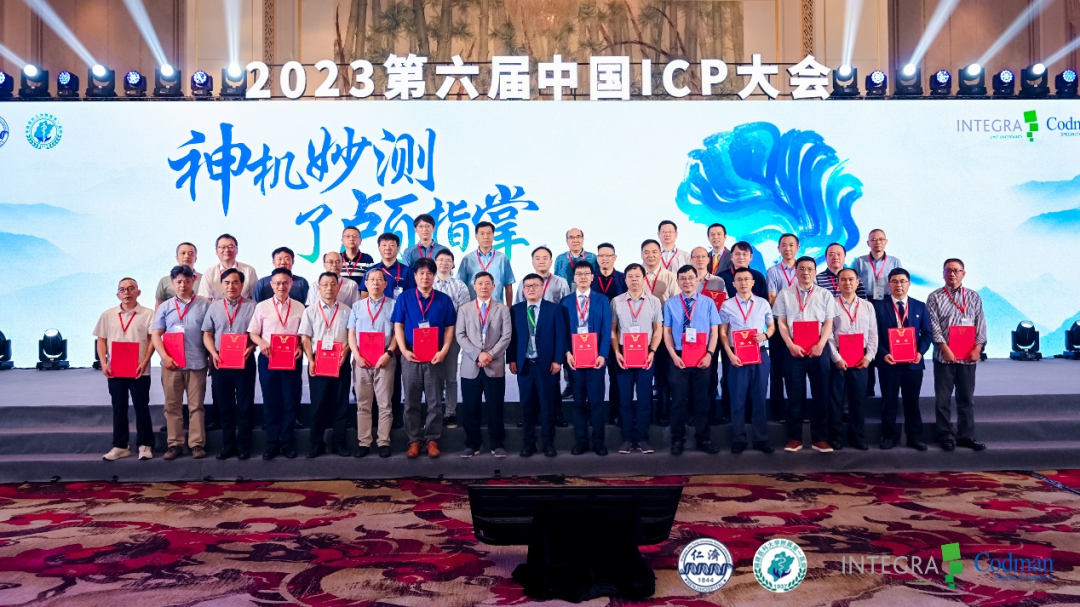
Mentors, in the original Chinese surname-stroke order: Weihong Wang, Qinghua Wang, Pengcheng Wang, Renling Mao, Wenhua Fang, Xilong Yin, Guangzhi Shi, Hua Feng, Hengli Tian, Junfeng Feng, Weiming Liu, Jinfang Liu, Rongcai Jiang, Xiaochuan Sun, Hao Li, Rongjun Qian, Xiaofeng Yang, Chaohua Yang, Binghui Qiu, Fei Song, Yongming Zhang, Ruijian Zhang, Nu Zhang, Wenjin Chen, Xiaolei Chen, Hongguang Chen, Yuanxiang Lin, Yan Zhou, Chunhua Hang, Shaowu Ou, Jin Hu, Shangwei Hu, Tao Qian, Naikang Gao, Guoyi Gao, Liang Gao, Qibing Huang, Guodong Huang, Jinzhong Huang, Xianjian Huang, Hongsheng Liang, Guoqiang Han, Kai Shu, Junji Wei and Xiangpin Wei.
Establishment of the ISTI idiopathic normal-pressure hydrocephalus collaborative centre
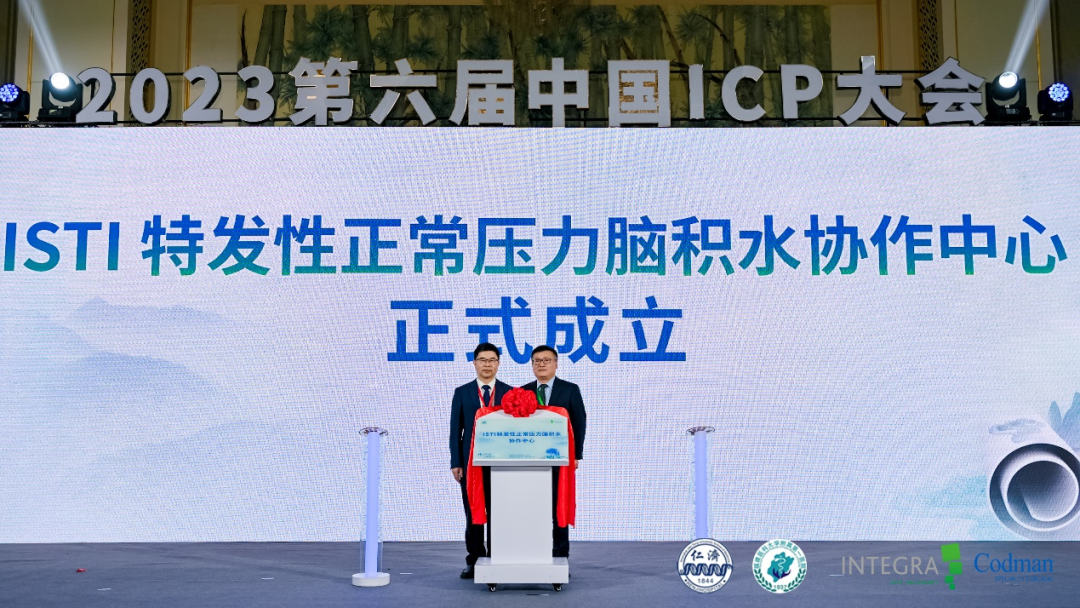
Yuanxiang Lin explained that normal-pressure hydrocephalus has diverse causes and presentations and involves medicine, surgery, rehabilitation, geriatrics and imaging. Slow progression often delays diagnosis and appropriate treatment. Understanding mechanisms and best practice requires interdisciplinary cooperation. A new partnership with Integra will use its products and technical resources to support clinical and experimental research, joint development and patient care.
Yan said Integra hoped to increase Chinese awareness of this disease, promote standardised treatment through collaboration with the host hospital, improve patient and family understanding and learn how clinical needs should guide products and technologies.
Flag handover for the seventh China ICP Conference
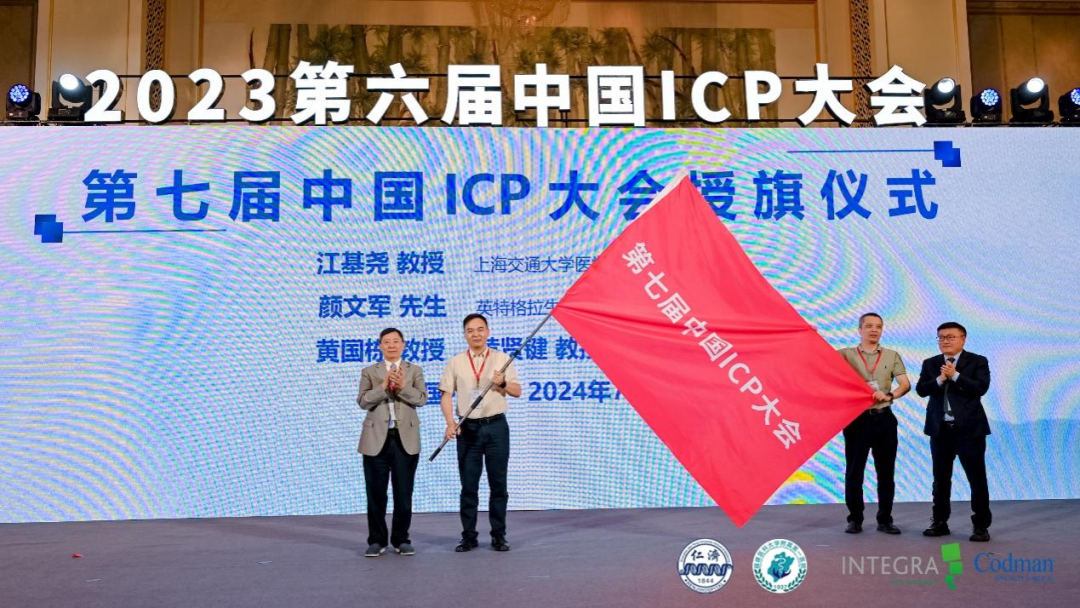
With Jiang witnessing, the flag was handed over for the next ICP conference, planned for Shenzhen in July 2024.
Main venue: session one
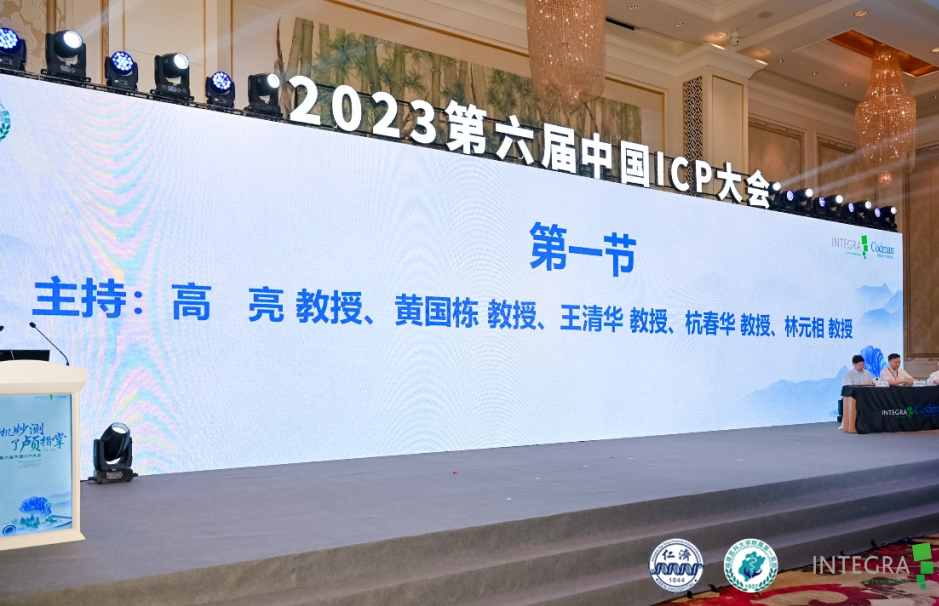
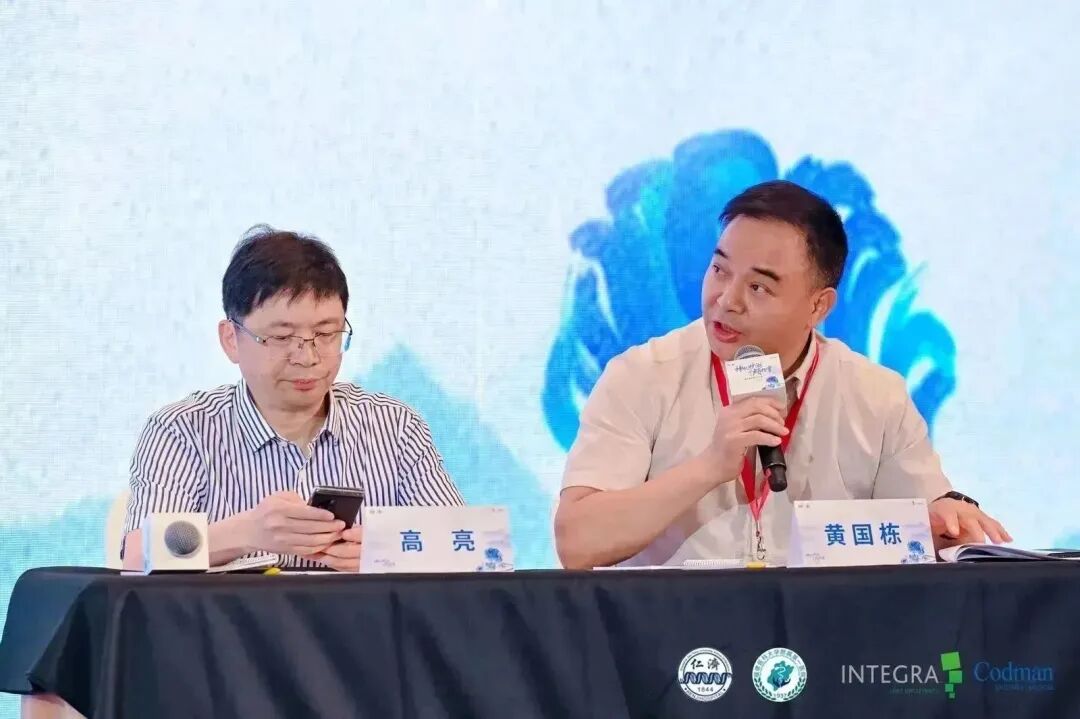
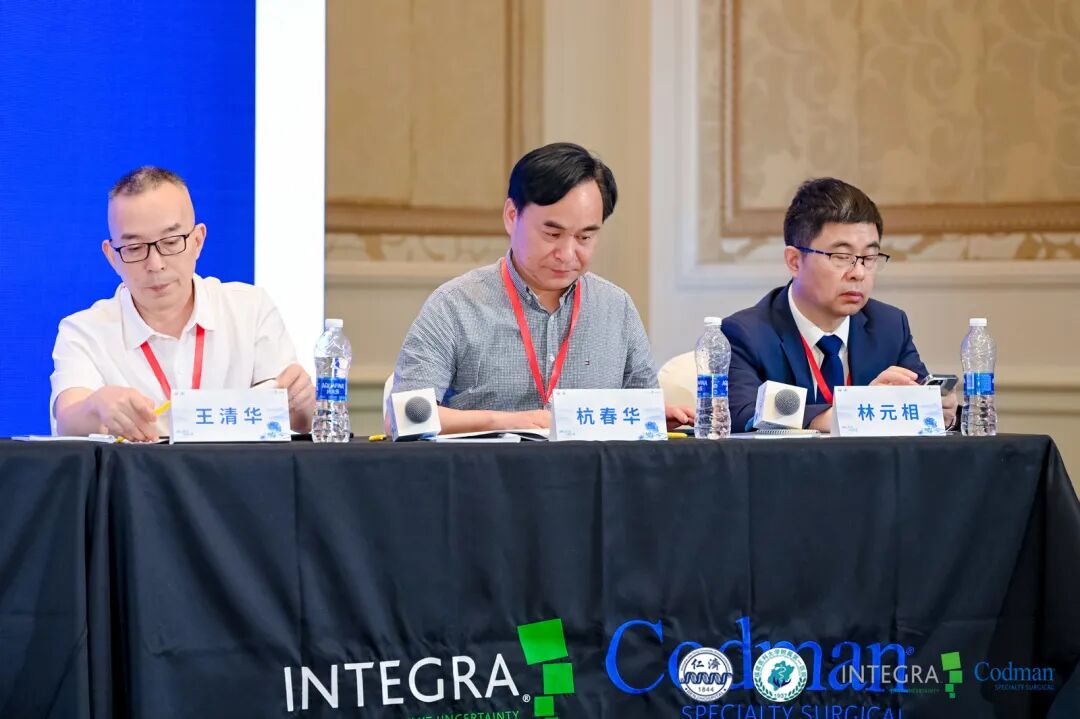
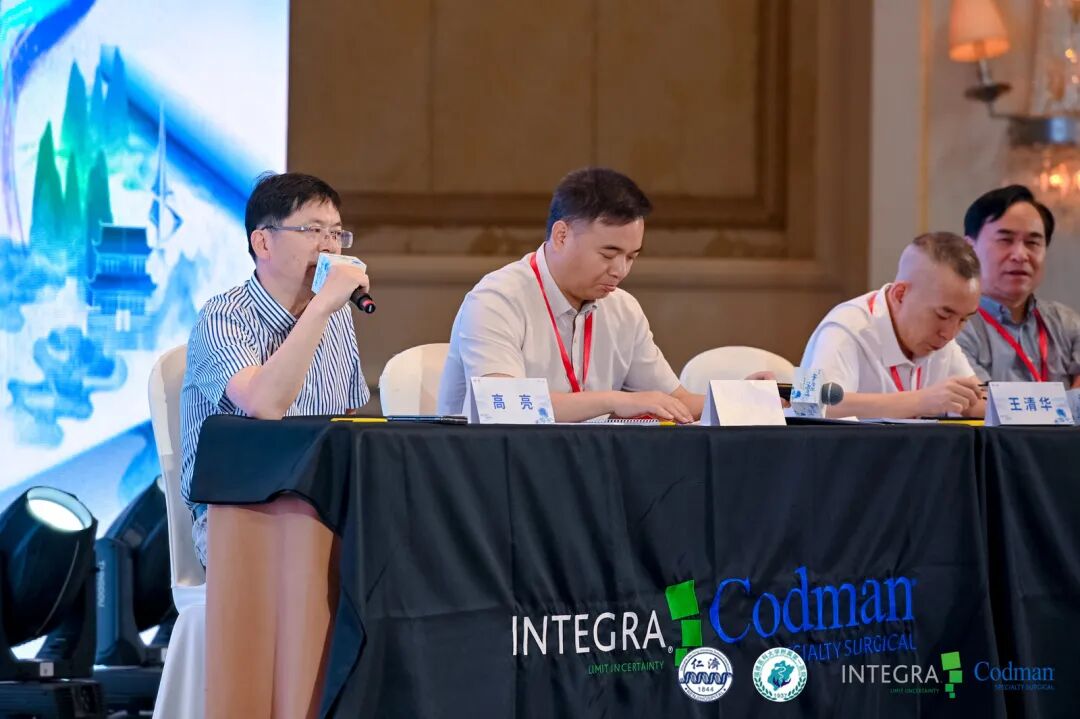
Swipe left for further photographs.
Chairs: Liang Gao, Shanghai Tenth People’s Hospital, Tongji University; Guodong Huang, First Affiliated Hospital of Shenzhen University; Qinghua Wang, Zhujiang Hospital, Southern Medical University; Chunhua Hang, Nanjing Drum Tower Hospital, Nanjing University Medical School; and Yuanxiang Lin, First Affiliated Hospital of Fujian Medical University.
1. Strategies and techniques for traumatic intracranial hypertension
Jiyao Jiang, Renji Hospital, Shanghai Jiao Tong University.
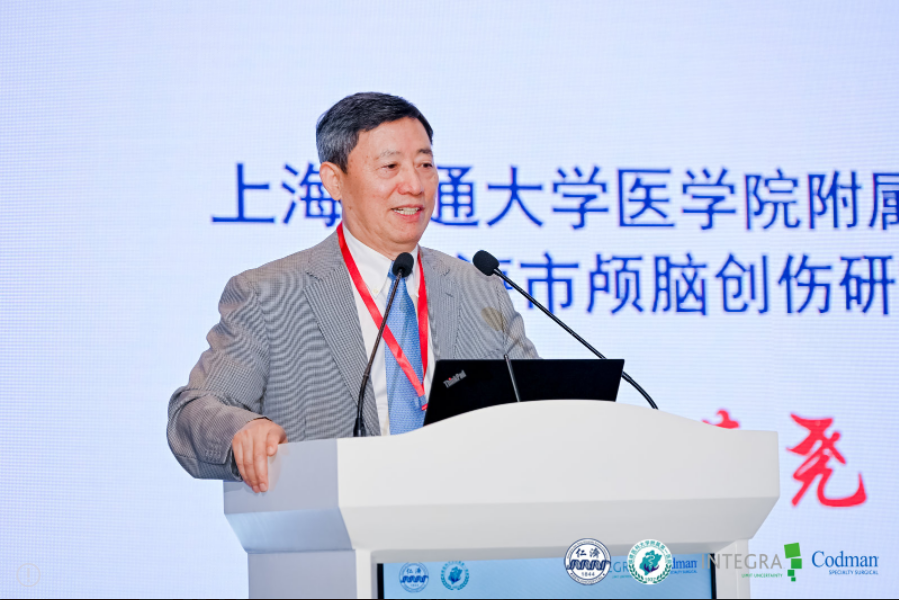
Jiang explained that clinicians commonly manage intracranial hypertension. The difficulty is not a removable haematoma but contusion and oedema. The classical Medical College of Virginia tiered approach includes drainage, osmotherapy, cooling and decompressive craniectomy; later literature uses these methods, but applying them is not simple.
(1) External CSF drainage with ICP monitoring is important. The lecture warned against continuous lumbar drainage during intracranial hypertension, emphasised control of rate and volume and noted that subcutaneous tunnelling greatly reduces infection opportunities.
(2) Hyperosmolar therapy: guidelines do not identify a specific agent proven to improve TBI outcomes. Jiang described ICP above 20 mmHg as an intervention indication, dosing according to pressure, choosing agents according to sodium and paying attention to a colloid/crystalloid ratio of 3–4:1.
(3) Hypothermia: the lecture gave ICP above 25 mmHg as an indication, with significant effects above 30 mmHg, prolonged treatment and rewarming after pressure normalisation. Severe cases may require combined osmotherapy and decompression. Possible complications mean cooling requires a suitable NICU and specialist medical and nursing team.
(4) Decompressive craniectomy: standardisation matters. Modest pressure elevation may need only osmotherapy. The stated indications included severe TBI, CT mass effect from haemorrhagic contusion and ICP above 25 mmHg, using standard large-flap decompression plus monitoring.
In Jiang’s conclusion, drainage and osmotherapy are foundational, hypothermia and sedation are effective measures, decompression is a final measure, and individualised precision care is the best overall strategy.
2. ICP monitoring and management in aneurysmal subarachnoid haemorrhage
Jin Hu, Huashan Hospital, Fudan University.
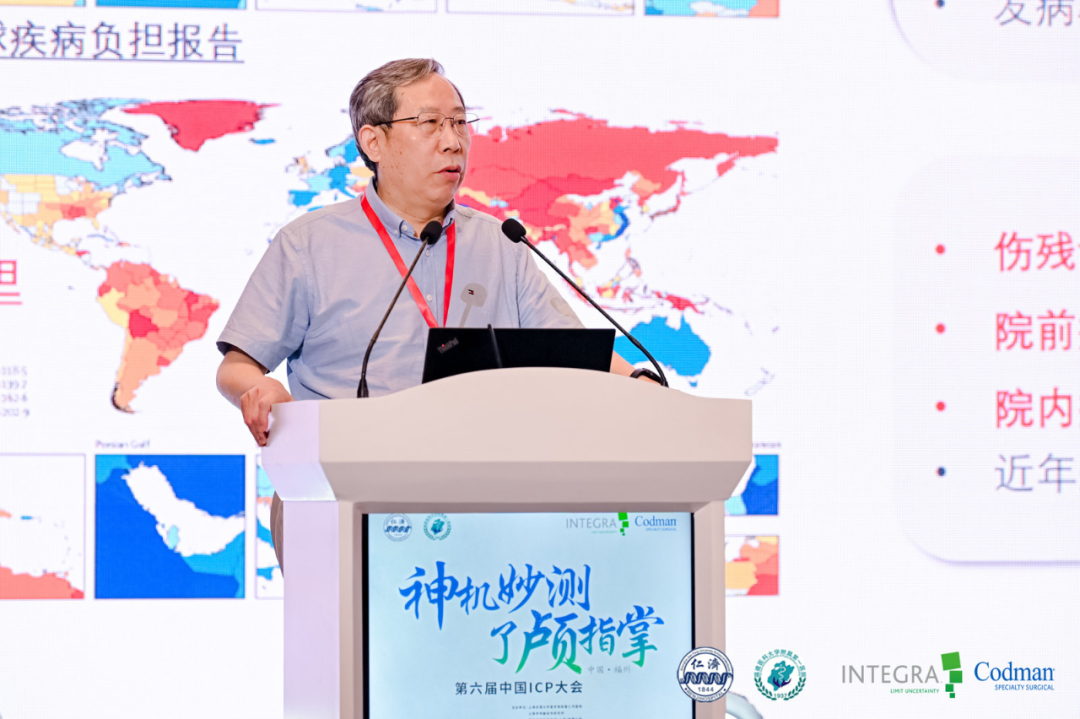
Aneurysmal SAH remains a major neurocritical condition. Challenges include early rebleeding, hydrocephalus and seizures, later vasospasm and delayed cerebral ischaemia, and chronic disorders. Acute events and complications can elevate ICP and cause secondary injury. Recent work focuses on detecting physiological changes early and optimising management. Literature reports pressure elevation in around 71% after aSAH, associated with poor outcomes. Specific monitoring and management guidelines are lacking; TBI guidance is often used despite marked pathophysiological differences.
Early mechanisms include sudden entry of blood into the subarachnoid space, cytotoxic oedema, obstructive or communicating hydrocephalus and diffuse swelling. Subacute mechanisms include rebleeding, early ischaemic lesions and inadequate perfusion; later mechanisms include persistent hydrocephalus and haemorrhage or oedema mass effect. Causes include communicating/obstructive hydrocephalus (30%), haemorrhage, early or late diffuse oedema, subdural haematoma (5%), infarction (2–3%) and extracranial factors. Monitoring remains debated without specific guidance.
Hu listed indications including GCS ≤8, neurological deterioration, acute hydrocephalus, early or delayed oedema, intracranial mass effect and need for perioperative monitoring or EVD. Catheters may be placed before aneurysm embolisation or when intraventricular blood requires intraventricular thrombolysis. While an ICP probe is placed on the more affected side, EVD generally uses the ventricle with less blood to avoid obstruction. Probes with CSF drainage are often used. Non-invasive approaches such as optic nerve sheath diameter ultrasound and TCD are developing, but reliability and utility remain uncertain.
Research suggests a lower ICP intervention target may be needed than in TBI. Absolute pressure may not be the best measure; accumulated ICP burden incorporating duration and magnitude may better quantify exposure. Current evidence more strongly supports CPP-oriented management around 70 mmHg for vasospasm and inadequate perfusion. Drainage controversies include continuous versus intermittent use, clamp trials versus early removal, intraventricular thrombolysis and substitution with lumbar drainage. Addressing underlying mechanisms may improve outcomes, but evidence is insufficient for firm recommendations and further aSAH research is needed.
3. Multimodal monitoring-guided management of severe TBI
Xiaofeng Yang, First Affiliated Hospital of Zhejiang University.
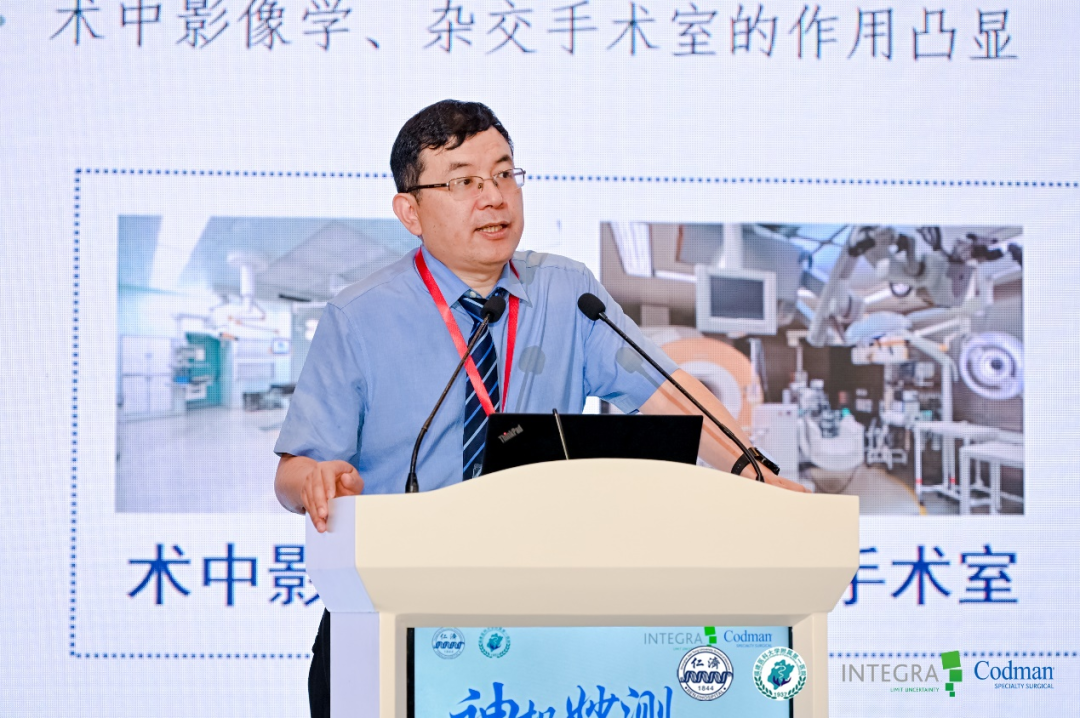
Brain multimodal monitoring (MMM) includes CT/MRI, TCD, ICP, EEG, blood flow and oxygen measurements to observe physiology, assess function and support precise treatment. It is a developing clinical direction with existing applications. Intraoperative imaging, hybrid operating rooms and mobile CT extend imaging use. With experienced operators, neurocritical ultrasound helps assess perfusion, vascular compliance and pressure indirectly and is important in rapid bedside assessment.
Non-invasive ICP approaches still require validation; invasive ventricular monitoring remains the gold standard and can provide treatment. As the current MMM approach directly entering the skull, it requires complication prevention; good operative and postoperative management minimises risk. Imaging-based blood-flow assessment has limitations for continuous real-time monitoring, while CPP thresholds for invasive monitoring remain debated. Brain oxygen monitoring is spreading in anaesthesia and intensive care and complements flow measurement, but its clinical evidence needs further investigation. All techniques have value and limitations; rational integration enables more precise decisions. Severe TBI patients should receive MMM when resources permit, with a team specialising in severe injury for care beyond surgery.
4. Intracranial compliance in acute brain injury
Guoyi Gao, Beijing Tiantan Hospital, Capital Medical University.
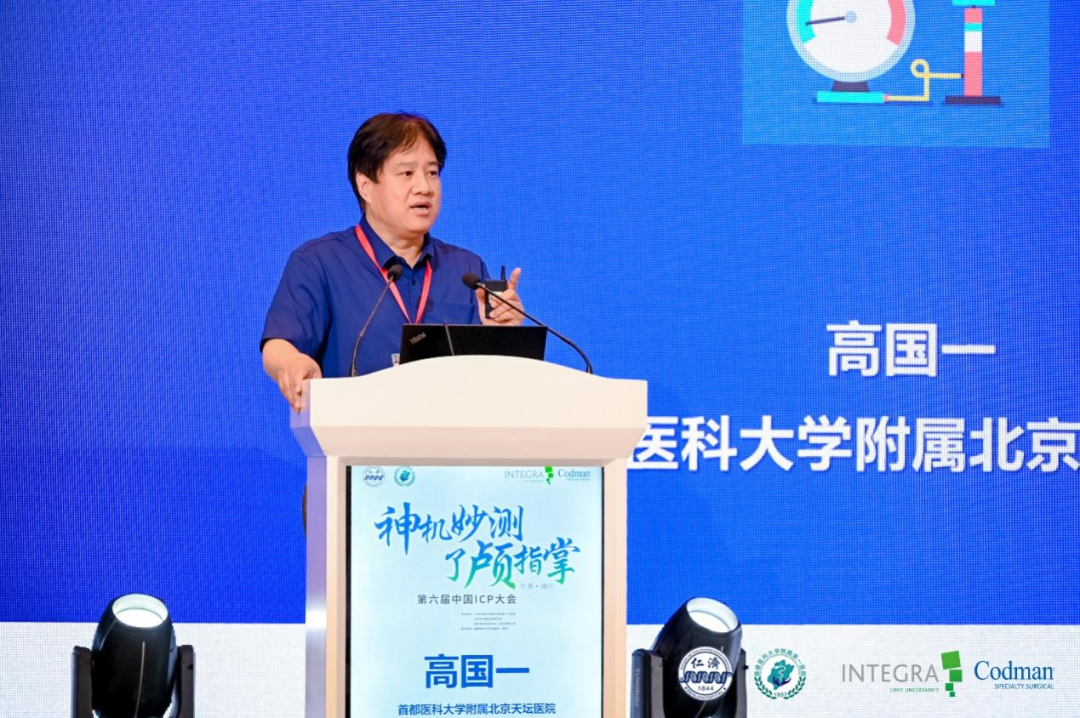
Gao discussed concepts, components, monitoring and management. Compliance describes how readily an elastic structure deforms under force, relating intracranial pressure and volume and reflecting changes before pressure rises. It involves venous, arterial and CSF compartments as a functional relationship rather than a mathematical sum. It relates to blood-flow regulation, arterial smooth muscle tone, carbon dioxide, tissue water and metabolism and spans many aspects of neurocritical care.
Monitoring includes: (1) ICP pulse amplitude, interpreted as a pressure–volume response with an anatomical basis; (2) waveform upslope, which with amplitude mainly reflects cerebrovascular regulation; and (3) RAP, reflecting compensatory reserve and regulation of CBF/CBV. Management discussed: surgery as the first measure; barbiturate coma, which Gao described as effective despite an unclear mechanism; head elevation around 16–17 degrees to improve venous return and pressure/compliance; blood-pressure control that may stabilise compliance without substantially changing absolute ICP; vascular autoregulation through hypothermia; and CSF drainage improving RAP.
5. Three “S” perspectives on ICP monitoring
Junfeng Feng, Renji Hospital, Shanghai Jiao Tong University School of Medicine.
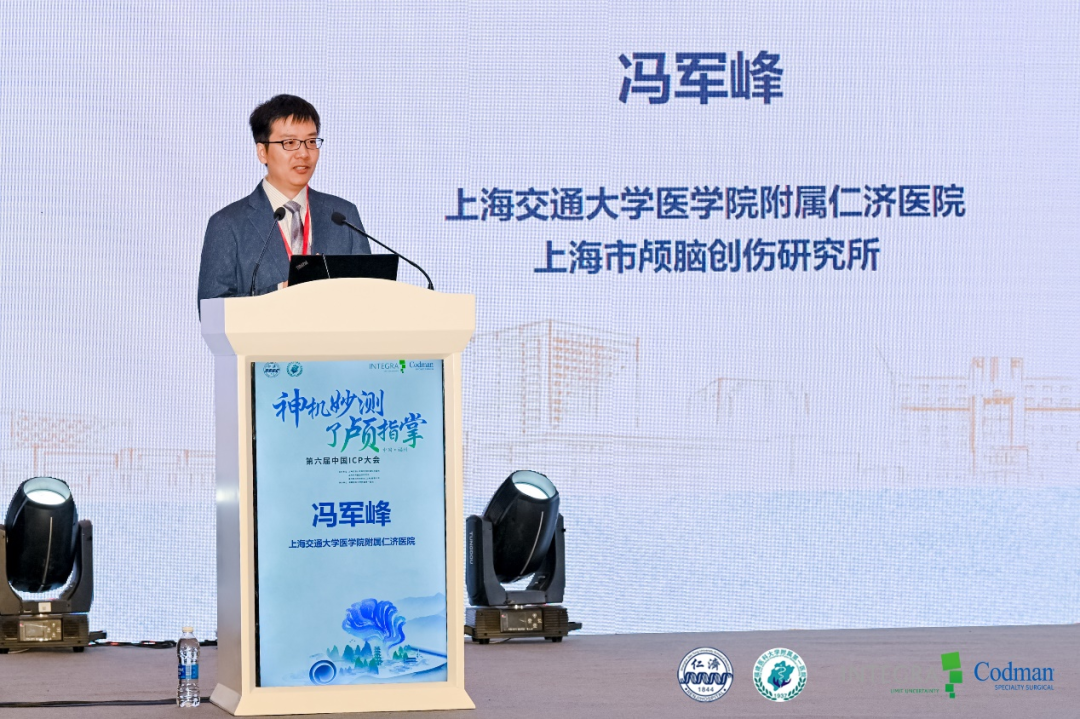
The three terms are Skill, Strategy and Scene. Skill concerns operative technique. Difficulties, including compressed, displaced or distorted ventricular targets, may partly limit uptake. Young clinicians should improve insertion success through careful preoperative CT assessment, confidence, repeated practice, observation, feedback and reflection on unexpected problems.
Strategy means integrating monitoring into the whole care pathway. Pre-decompression catheter placement may help anticipate brain bulging, assess pressure and choose the operation. ICU monitoring detects changes, contributes to decisions on reoperation and guides medicines and cooling.
Scene is the real setting in which a medical and nursing team works. Under different resource conditions, clinicians must understand monitoring-guided care and use available facilities appropriately. As equipment improves, the balance between operative and critical-care stages can differ; contextual thinking helps optimise resources.
Main venue: session two
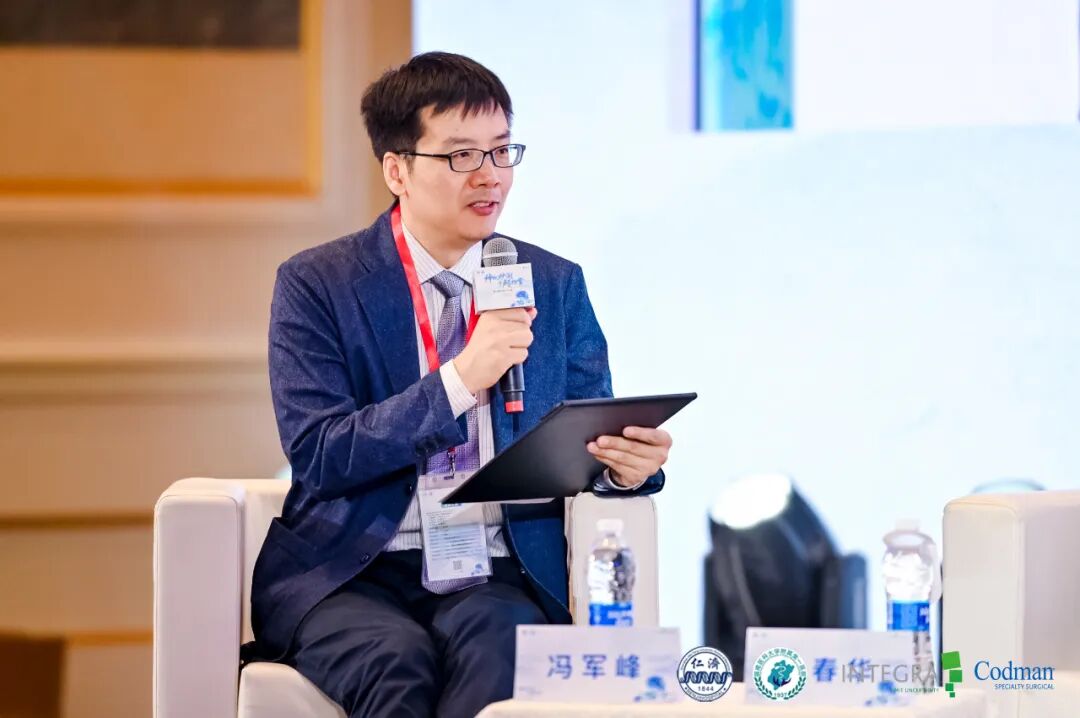
Chaired by Junfeng Feng of Renji Hospital.
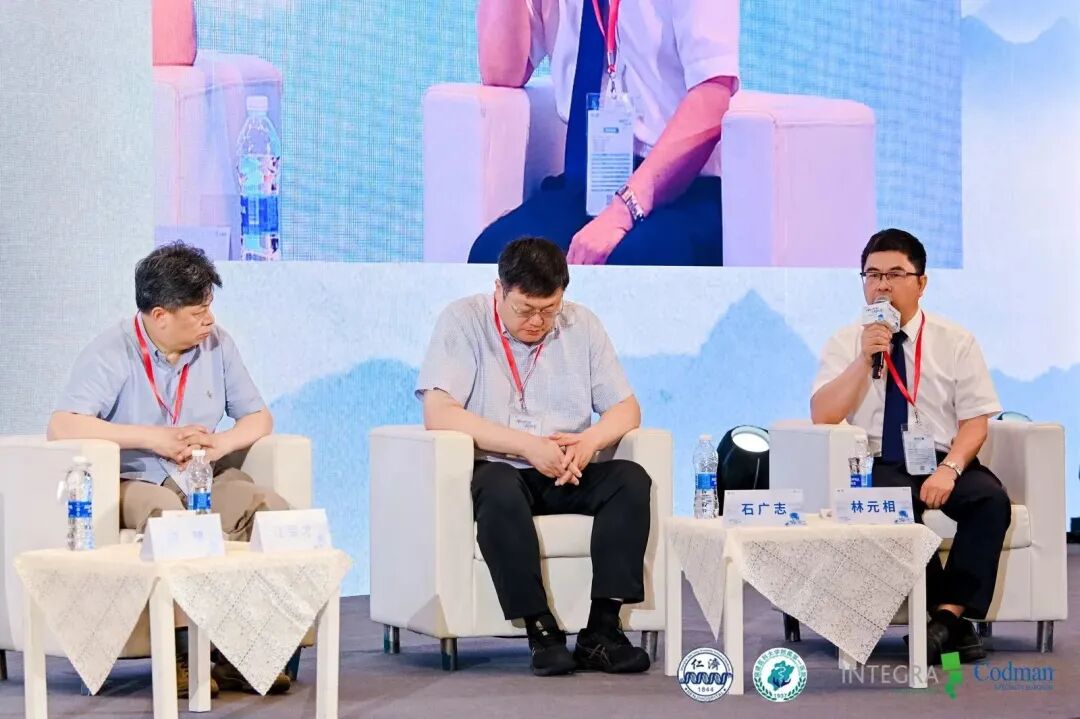
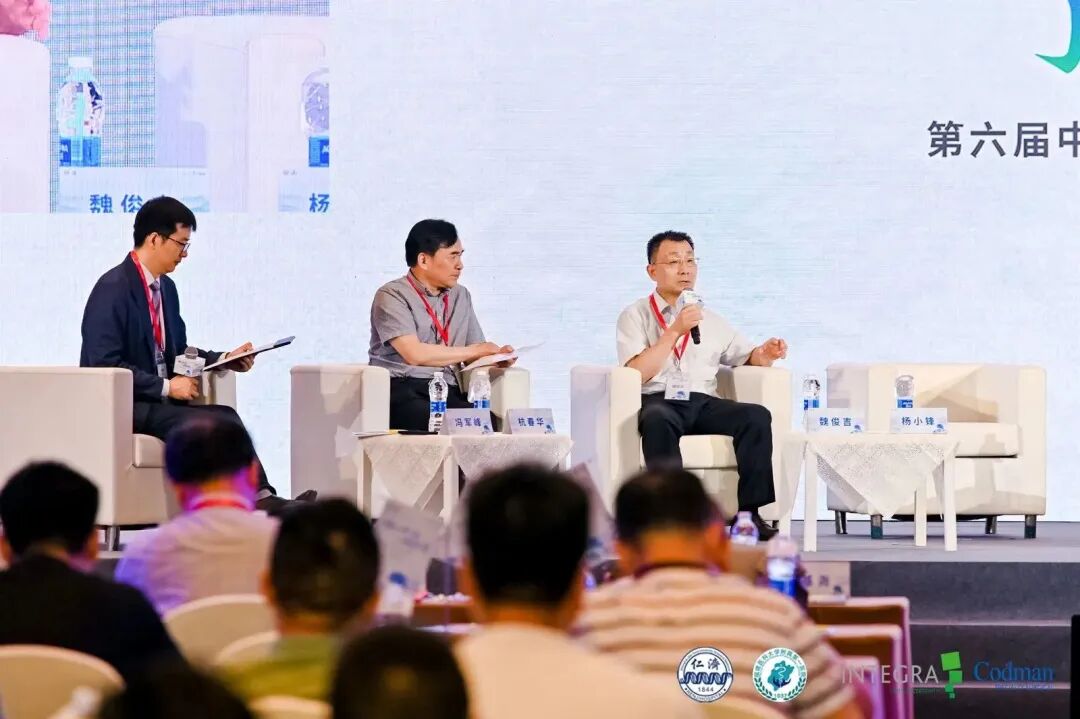
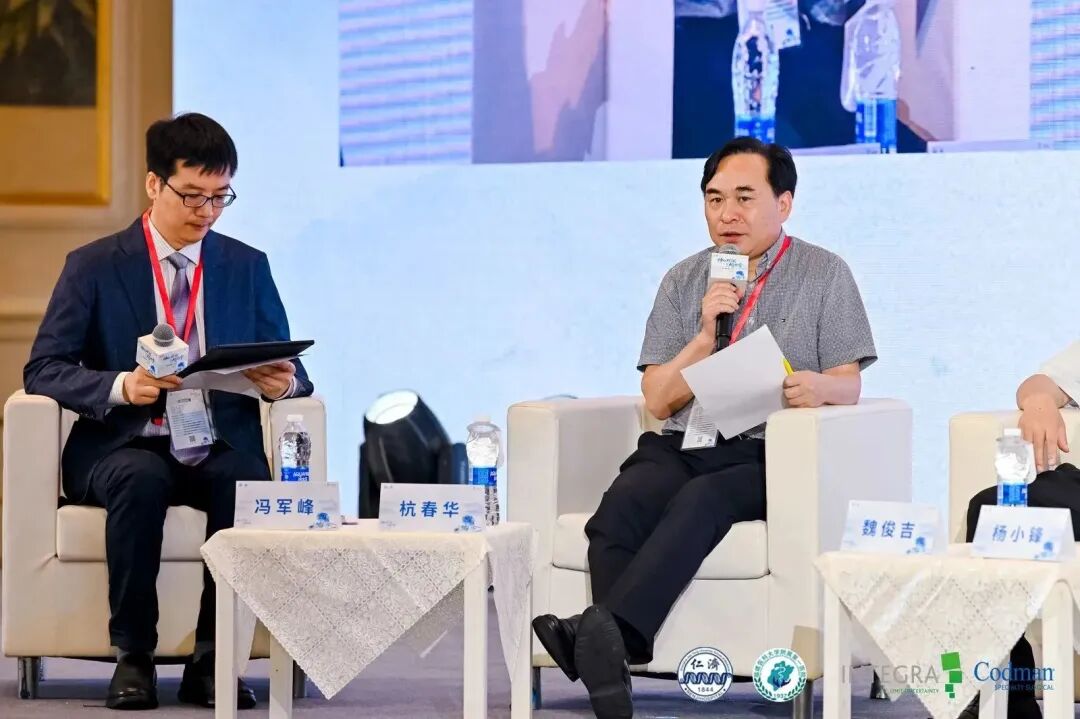
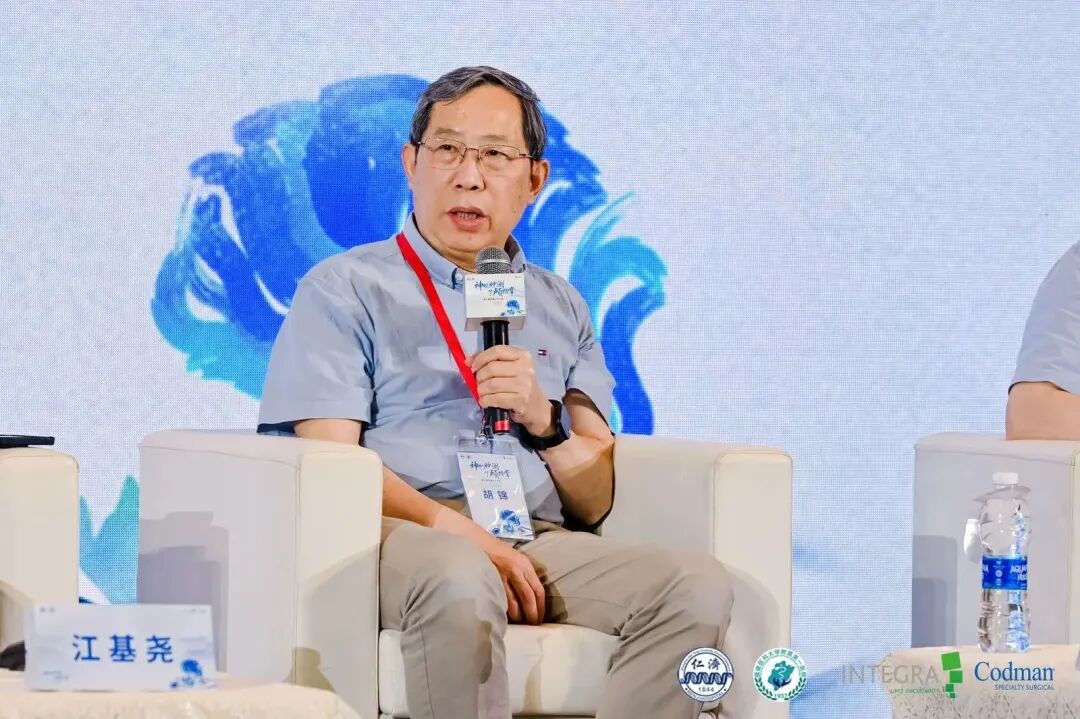
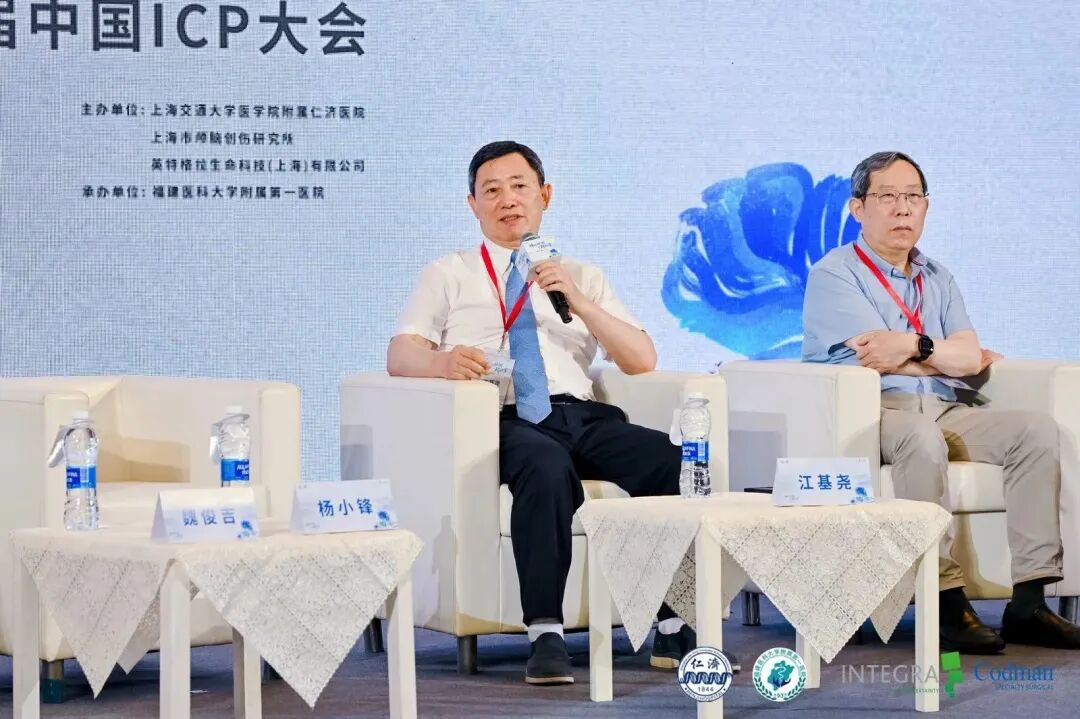
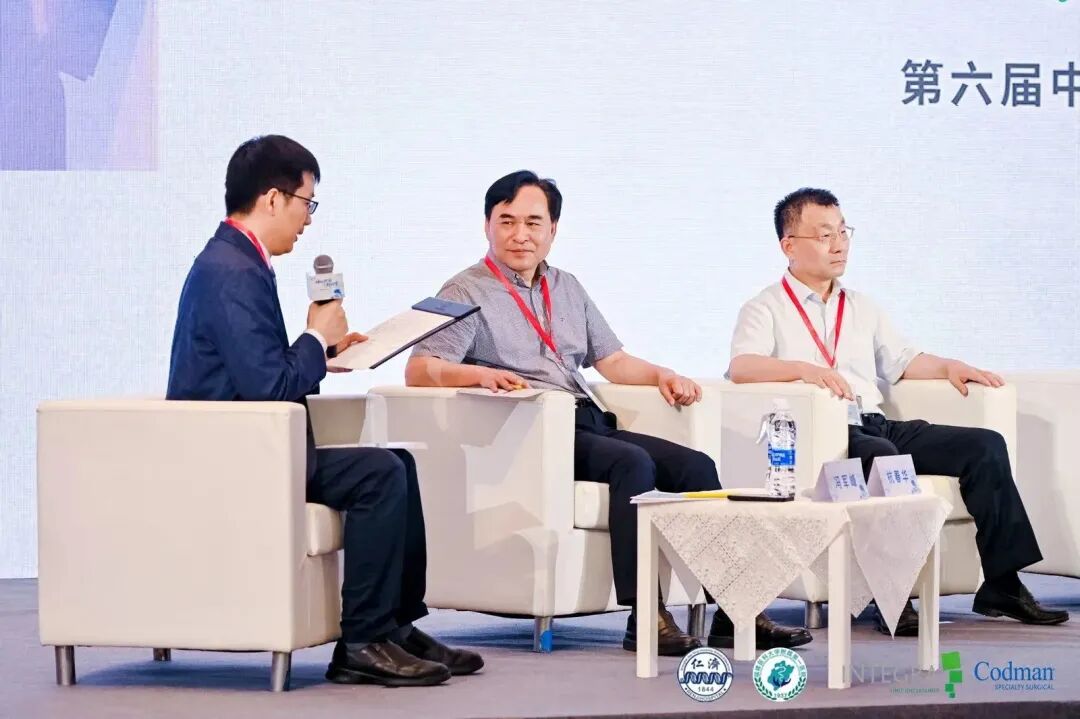
Swipe left for more photographs.
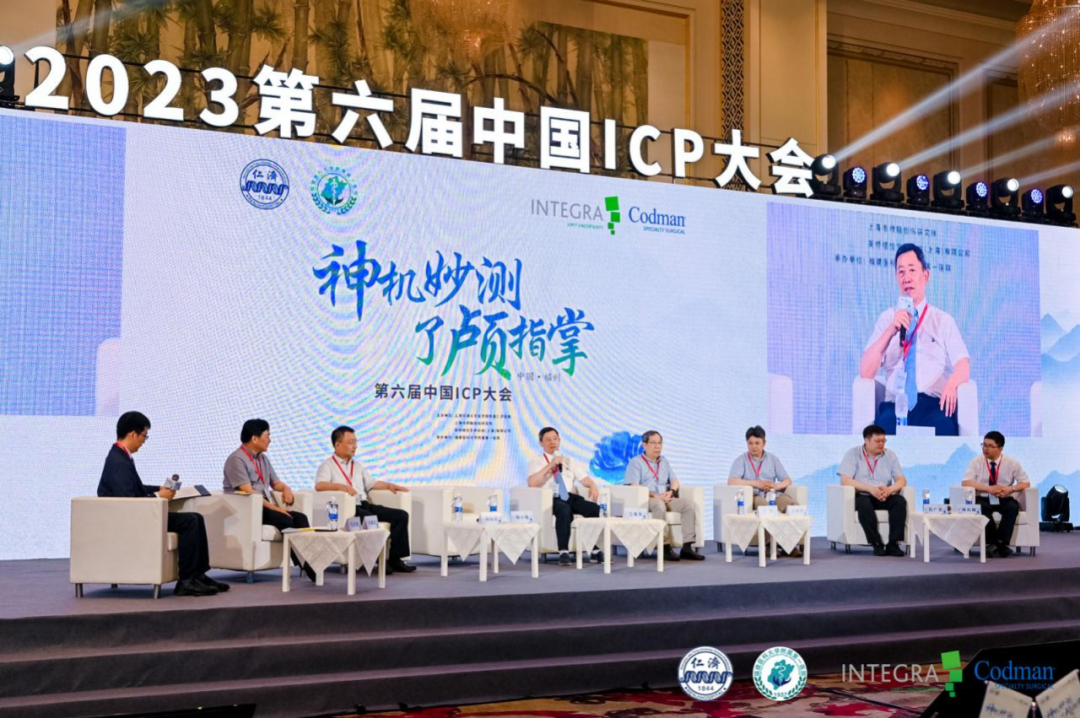
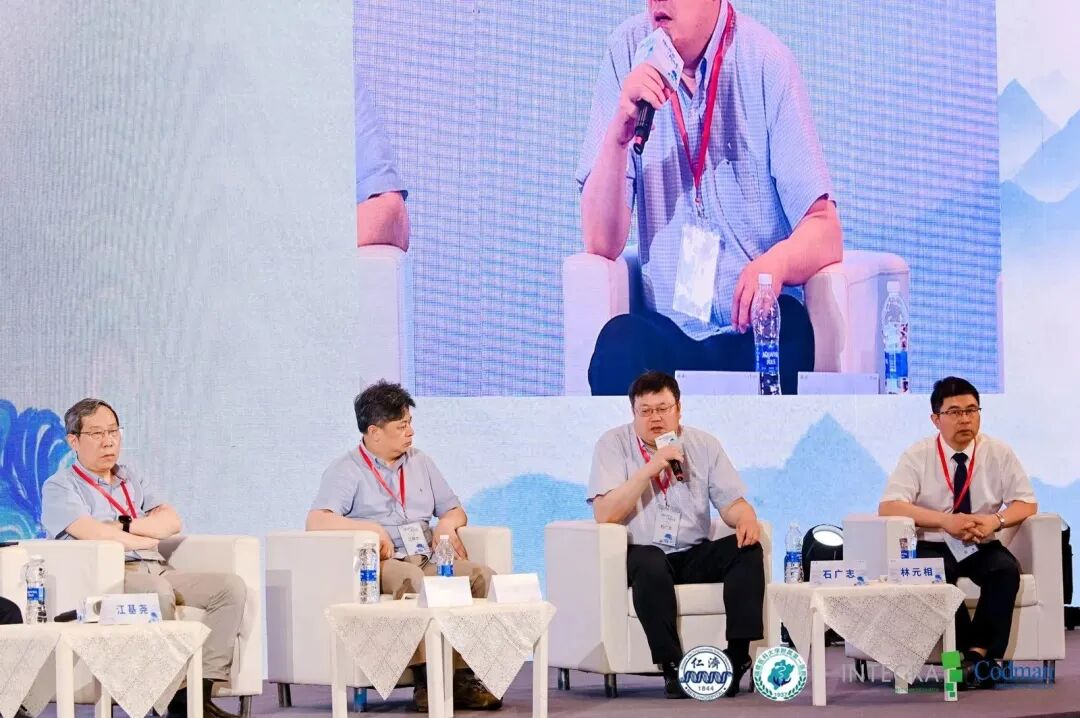
The face-to-face expert interview included Jiyao Jiang (Renji), Jin Hu (Huashan Hospital), Xiaofeng Yang (First Affiliated Hospital of Zhejiang University), Chunhua Hang (Nanjing Drum Tower Hospital), Junji Wei (Peking Union Medical College Hospital), Guangzhi Shi (Beijing Tiantan Hospital), Rongcai Jiang (Tianjin Medical University General Hospital) and Yuanxiang Lin (First Affiliated Hospital of Fujian Medical University).
Feng asked Jiang: As director of the new Kunpeng Academy, should young doctors aim to soar like the Kunpeng, or first do their immediate work well?
Jiang answered: This relates to why the academy was established. Over 20 years, ICP use and understanding have grown and precise care has become more widely accepted. A higher-level research academy does not mean fundamentals are unimportant; both must develop together. New units and clinicians need a foundation, while established and leading centres should deepen research, analysis and understanding to improve outcomes.
Feng asked Hu: aSAH may be treated in different departments. What is an ideal model, and how should subspecialties cooperate?
Hu answered: The growing number of cerebrovascular patients makes aSAH care important. Strictly defined ICP monitoring remains uncommon, although EVD also reflects pressure. Cerebrovascular teams recognise monitoring, but many methods are borrowed from TBI. Vascular surgeons, neurologists and interventional clinicians may lack sufficient evidence for monitoring and management, with similar problems in hypertensive haemorrhage and infarction. Insertion is technically straightforward; understanding pressure-related cerebrovascular physiology is harder. More reliable clinical and basic research is needed.
Feng asked Hang: How should indications and intervention thresholds be assessed in hypertensive haemorrhage, and what research is possible?
Hang answered: Eighty percent of our patients have severe cerebrovascular disease, many with hypertensive haemorrhage. Management has shared and distinctive features because hypertension is systemic. Extensive ICP work may not produce outcomes comparable with TBI. We favour monitoring: ICP is fundamental to neurocritical care. How best to monitor remains insufficiently studied. Hypertensive patients have weaker vascular regulation, making pressure-regulation assessment meaningful. MMM may clarify its effects on neurological recovery. Understanding the underlying vascular disease is a future research priority.
Feng asked Wei: Does supratentorial monitoring help when infratentorial mass lesions cause pressure elevation? What are the practical considerations?
Wei answered: The falx and tentorium create differences between sides and compartments. Supratentorial microprobes and ventricular probes are appropriate when the principal lesion is above the tentorium. For infratentorial lesions, placement must reflect the circumstances rather than always being supratentorial. An infratentorial parenchymal probe may be placed when indicated during surgery; because obstructive hydrocephalus can develop, a supratentorial ventricular drain can also be used to lower pressure.
Feng asked Rongcai Jiang: Is pressure monitoring alone sufficient, or should it be combined with EVD? How do you view parenchymal and ventricular probes?
Jiang answered: Parenchymal probes are used more often in northern China and ventricular probes more in the south, possibly because of technical and cost considerations. Ventricular advantages have already been discussed, and insertion is feasible. Both methods should be learned; in his view, monitoring is preferable to no monitoring. Further development should consider lymphatic drainage, nervous-system immunity and underused imaging information, combining research with engineering.
Feng asked Shi: Does invasive monitoring increase infection risk, and what should be considered during surgery and intensive care?
Shi answered: From clinical experience, he regards monitoring as routine, although practical and health-economic barriers limit implementation. Its guidance for care makes it worthwhile. Whether complications arise from probe insertion or surgery for the primary disease requires clarification and discussion.
Feng asked Lin: In functional disorders such as status epilepticus with cortical oedema, would you use neurocritical procedures?
Lin answered: Interdisciplinary and subspecialty cooperation is essential. Both the condition and national quality-control requirements place these patients within neurocritical management. Alongside standardisation and individualisation, care must be integrated, holistic and comprehensive.
Main venue: session three — case discussion, “A Story Started by a Chainsaw”
A trauma case treated at the host hospital introduced four questions: establishing a prehospital TBI system, surgery for complex injury, consistent yet standardised and individualised postoperative NICU care, and managing subdural fluid collections after decompressive craniectomy. Liang Gao of Shanghai Tenth People’s Hospital chaired.
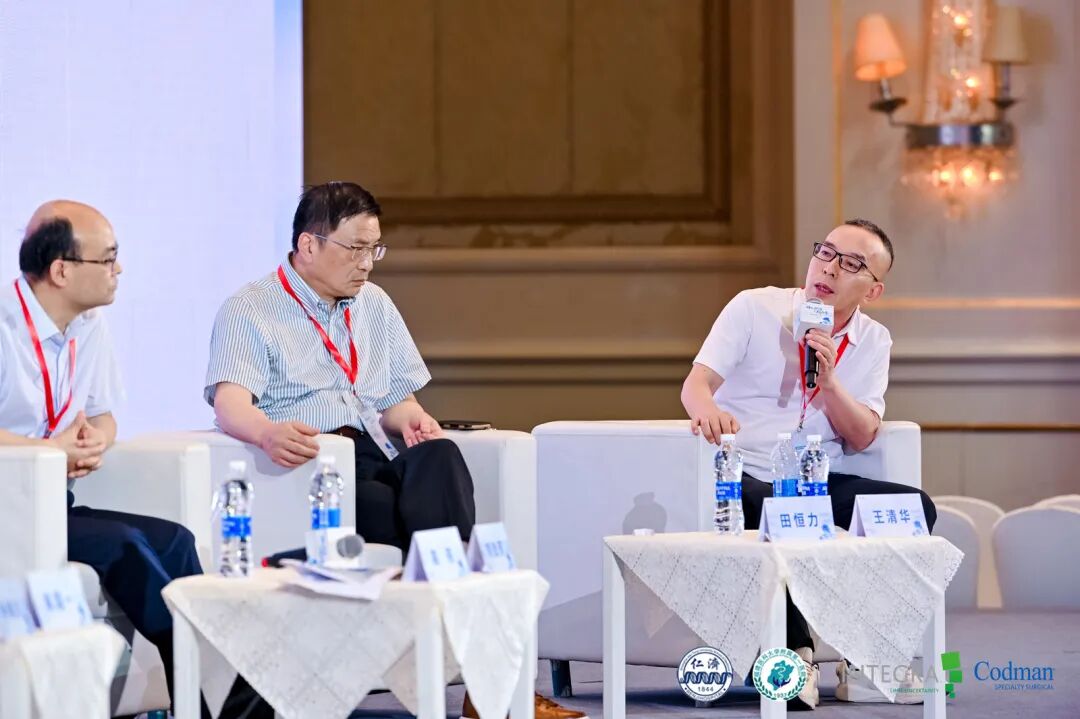
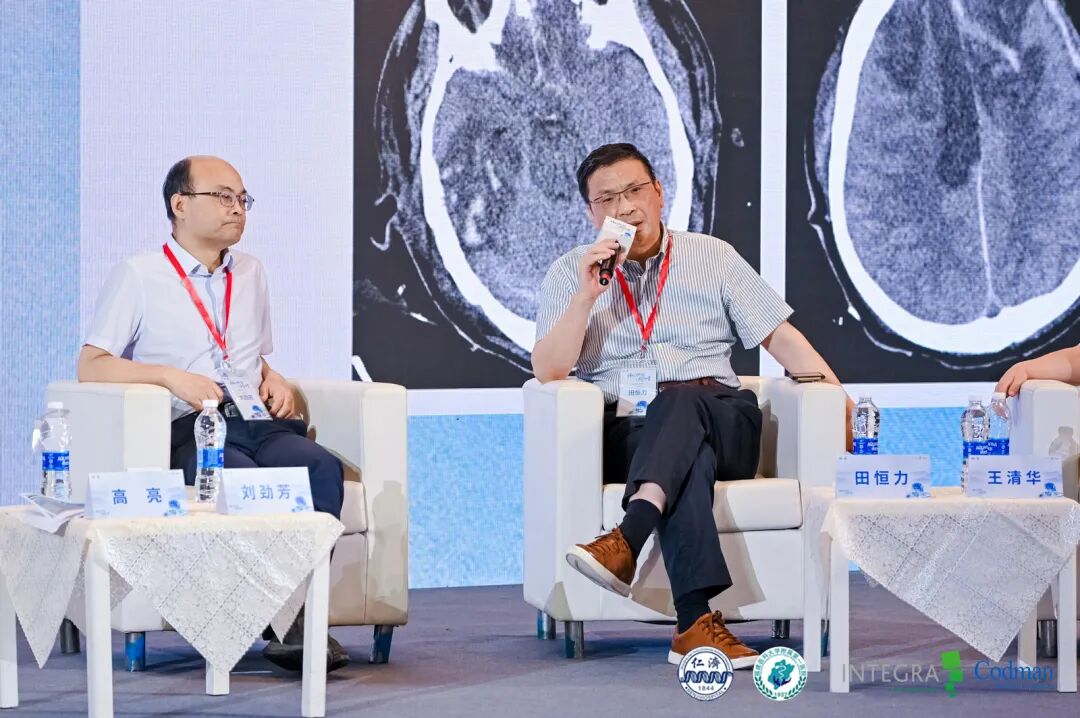
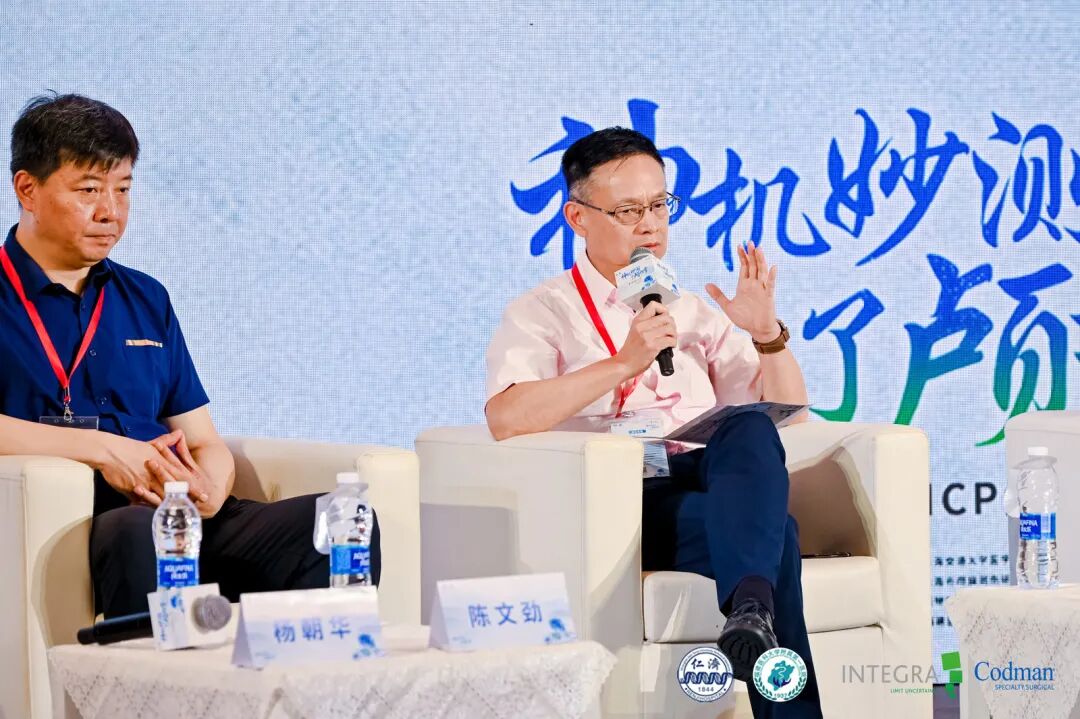
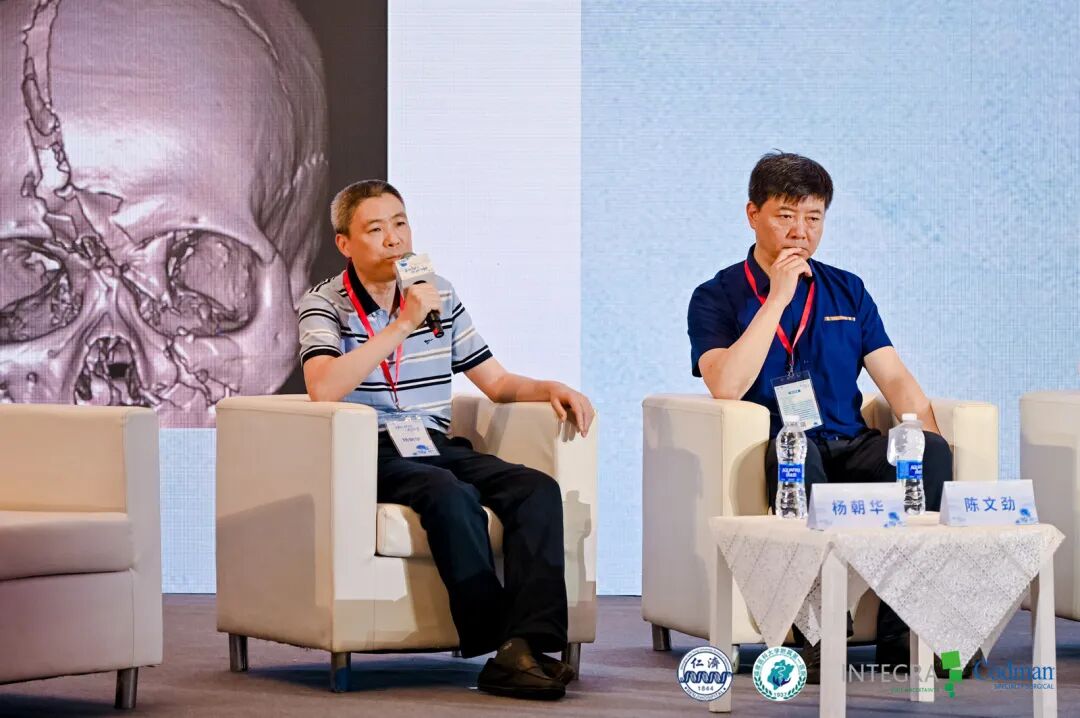
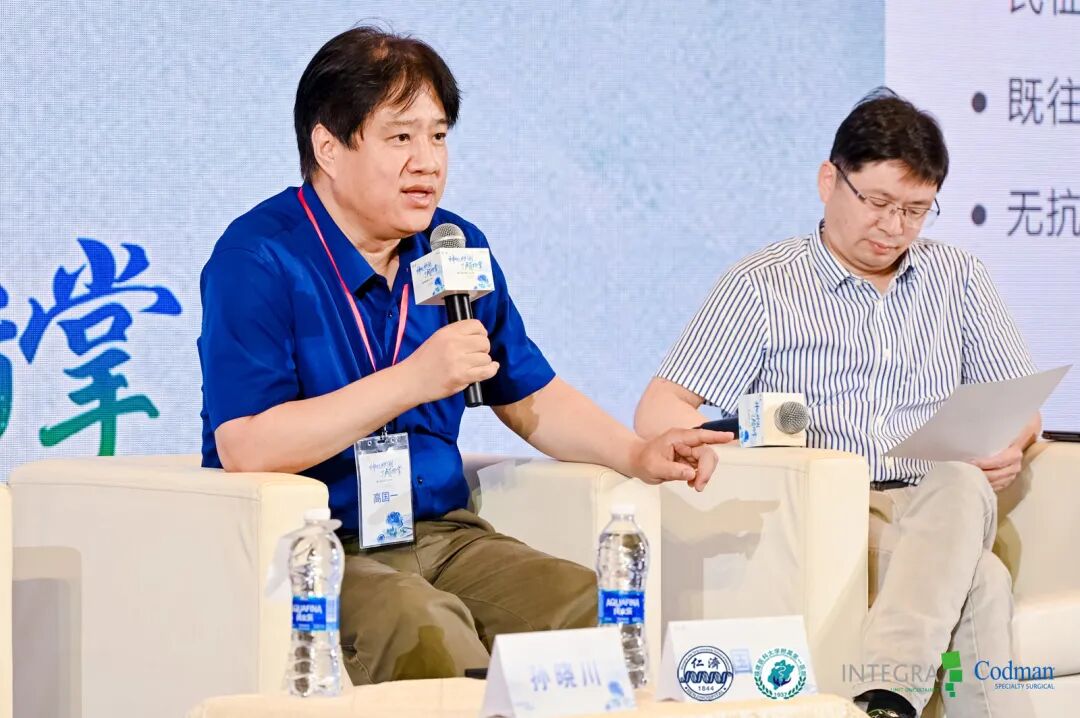
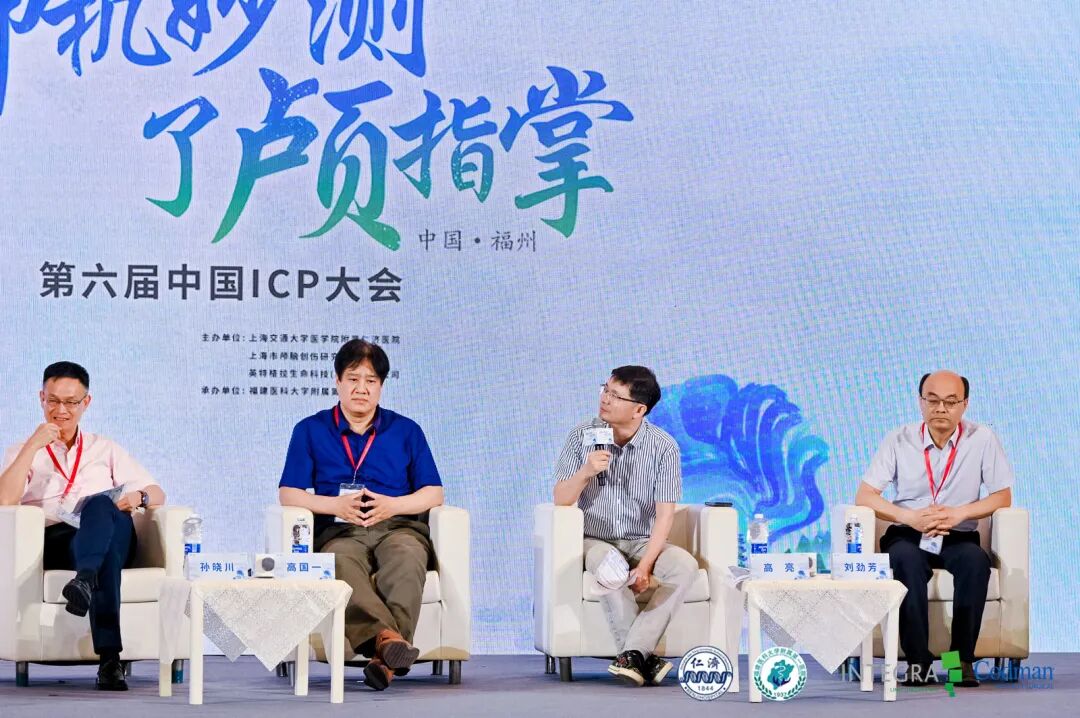
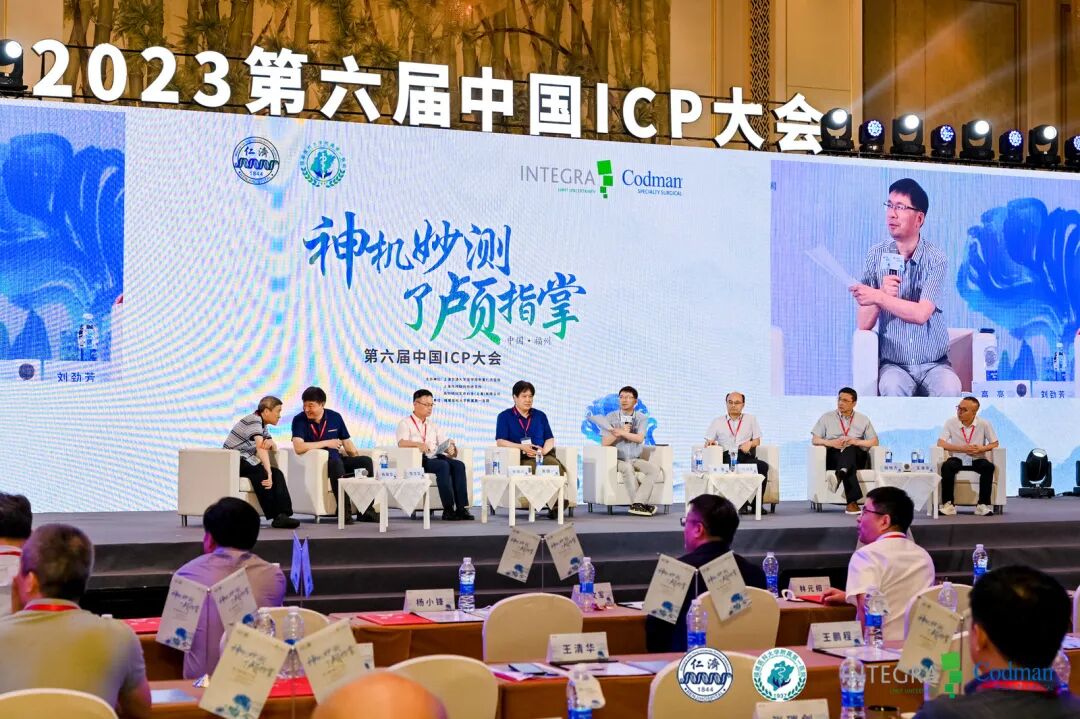
Swipe left for more photographs.
Gao described ICP above 20 during postoperative days 1–3, then below 20 from day four after osmotherapy and ventricular drainage. He praised the distinctive case and successful operation and invited discussion.
Guoyi Gao: Timely care and multidisciplinary participation in severe penetrating injury demonstrate the receiving team’s ability and support successful transition to subsequent care.
Chaohua Yang: The case reflects the current trauma system. The dynamic process requires simultaneous action on coagulation, shock and conversion of an open injury to a closed one. Infection control and prevention and treatment of chronic hydrocephalus are important.
Xiaochuan Sun: Perioperative surgical assessment needs multidisciplinary discussion. Arterial injury calls for vascular expertise; skull-base reconstruction requires that group, alongside ENT, ophthalmology and interventional teams. A hybrid platform is preferable to reduce the risk of difficult deep bleeding.
Hengli Tian: Open TBI needs circulatory as well as pressure monitoring, considering both to achieve overall balance.
Wenjin Chen: Venous sinus occlusion and infection would be concerns when taking over this patient. Without sinus occlusion, passage through the dangerous period is more reassuring.
Jinfang Liu: Infection and seizure prevention are key in open injury. Operative planning should be meticulous from the beginning. Early antibiotics should cover Gram-negative and Gram-positive organisms; later care must consider skull-base defects and avoid secondary infection through the open injury. Removing foreign bodies helps early seizure prevention; later EEG may support gradual withdrawal of medicine if no abnormalities are found.
Qinghua Wang: In this case without infection, progression from subdural fluid collection to later hydrocephalus is common and a shunt may be considered.
Parallel venue one: southern regional ISTI case competition
The southern regional round of the second ISTI Neurotrauma and Neurocritical Care Case Competition in 2023 brought 11 contestants together after case collection and blinded expert review.
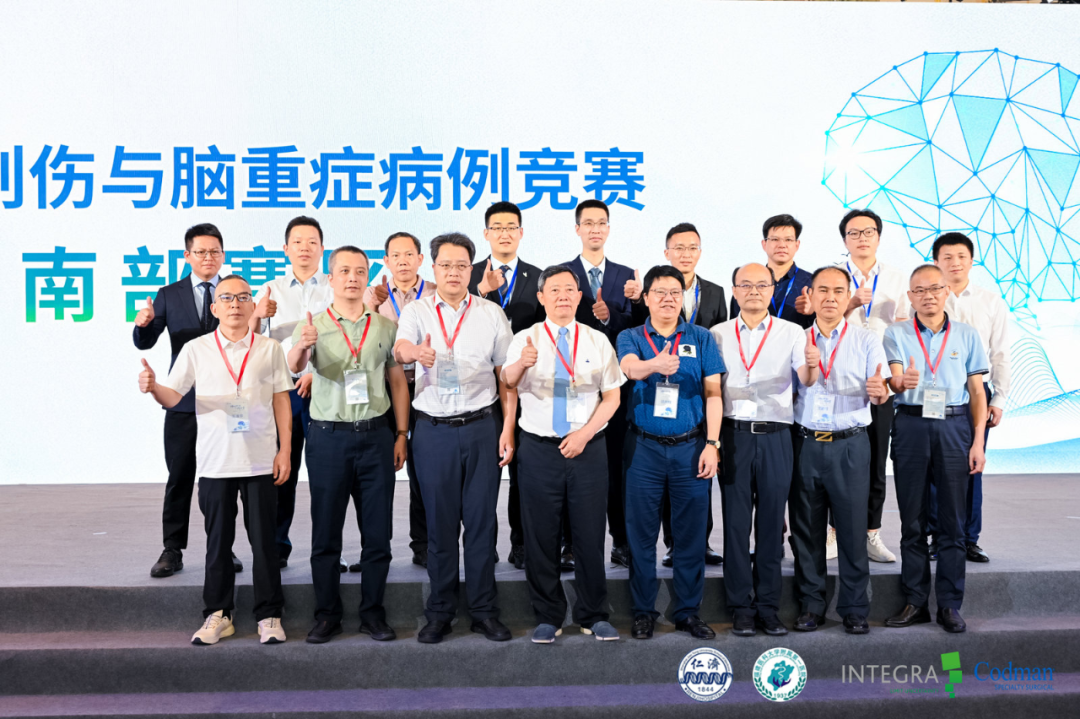
Following the previous competition’s standards, experienced judges gave constructive knowledge and advice and shared perspectives on the field. Jiyao Jiang, Renji Chief Expert and Shanghai Institute of Head Trauma Director, chaired. Lianghong Yu of the host hospital was regional executive chair. Judges were Jinfang Liu (Xiangya Hospital, Central South University), Binghui Qiu (Nanfang Hospital, Southern Medical University), Xianjian Huang (First Affiliated Hospital of Shenzhen University), Pengcheng Wang (Hainan General Hospital), Qinghua Wang (listed here in the source as Nanfang Hospital, Southern Medical University) and Jinzhong Huang (Second Affiliated Hospital of Fujian Medical University).
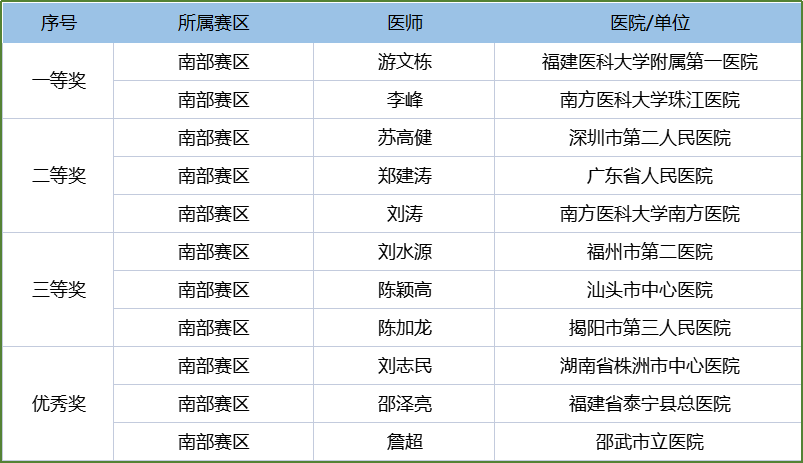
Competition results were presented as follows:
Thanks were offered to judges and contestants. Jiang again thanked colleagues and Integra for the platform and wished subsequent competition rounds success.
Parallel venue two: ISTI Kunpeng Academy for Precision ICP Research
At 13:30, the academy programme began with opening remarks from Jiang, Kang, Hu and Integra’s Yan. Its value is to view clinical problems academically and return from practice to research, ensuring standardised work. Under Jiang, improving outcomes for more patients is the goal.
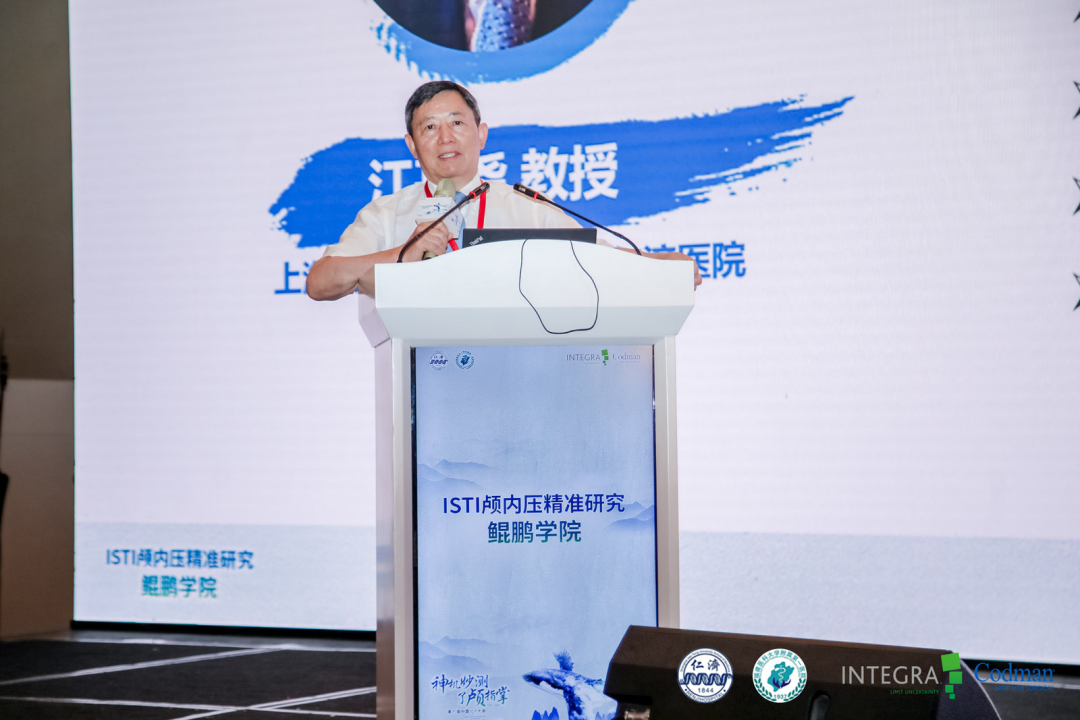
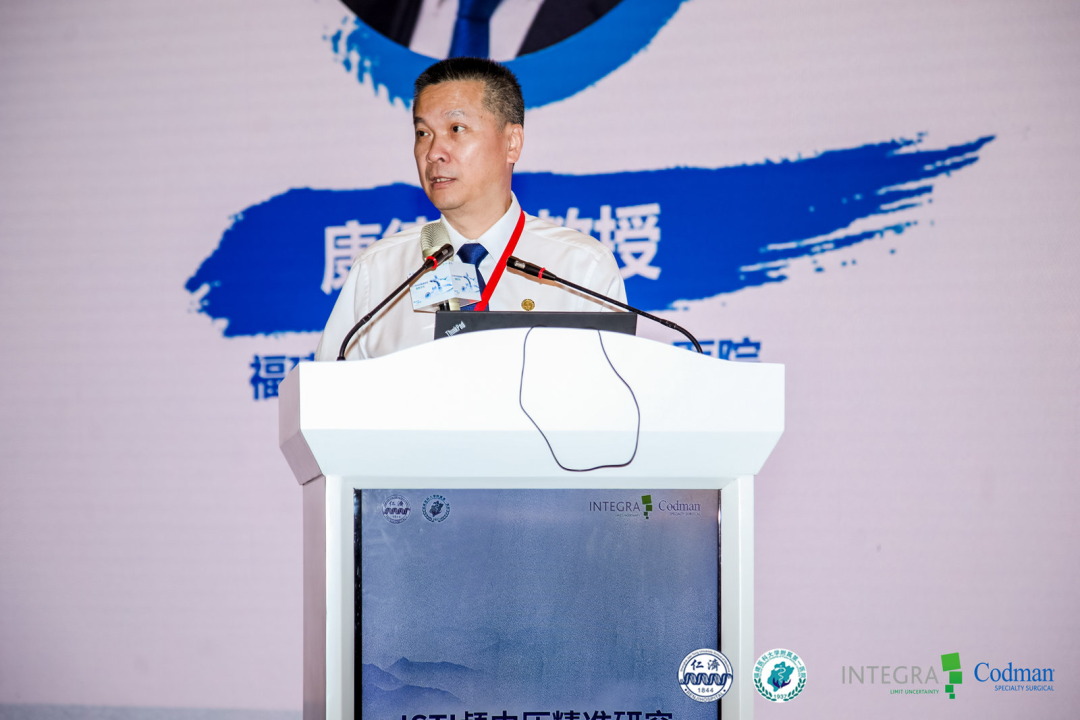
Guangzhi Shi and Junfeng Feng chaired the first lecture session.
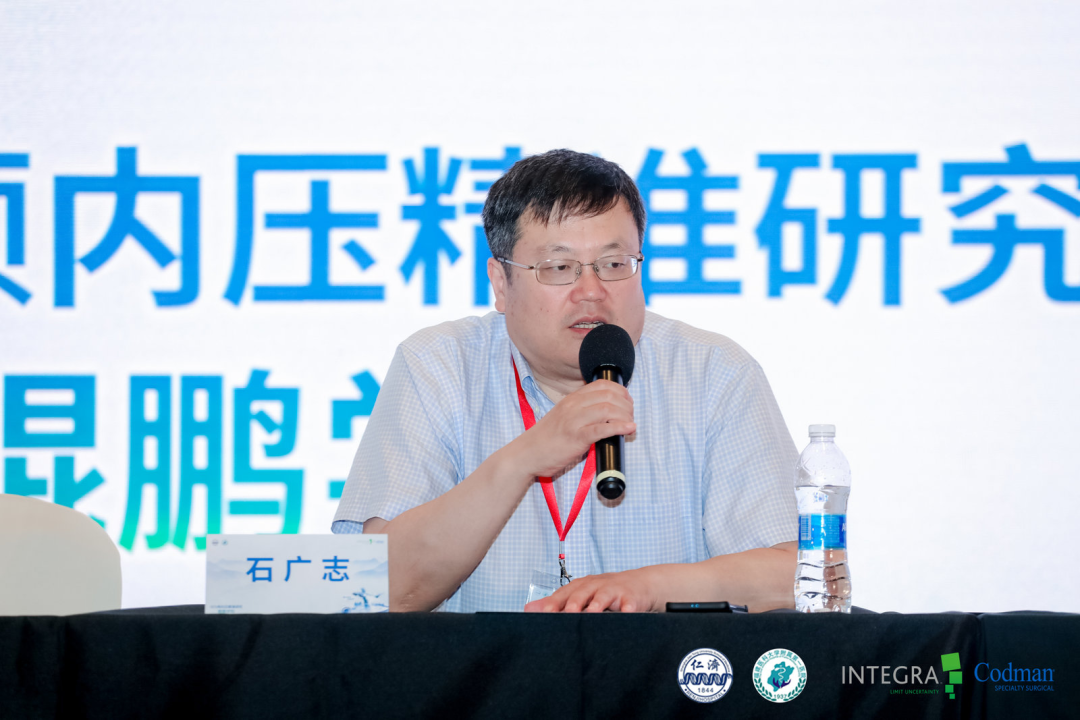
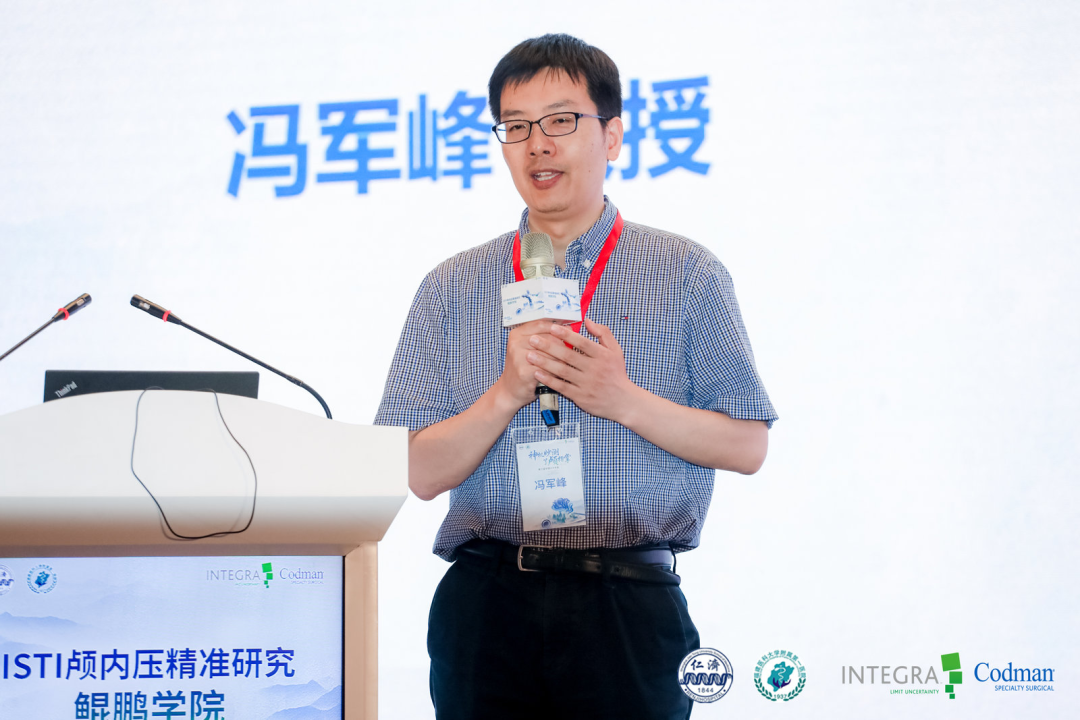
Feng presented “Frontal Contusion Care: Practice and Reflection”; Wenjin Chen discussed “Intracranial Pressure and Cerebral Perfusion”; Hengli Tian introduced “New Neurocritical Care Concepts Based on ICP Monitoring.”
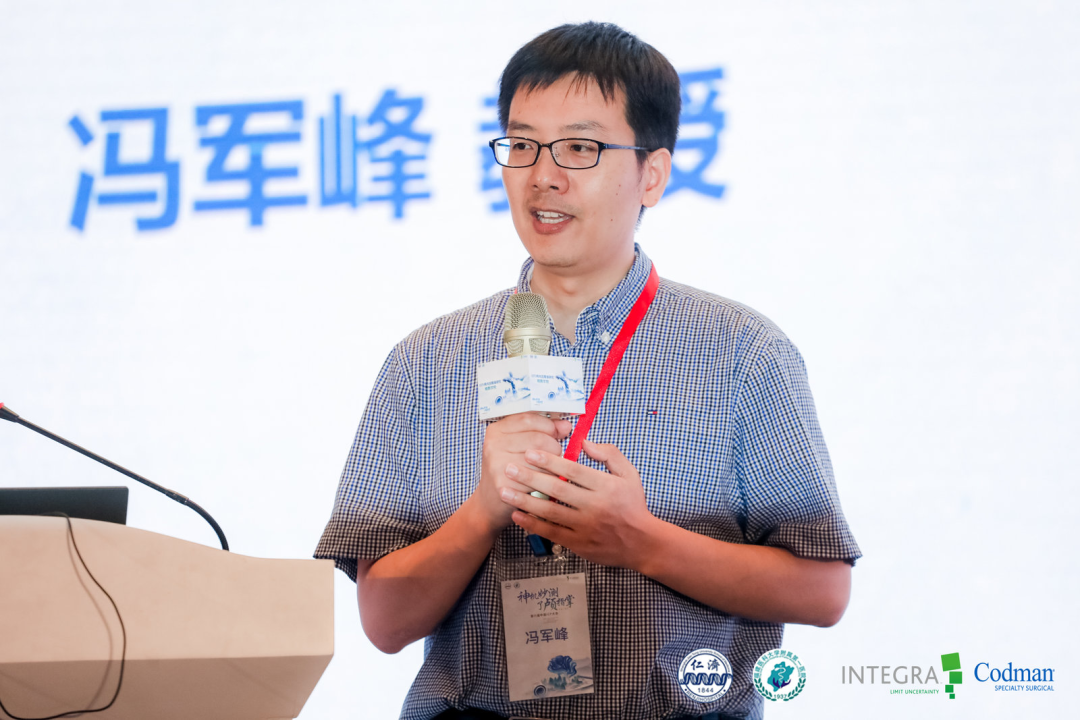
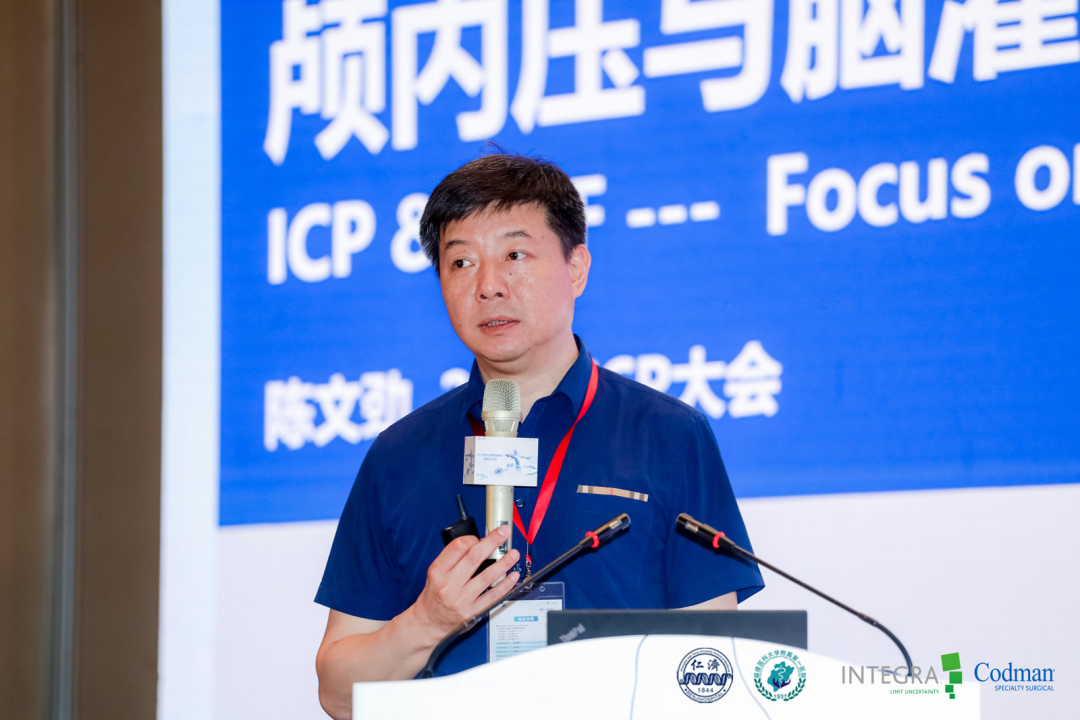
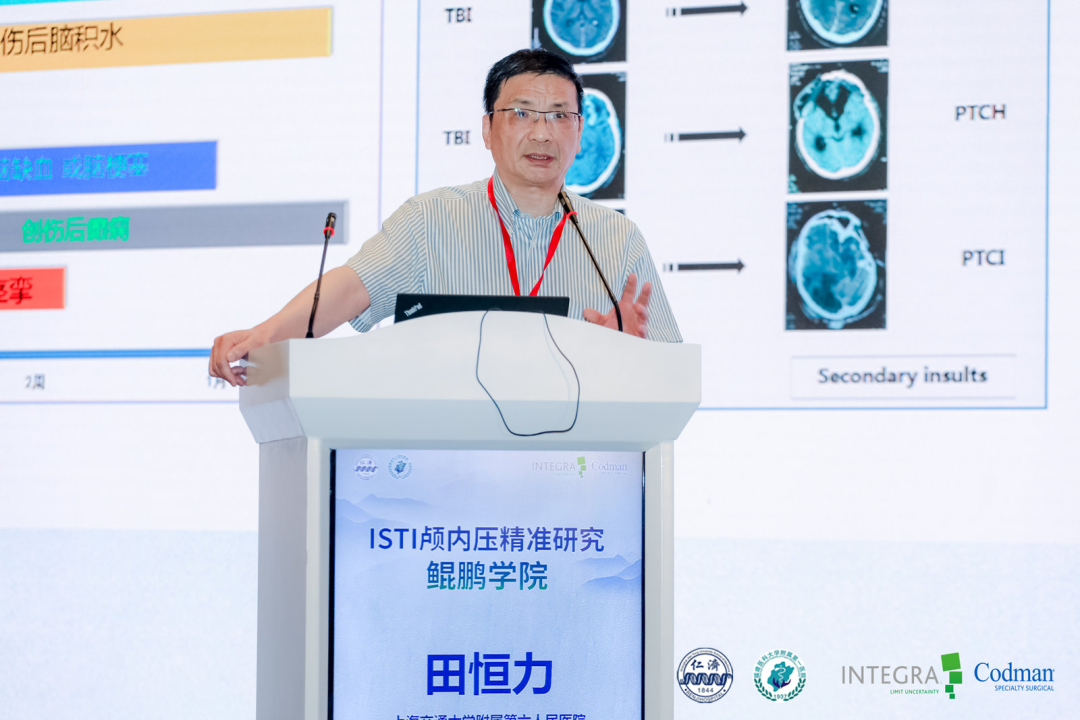
Guoyi Gao and Xiaochuan Sun chaired the second session.
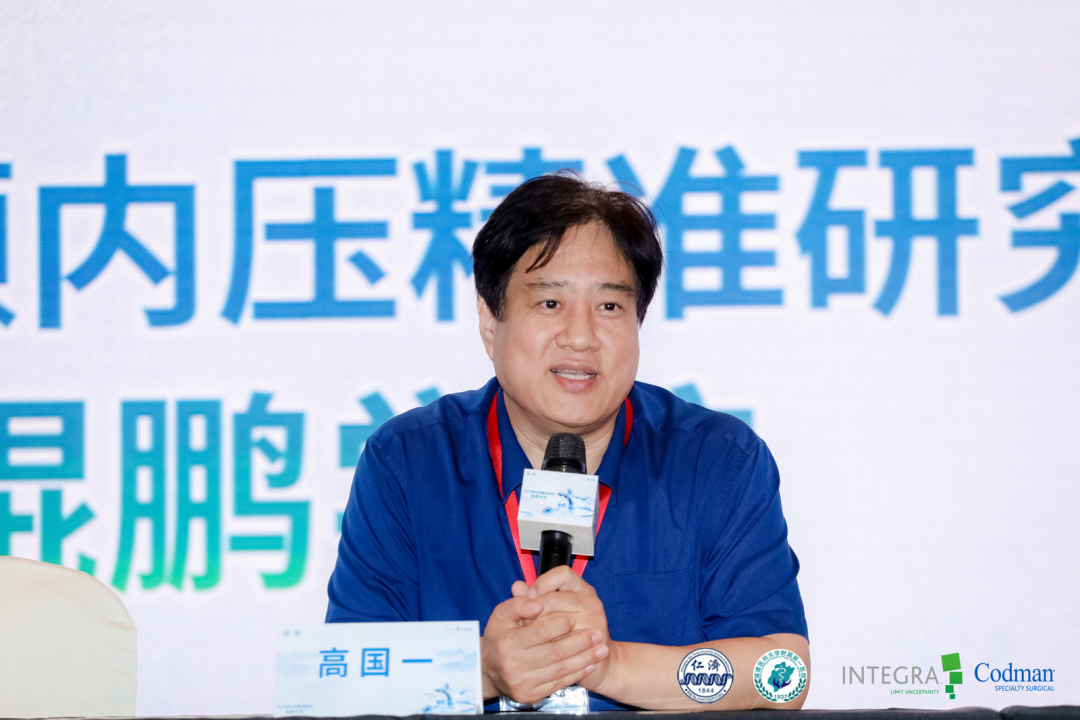
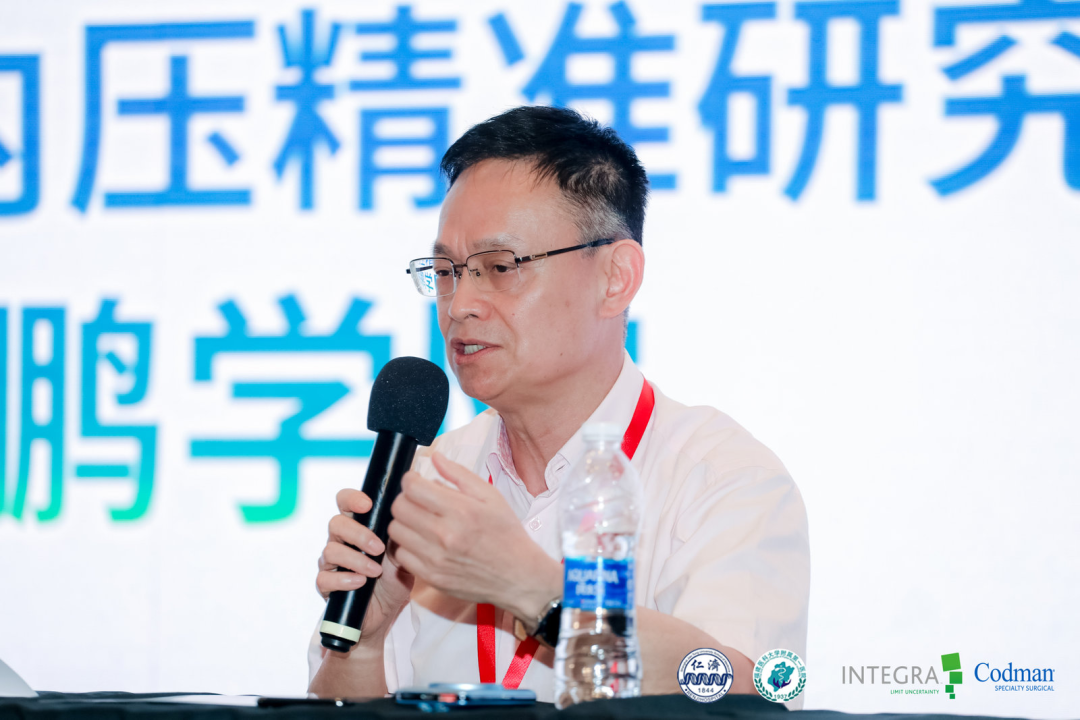
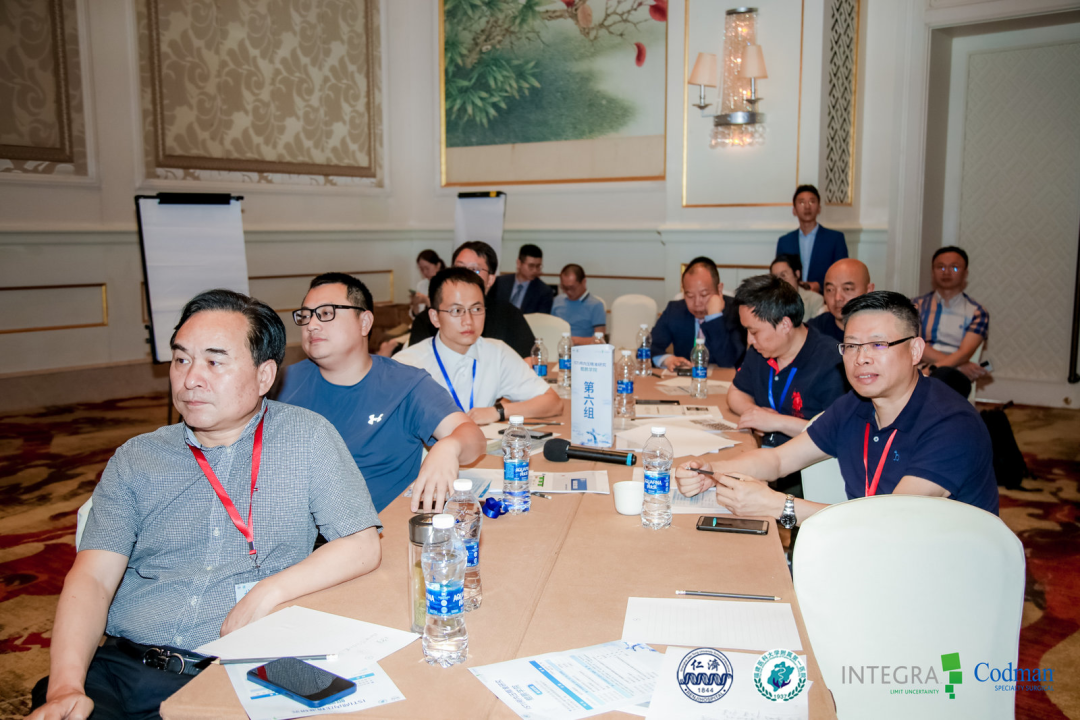
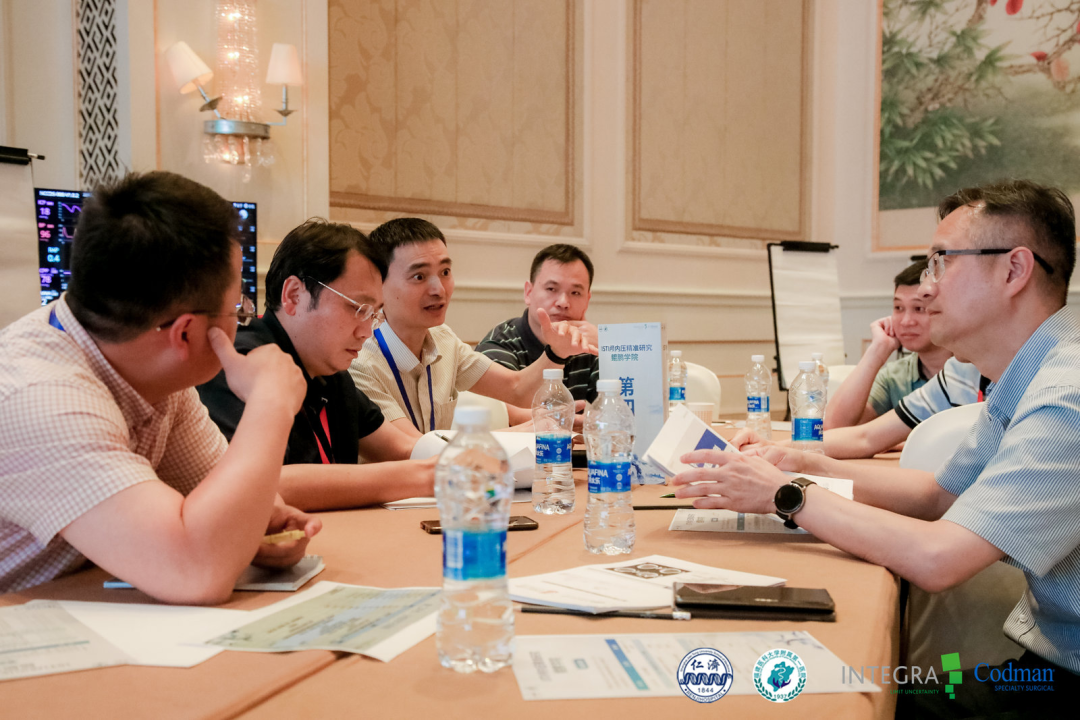
Group learning began with three cases: Xiangru Ye on ICP-guided diagnosis and treatment of haemorrhage from a dural arteriovenous fistula; Lidan Jiang on a presentation titled in the source “How long is differentiation of cerebral perfusion resistance?”; and Xiang Wu on ICP-parameter-guided care in severe TBI. Case-based discussion encouraged active exchange and insight. The wording of Jiang’s title is retained from the source rather than reconstructed.
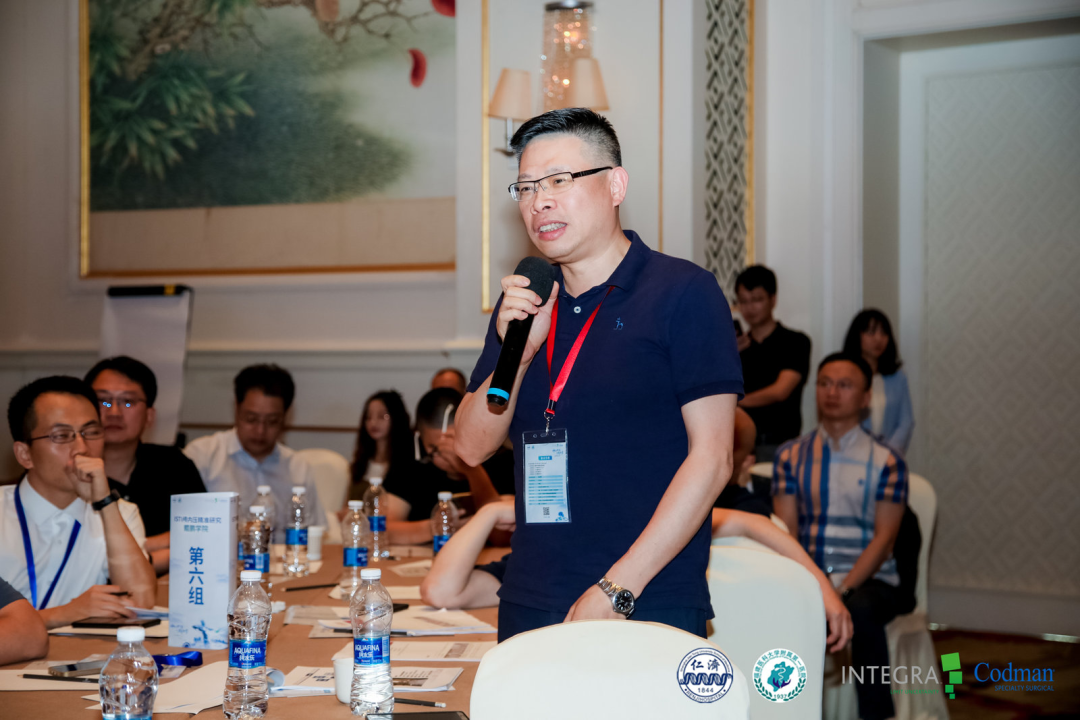
Parallel venue three: ISTI iNPH multidisciplinary care forum
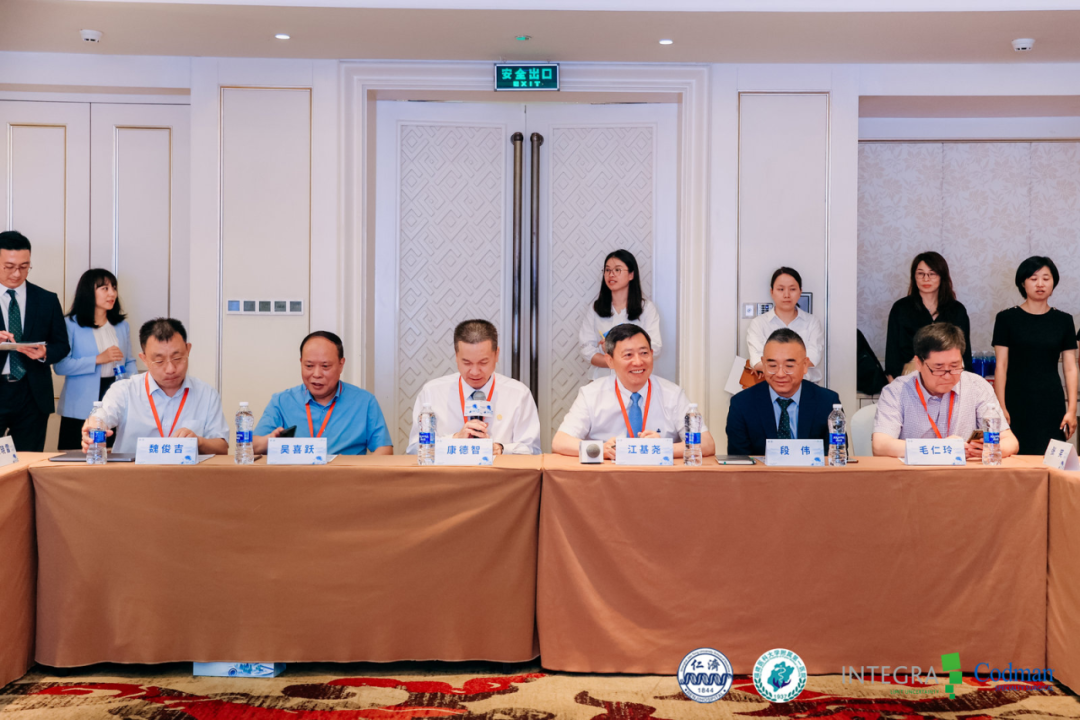
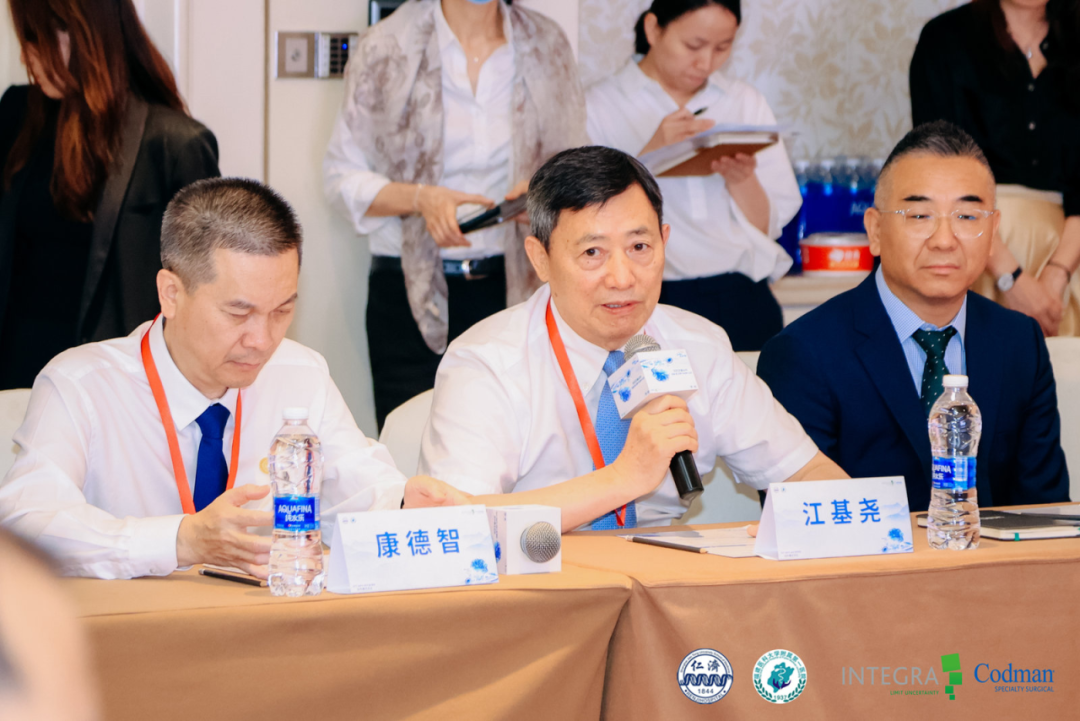
Jiang and host hospital President Kang opened the afternoon forum. They noted increasing idiopathic normal-pressure hydrocephalus (iNPH), frequent misdiagnosis and missed diagnosis, thanked experts with longstanding work in the field and welcomed the clinically relevant programme.
Renling Mao and Guodong Huang chaired session one.
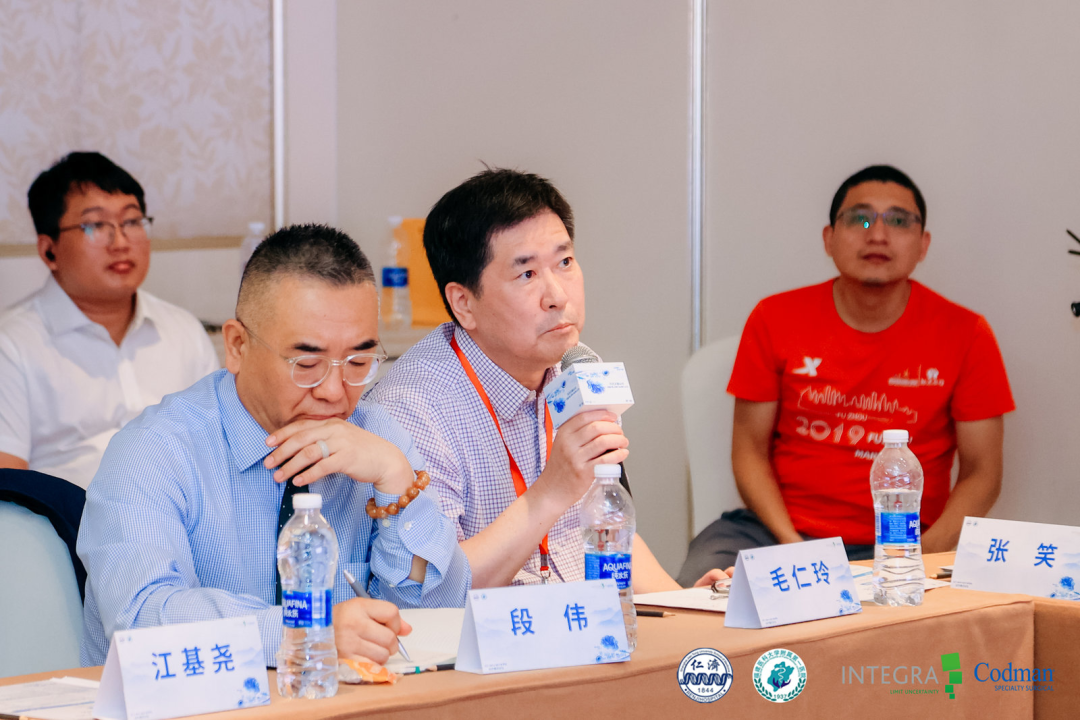
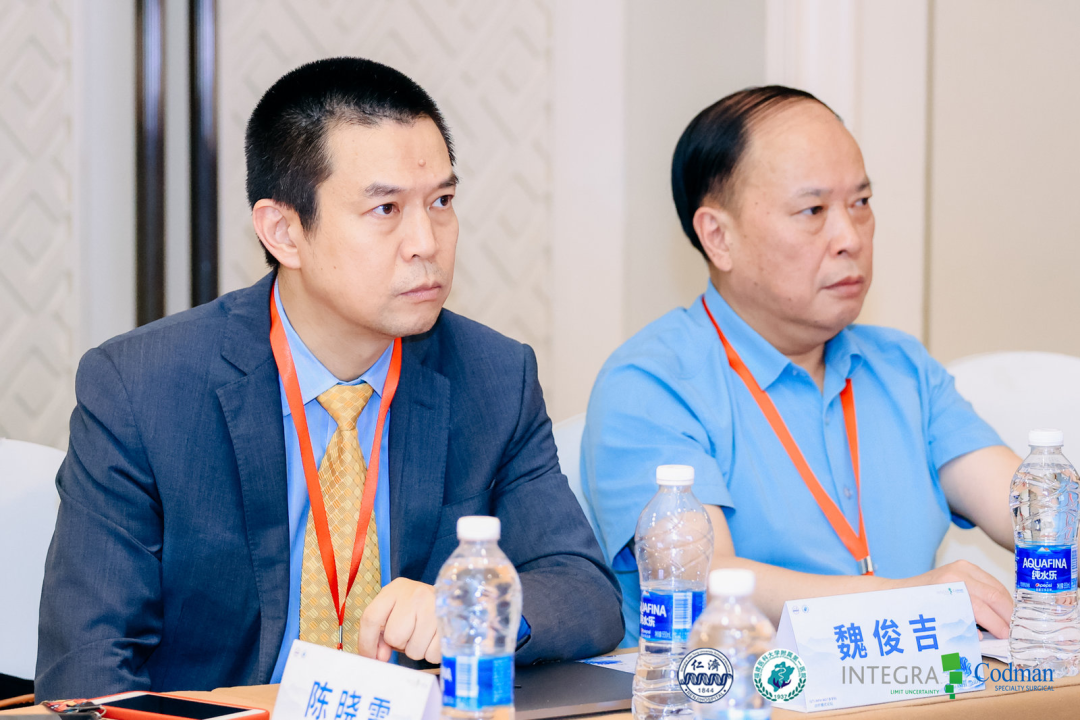
Junji Wei presented clinical features and research developments in NPH. Yu Lin reviewed differential diagnosis from common neurological diseases. Guoyi Gao discussed brain compliance assessment. Zheming Fang addressed imaging assessment and quality control. Experts then discussed multidisciplinary models in NPH diagnosis and treatment.
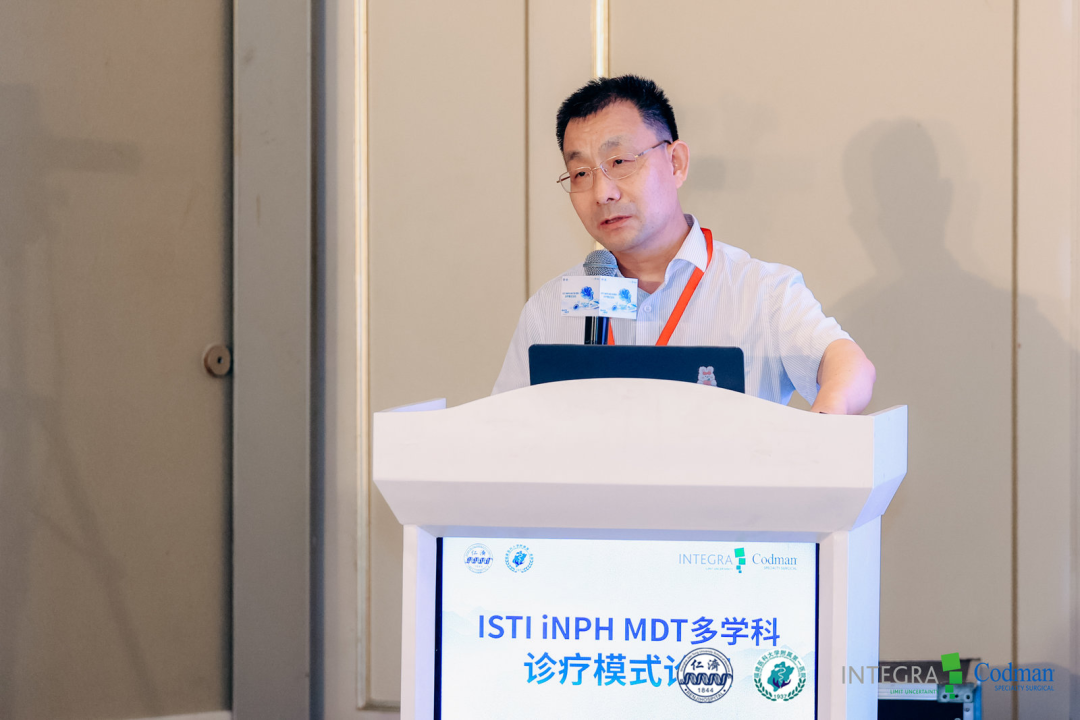
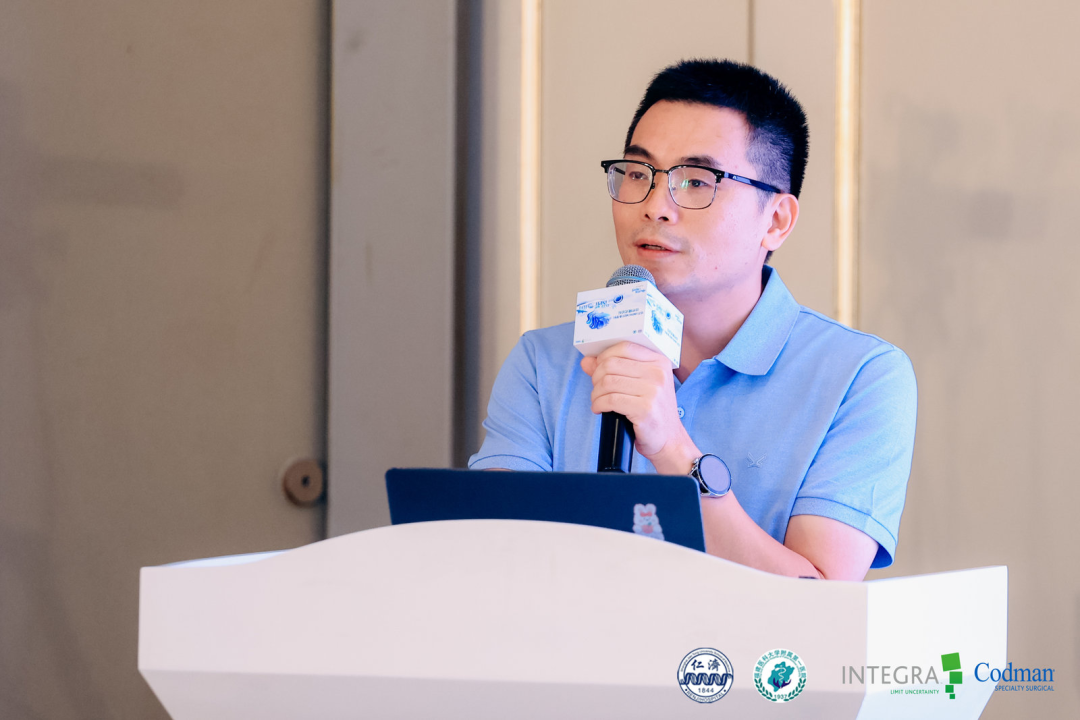
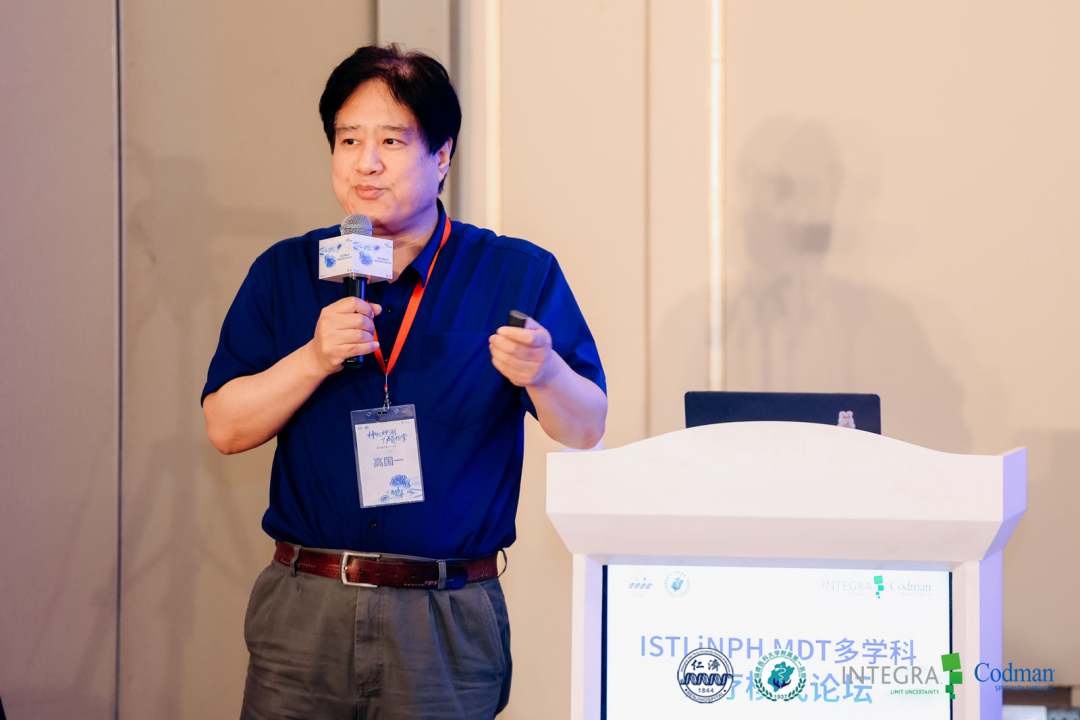
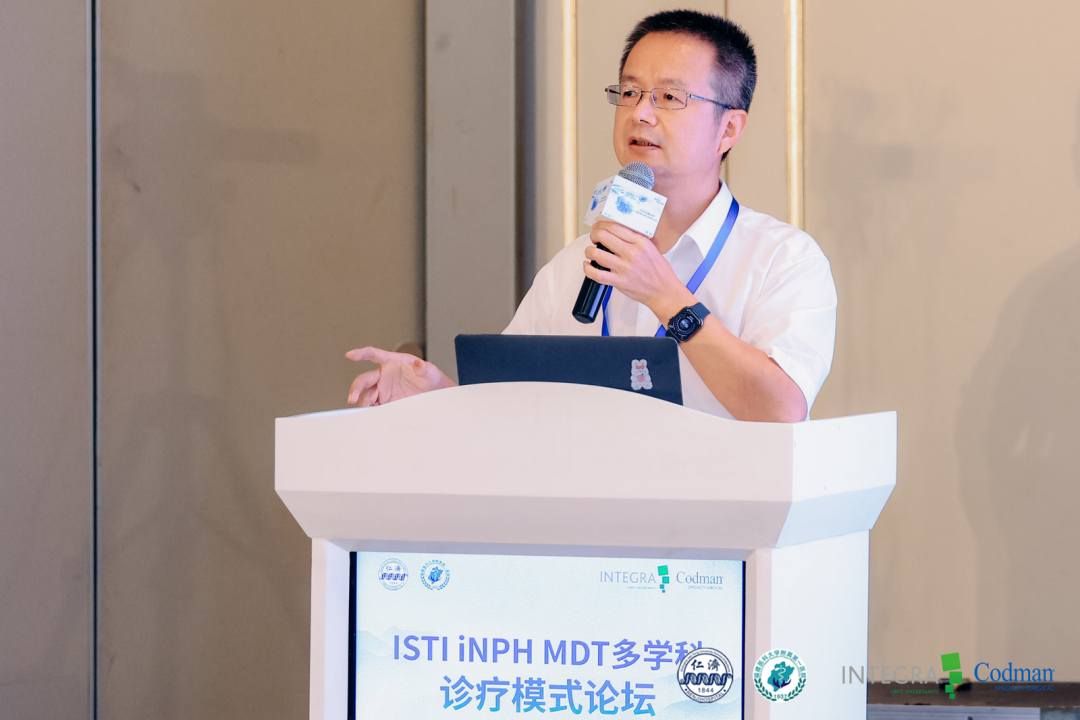
Xiaolei Chen and Xiyue Wu chaired session two.
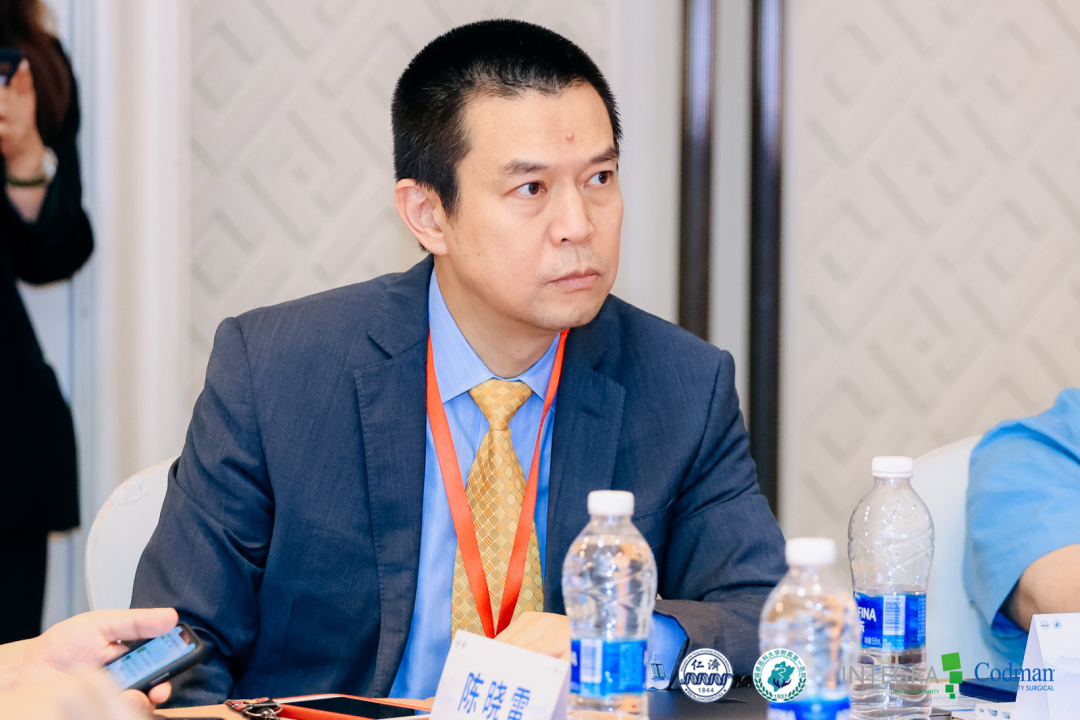
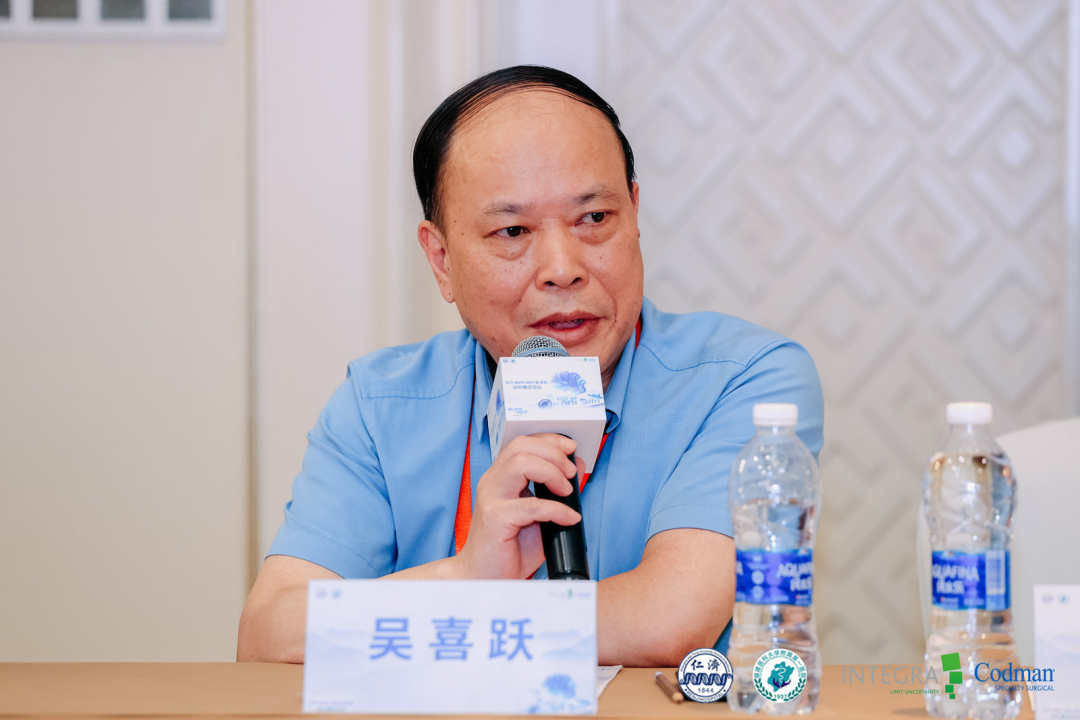
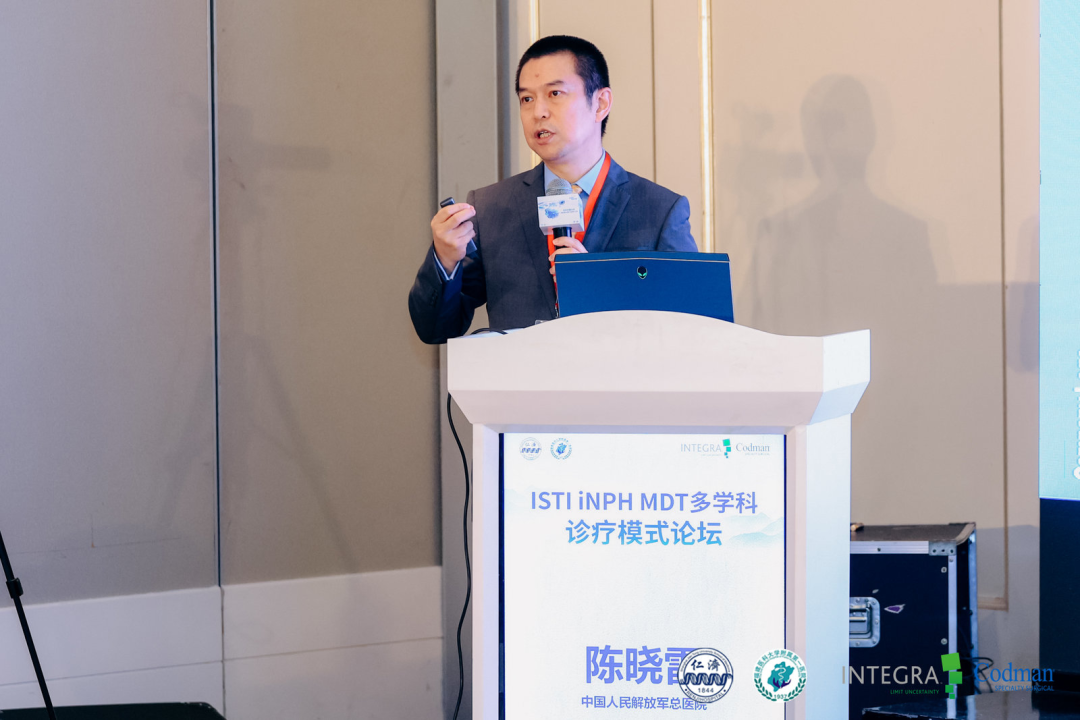
Chen presented advanced imaging and digital gait analysis in NPH. Fei Wang shared surgical treatment experience. Xiao Zhang discussed features of hydrocephalus surgery in older adults. The experts then discussed surgery for NPH.
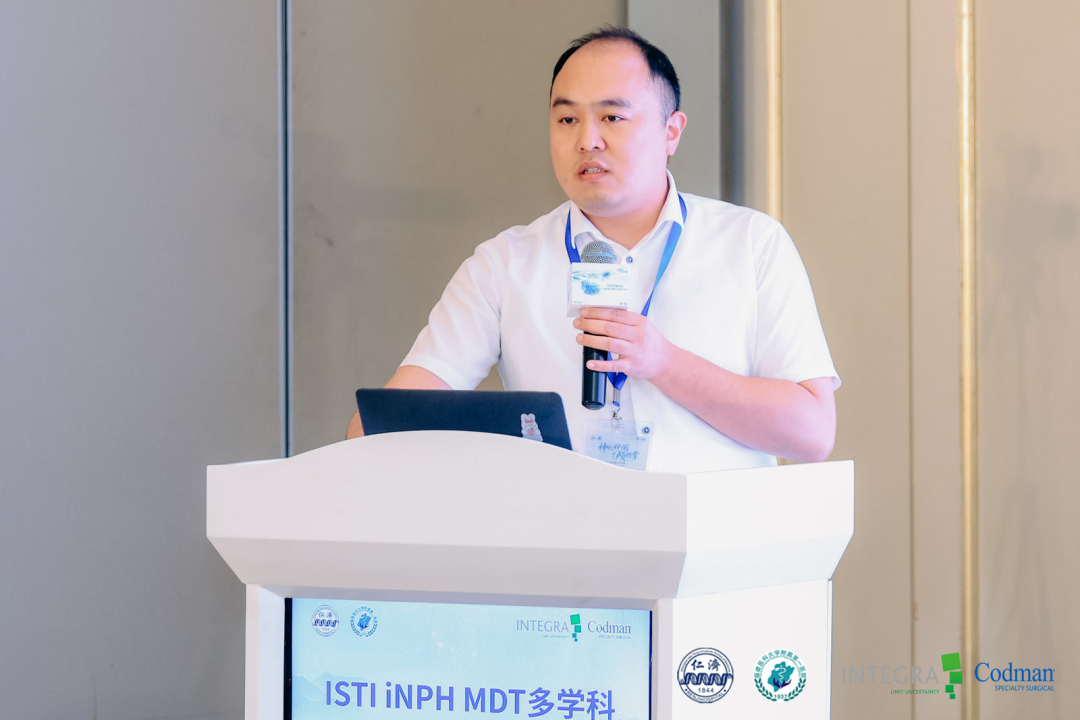
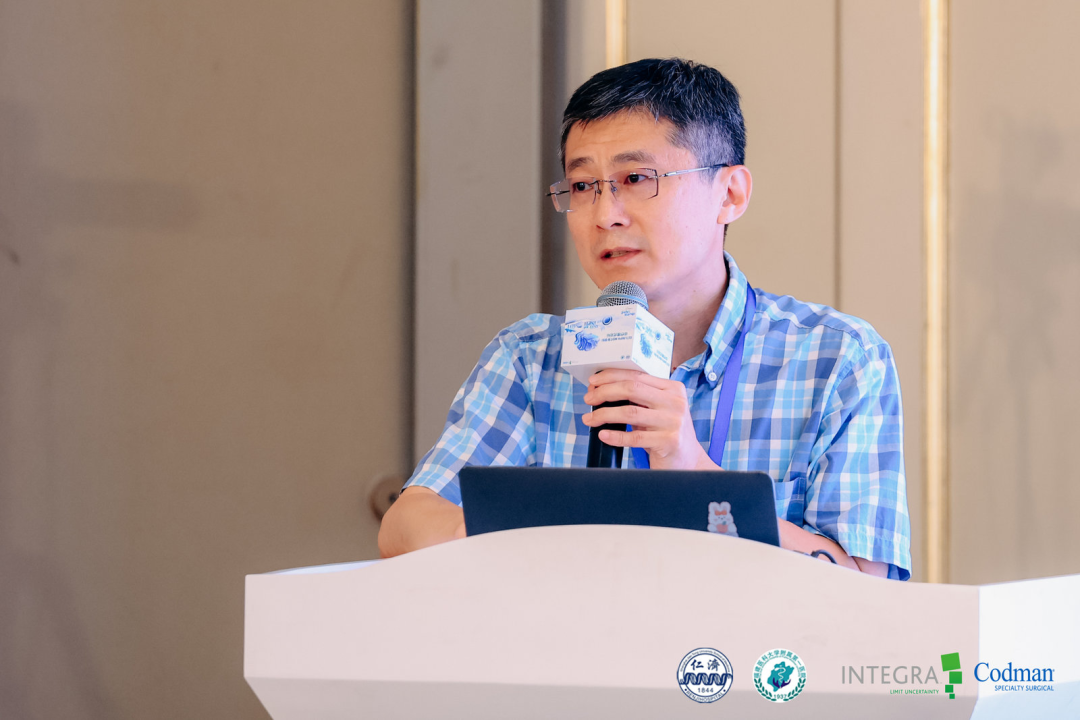
Xiyue Wu and Wei Duan closed the forum, describing it as successful and thanking participants.
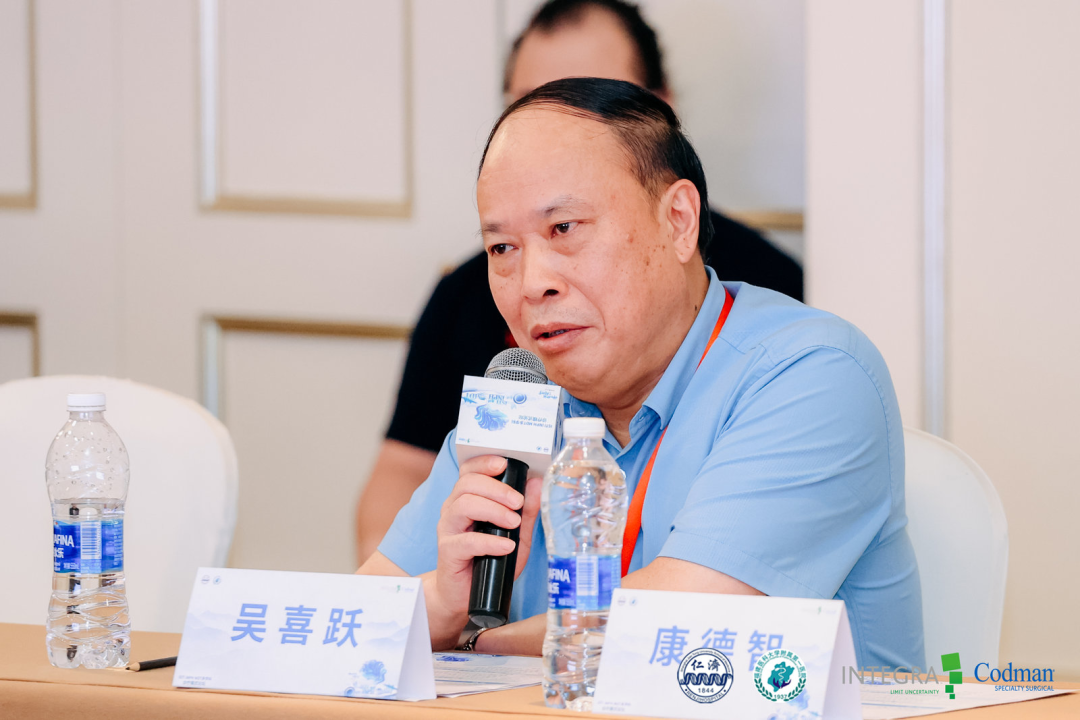
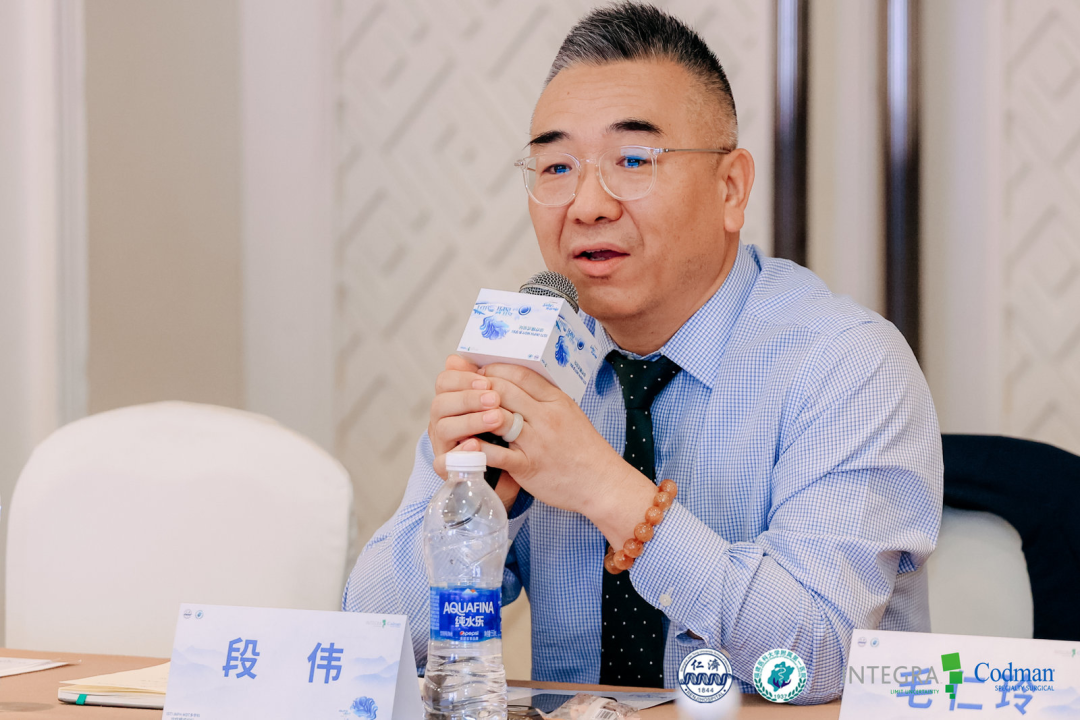
The sixth China ICP Conference concluded. Building on this work, the organisers looked forward to meeting colleagues again at the seventh conference.
Conference highlights
The original contains video material. This website retains a reference to it; the video has not been transcribed. Consult the original article for the video.
2023年7月1日,本年度下半年的第一天,“神机妙测 了颅指掌·第六届中国颅内压大会”在中国福州成功举办!
本次大会由上海交通大学医学院附属仁济医院、上海市颅脑创伤研究所、英特格拉生命科技(上海)有限公司共同主办,福建医科大学附属第一医院承办,上海交通大学医学院附属仁济医院江基尧教授、福建医科大学附属第一医院康德智教授担任大会主席。会议大咖云集,为全国同道奉上精彩纷呈的学术盛宴,在热烈的讨论中碰撞出思维的火花,于深度交流中显现敏锐洞见。
我中心江基尧教授、冯军峰教授均做大会主旨演讲,并做会议主持、分论坛讲者、讨论嘉宾等,全程参与,聚焦于颅脑创伤、神经危重症及颅内压监测,和全国同道热烈探讨交流。
开幕式
会议开幕式由福建医科大学附属第一医院林元相教授主持。
林元相教授向全国各地前来参会的神经外科专家及同道表示了热烈的欢迎,简要介绍了福建医科大学附属第一医院神经外科建制及亚专科配备情况,并对各位专家在学科建设中予以的帮助表示衷心的感谢。
上海交通大学医学院附属仁济医院江基尧教授发表开场致词,感谢了福建医科大学附属第一医院为本次大会顺利进行付出的努力,感谢英特格拉公司为本次大会长达半年的准备工作以及他们为我国神经外伤重症精准化、微创化治疗所作的长期不懈的努力。颅内压监测是一个古老又新鲜的话题,CODMAN®有创监测颅内压引进中国也只有二十年,从零开始到几乎普及到全国大部分的神经外科,实现了精准颅内压监测的巨大进步,同时我们颅内压的大数据研究也发出了中国的声音,在学术上也建立了一定的影响力,但仍然有一些不足,比如颅内压的监测率仍然很低,远低于欧美国家;第二,我们国家地域辽阔,各个地区发展差异很大,在对颅内压监测方面存在很大的不均衡和差异;第三,我们对颅内压监测的认识仍然不足,颅内压背后的生理变化我们并没有掌握得很清楚,所以希望我们前来参会的各位专家,引领我们国内的颅内压监测、正确认识颅内压监测的意义,进一步提高我国颅脑创伤、脑卒中、脑出血重症患者颅内压监测的规范化、精准化,为进一步降低死残率、提高患者生活质量做出应有的贡献。
福建医科大学附属第一医院康德智院长感谢大家来到“有福之地”福州,感谢大会主办方对福医附一院的支持和厚爱。我们携手见证颅内压监测在我国发展的二十年时光,很荣幸能与全国专家同仁,扩展神外精准之路,以智慧和知识为颜料,共绘我国神外发展的新画卷,提升我国颅内压监测水平,满足更多临床需求和患者期待,预祝本次大会圆满成功。
英特格拉生命科技(上海)有限公司总经理颜文军先生致辞表示,INTEGRA CODMAN®跟随我国神经外科、神经重症领域的顶尖团队,推动ICP监测相关理念在中国的应用已有二十年,但依然存在着前面江教授讲到的三个不足。INTEGRA作为专注于神经外科的医疗公司,未来必将继续与中国神经重症的研究一同向前迈步,希望可以跟中国神经重症的团队一起给患者提供更好的服务,同时也为中国神经重症领域提供更好的技术支持。INTEGRA有许多产品应用于神经外科的临床实践,未来我们也有信心在ICP监测、神经重症管理上引进更多新的技术,目前已经启动了在中国制造ICP监测产品的相关项目,INTEGRA将对中国市场和神经重症领域投入长期的支持,也希望未来一直能与中国的神经重症专家共同进步,并预祝大会成功。
ISTI颅内压精准研究鲲鹏学院成立
英特格拉生命科技(上海)有限公司总经理颜文军先生首先感谢了神经重症领域的各位专家为救治危重患者作出的巨大贡献,我们深知颅内压监测是危重患者抢救中非常关键的环节,而精准的研究和培训对于高质量提高患者诊治率是至关重要的,因此成立ISTI颅内压精准研究鲲鹏学院成立,旨在提高颅内压研究的技术、能力和知识水平,进一步推动神经重症领域的发展。该项目将通过颅内压多参数监测的方式进行精准研究和培训,为一线专家提供最新的技术和方法,使其能够准时及时地评估患者颅内压情况,以制定最适合的诊治方案,同时将邀请国内外知名专家、学者和顶尖的临床医生,为培训班提供专业的讲座和实践指导,分享最新研究成果。在实践中,ISTI颅内压精准研究鲲鹏学院将通过精准监测、多参数生化研究,助力国际视野,更会以探本溯源的精神,寻找颅内压数字背后的真相,前行不息,以鲲鹏的广远和博大,引领学术前沿。
现场聘请了上海交通大学医学院附属仁济医院神经外科专家、上海市颅脑创伤研究所所长江基尧教授担任ISTI颅内压精准研究鲲鹏学院院长,携手合作,为患者提供更加安全有效的颅内压监测。汇聚力量,扶摇直上,江基尧教授宣布ISTI颅内压精准研究鲲鹏学院正式成立,并与英特格拉生命科技(上海)有限公司总经理颜文军先生共同为导师团颁发导师证书。
导师团成员包括:王卫红教授、王清华教授、王鹏程教授、毛仁玲教授、方文华教授、尹夕龙教授、石广志教授、冯华教授、田恒力教授、冯军峰教授、刘伟明教授、刘劲芳教授、江荣才教授、孙晓川教授、李昊教授、迁荣军教授、杨小锋教授、杨朝华教授、邱炳辉教授、宋飞教授、张永明教授、张瑞剑教授、张弩教授、陈文劲教授、陈晓雷教授、陈鸿光教授、林元相教授、周岩教授、杭春华教授、欧绍武教授、胡锦教授、胡尚伟教授、钱涛教授、高乃康教授、高国一教授、高亮教授、黄齐兵教授、黄国栋教授、黄金钟教授、黄贤键教授、梁洪生教授、韩国强教授、舒凯教授、魏俊吉教授、魏祥品教授。(按姓氏笔画顺序排序)
ISTI特发性正常压力脑积水协作中心成立
在ISTI特发性正常压力脑积水协作中心成立仪式上,福建医科大学附属第一医院林元相教授致辞表示,正常压力性脑积水是一种具有多样化病因和临床表现的神经系统疾病,涉及到非常多的学科,包括内外科、康复科、老年科、影像科等。由于其缓慢进展,很多病人在早期得不到及时的诊断,遑论正确的治疗,这对我们提出了挑战。通过跨学科、跨领域的合作,可以更好地理解其发病机制以及最佳的诊疗实践,单靠单一的力量是不够的。我们将与INTEGRA展开新的合作伙伴关系,共同推动正常压力性脑积水的临床研究和探索,利用INTEGRA专业的产品和技术资源,推动临床和实验研究新的突破,共同研发,更好地服务患者。
英特格拉生命科技(上海)有限公司总经理颜文军先生表示,作为多年来深耕神经外科领域的厂家,非常希望能够推动正常压力性脑积水疾病认知在中国的发展,也希望通过与福医附一院的合作推动规范化治疗及其运用,提高患者及家属对该疾病的了解,同时在合作中进一步挖掘临床对于公司产品、技术需求的指引方向。
第七届中国ICP大会授旗仪式
随后,在江基尧教授的见证下,举行了第七届中国ICP大会授旗仪式。下一届ICP大会将于2024年7月在深圳举办。
主会场
第一节
向左滑动查看更多内容
第一节由同济大学附属第十人民医院高亮教授、深圳大学第一附属医院黄国栋教授、南方医科大学珠江医院王清华教授、南京大学医学院附属鼓楼医院杭春华教授、福建医科大学附属第一医院林元相教授主持。
01
创伤性颅高压处理策略与技巧
上海交通大学附属仁济医院江基尧教授
颅高压是神经外科临床医师经常遇到需要处理的一个问题,控制颅高压的难点不在于可以被直接清除的脑出血等,而在于脑挫裂伤脑水肿。颅高压最经典的处理策略是弗吉尼亚医学院颅内压阶梯式治疗方案,主要包括引流、脱水、低温和去骨瓣减压四个方法。后续的多个经典文献都离不开这些方法,但如何应用并非易事。(1)脑脊液外引流:结合ICP监测是重要手段,颅高压时禁止腰穿持续引流,脑脊液引流速度和引流量一定要控制,使用皮下隧道技术极少感染机会;(2)高渗脱水:目前指南尚无推荐具体何种类型的脱水剂可以改善TBI患者预后,ICP>20 mmHg达到需干预的指征,根据颅内压决定脱水剂量,根据血钠的浓度决定脱水种类,重视胶体/晶体比例为3-4:1;(3)低温:ICP>25 mmHg为指征(>30 mmHg疗效显著),长时程(颅内压正常复温),对于严重的患者有必要时联用脱水和去骨瓣减压,需要强调的是考虑到低温治疗可能的并发症,使用低温治疗一定需要良好的NICU环境和专业医护团队;(4)去骨瓣减压:强调规范,对于较温和程度的ICP升高只需脱水治疗而无需去骨瓣减压,去骨瓣减压的指征包括重型颅脑创伤、CT显示脑挫裂伤出血占位效应、ICP>25 mmHg,方法包括标准外伤大骨瓣减压术+ICP监测。综上,处理TBI颅高压的关键点在于:外引流和脱水作为基本手段,低温镇静是有效手段,去骨瓣减压是终极手段,个体化精准治疗是控制颅高压的最佳方案。
02
动脉瘤蛛网膜下腔出血的颅内压监测和管理
复旦大学附属华山医院胡锦教授
动脉瘤蛛网膜下腔出血仍是最严重的神经危重症之一。aSAH的诊疗挑战包括早期的再出血、急性脑积水、癫痫等,后期的脑血管痉挛、迟发性脑缺血等,以及一些慢性期病变。aSAH后急性事件和并发症可引起颅内压增高、继发性颅脑损伤,严重影响患者预后。近年来的重点主要关注在如何早期发现病理生理改变,以及如何优化管理策略来减少继发性损伤。ICP监测和管理是aSAH诊疗的重要环节,按文献报道aSAH后约71%发生ICP升高,且ICP增高与aSAH不良预后有关;目前暂缺乏aSAH患者的ICP检测和管理指南共识,在临床中仍参照TBI指南,然而aSAH与TBI在病理生理两者有很大异质性。aSAH ICP升高的病理基础:早期时破裂后蛛网膜下腔突然涌入血液、发生早期细胞毒性水肿、早期梗阻性/交通性脑积水、进而引起早期弥漫脑肿胀;亚急性期:再发出血、早期缺血病灶、脑灌注不足;延迟期:脑积水持续存在,脑出血/水肿等导致的占位效应。ICP增高原因主要有交通性/梗阻性脑积水(30%)、脑出血、弥漫脑水肿(早发/迟发),以及硬膜下血肿(5%)、脑梗(2-3%)等占位效应和颅外原因。aSAH的ICP监测仍存在争议,暂缺乏具体针对性指南。
一般来说,SAH的患者ICP监测适应证包括:GCS≤8、神经系统功能恶化、急性脑积水、(早期或迟发)脑水肿、颅内病变有占位效应、需要围手术期监测或EVD。颅内监测导管置入时机:(1)动脉瘤栓塞前;(2)脑室积血需要脑室内注射血栓溶解药物时。不同于ICP放在病变更为严重的一侧,EVD通常选择血液较少的一侧脑室以免发生堵管。考虑引流血性脑脊液需求,带CSF引流功能的ICP探头在aSAH患者中更为常用。此外,无创ICP监测方法也在开展,例如超声评估视神经鞘直径(ONSD)、经颅超声多普勒(TCD),但可靠性和临床实用性存疑。相较于TBI,临床研究提示可能需要进一步降低aSAH的ICP干预靶点。此外,ICP绝对值可能不是指导SAH管理的最佳指标,而ICP累积量(反应颅内压持续时间和升高程度)或可更好地量化aSAH患者的ICP负担。目前证据更支持以CPP(保持在70 mmHg左右)为导向的管理,可解决脑血管痉挛、脑灌注不足的情况。在脑脊液引流方面临床尚存争议,如持续/间歇、夹闭观察/直接早期拔管、是否脑室内溶栓药物、腰大池引流能否替代等。针对潜在导致颅高压的病理生理机制,可以最大限度的改善预后,但目前尚无更多的循证医学依据能够形成足够的推荐,因此有必要对aSAH进行进一步研究来确定患者ICP的最佳管理策略。
03
脑多模态监测指导下重型颅脑外伤患者的处理
浙江大学附属第一医院杨小锋教授
脑的多模态监测(MMM)包含多种监测技术如CT/MRI等传统影像学、TCD、ICP、脑电/脑血流/脑氧等,目的是监测脑的病理生理变化,评估脑功能,制订精准治疗方案。MMM是临床脑监测的发展方向,并已经在临床取得一定应用。术中影像学检查和杂交手术室的作用凸显,移动式CT拓展了影像学的应用场景。在操作者经验丰富的前提下,颅脑重症超声能够帮助评估颅脑灌注、血管顺应性、间接反映颅内压力,是床旁MMM快速评估不可或缺的部分。无创ICP监测目前尚缺乏验证,而脑室有创ICP监测依然是金标准,并可起到治疗作用。有创ICP作为目前唯一直接进入颅内的MMM手段,需注意预防并发症;良好的手术和术后管理能够将并发症风险降至最低,从而获取最大的收益-风险比。脑血流监测方面,基于影像的监测做法做到实时持续,而有创实时监测在实践中其CPP阈值仍存争议。脑氧监测目前已逐步在手术麻醉和重症监护领域普及,与脑血流形成“一体两面”,其进一步的临床指导意义和证据有待发掘。综合而言,各种监测手段都有各自的价值和局限性,合理的MMM是能够整合各类监测手段获取的信息,从而做出更加精确的临床决策。杨教授总结道,重症TBI患者有条件应当接受MMM指导下的诊治,但在手术外还需要专精于sTBI的团队进行重症管理。
04
急性脑损伤的颅内顺应性评估
首都医科大学附属北京天坛医院高国一教授
高国一教授从概念、构成、监测、管理四个方面进行讲解。顺应性是指弹性体在外力作用下发生形变的难易程度,是颅腔的压力与容量的比值关系,反映ICP升高之前的颅内变化过程。脑顺应性的构成包括静脉池、动脉池、脑脊液池顺应性的综合,是一种功能联系而非数学上的总和,跟脑血流调节、动脉平滑肌张力、二氧化碳分压、脑组织含水量、脑组织代谢率都是相关的,覆盖了现代神经重症患者管理的多个环节。脑顺应性的监测包括三个方面:(1)ICP的波幅,视同为压力容积反应,存在解剖学基础以支持其病理生理意义;(2)颅内压波形上升斜率,与ICP波幅一起反映的主要相关因素是脑血管调节能力;(3)RAP,反映了代偿储备、CBF/CBV的调节。脑顺应性的管理:(1)手术改善改善顺应性是第一位的;(2)巴比妥昏迷,效果良好,尽管目前机制尚不明确;(3)体位调整,床头只需调到16-17度左右,通过减少脑灌注、增加血液静脉回流改善ICP和脑顺应性;(4)血压控制,可能ICP绝对值并无显著改变,但顺应性处在稳定的状态;(5)血管自主调节(低温);(6)脑脊液引流改善的是RAP。
05
颅内压监测的3S思考
上海交通大学医学院附属仁济医院冯军峰教授
“3S”是指Skill、Strategy、Scene。Skill,颅内压监测-手术操作方面的技能;ICP监测普及率可能与操作上的困难点也存在一点的关联性,例如在实际临床病例中脑室内ICP经典放置位置的扁、偏、变,因此年轻医生首先需要关注的是如何提高ICP监测的操作成功率,在操作技术上需要术前仔细观察CT,要有信心并在大量的实践中不断观察、反馈和自我提升,通过思考解决技术环节出现的意外情况。Strategy,在ICP监测中指融入全流程救治中的应用。ICP监测是病人整体救治流程中的一个环节,要明确技能融入到整体中去。冯教授分享了自己对去骨瓣之前置管的一些思考,认为其能够帮助对脑膨出风险的预估、颅内高压的把控以及手术方式的选择。而ICU中的实时监测,主要是能够及时了解病情变化,决定再次手术的“最后一根稻草”,并指导药物、低温治疗等。Scene,是结合医护团队具体实践的最终场景。在不同的外在设备条件下,充分理解ICP监测和指导治疗的理念,合理运用现实条件,从而达到最佳的救治。随着设备条件的改善,不同情境中手术与重症环节的侧重可能并不一致,需要结合具体的场景进行综合的思考,实现医护条件的最优化。
第二节
由上海交通大学医学院附属仁济医院冯军峰教授主持。
向左滑动查看更多内容
“大咖”面对面-专家访谈环节邀请了上海交通大学医学院附属仁济医院江基尧教授、复旦大学附属华山医院胡锦教授、浙江大学附属第一医院杨小锋教授、南京大学医学院附属鼓楼医院杭春华教授、北京协和医院魏俊吉教授、首都医科大学附属北京天坛医院石广志教授、天津医科大学总医院江荣才教授、福建医科大学附属第一医院林元相教授。
冯军峰:
这一次ISTI颅内压精准研究鲲鹏学院成立,您作为院长,对于年轻医生来说是应该像鲲鹏一样展翅高飞,还是应该先把手头的事情做好?
答
江基尧教授:
这涉及到一个为什么要成立鲲鹏学院的问题。二十年来,ICP监测普及率在增加、ICP认识在提高,临床精准化治疗逐渐深入人心,因此我们踢出了更高一级的精准研究学院,但不等于说基础不重要,我们需要两条腿走路。对于刚刚开展ICP监测的单位和医生,仍然要打基础;对于已有基础的、引领性的单位和医生,需要做进一步的提升和深入研究、分析了解,去获取更好的患者预后。
冯军峰:
在现有救治框架下,aSAH可能在不同的相关科室进行救治,如何建立理想模式?对于开展各个亚专业之间的合作,有何建议?
答
胡锦教授:
由于脑血管病人的增加,aSAH救治的重要性不言而喻。事实上,严格意义上开展aSAH ICP监测的病例数非常少,但从EVD的角度也可以对ICP进行反映。通常在脑血管病亚专科这个监测的意识是存在的,但是大量的手段是从TBI借鉴过来的,由于对于一些血管外科、神经内科、介入科的医生,可能没有足够的循证医学依据来支持对ICP监测和管理方面的考虑,甚至在高血压脑出血、脑梗的病例方面都存在类似的问题。从操作技术上来看ICP是不难的,但如何在脑血管病方面理解ICP变化的病理生理机制,还是比较难的。未来这方面还需要更多的临床和基础方面可靠研究。
冯军峰:
对于高血压脑出血的患者,如何更好地评价ICP监测的指征,以及监测后相应干预的阈值?是否有相关临床研究可以开展?
答
杭春华教授:
目前我们的病人80%来自重症脑血管病,其中很大一部分就是高血压脑出血。这些病人的管理是复杂的,既有共性,又有独特之处,因为高血压是一个涉及全身系统的病变,可能我们花了很多工夫在处理ICP上面,但是预后可能不及TBI。对于高血压脑出血的病人要不要做颅内压监测,我们认为这个答案是肯定的,颅内压是我们神经重症中基础中的基础。在此之上,如何去做ICP的监测,目前国内外文献还是不足的。高血压的患者的血管调节能力是相对较弱的,评估ICP调节是很有意义的。另外,我们还希望通过多模态的监测了解这个血管调节能力对于神经功能恢复等多方面的影响,需要我们去理解高血压的血管病变的基础,未来也是需要研究的方向。
冯军峰:
幕下占位性病变导致的ICP增高,做幕上ICP监测有无价值?实际操作中会有哪些建议?
答
魏俊吉教授:
由于大脑镰、小脑幕的存在,左侧和右侧、健侧和病侧、幕上和幕下,还是有一定的压力差别。针对这种情况,如果说核心病变在幕上,还是以幕上的微探头监测以及脑室型探头监测为主。如果是幕下占位性病变,可能需要根据实际情况进行操作,不能一味地把ICP探头放在幕上。幕下手术有自己的适应证,可以适时地在幕下实质放置探头,由于容易出现梗阻性脑积水,也可同期在幕上放一个侧脑室引流,来实际地降低颅内压。
冯军峰:
一般情况下单纯监测ICP即可,还是结合EVD外引流?有关脑实质和脑室内的监测探头,您是怎么认识的?
答
江荣才教授:
脑实质内探头在北方地区目前做得多,脑室内在男方比较多,可能跟操作难易以及费用上的考虑有关。脑室内监测的优势前面讲得很多了,操作上也比较容易实现。这两种我认为都应该去做学习,监测是比不监测是更好的。ICP监测相关的技术还需要进一步的开发,比如淋巴管引流、神经系统免疫,以及尚未完全利用的影像学信息,这都需要我们的研究,去努力、去结合工程方面的技术。
冯军峰:
有创颅内压监测是否增加感染风险?在手术和重症监测阶段,有哪些建议?
答
石广志教授:
从临床经验出发,我认为放置ICP监测应该是一种常规,但目前由于各种各样的原因并没有很好地实践,包括卫生经济方面的限制。实际上,考虑到ICP监测在患者管理上的重要指导意义,放置ICP监测还是非常值得的,获益是比较明确的,而并发症到底是跟ICP置入相关还是原发病手术本身相关,是需要明确和值得商榷的。
冯军峰:
在功能领域比如癫痫持续状态,此时伴有大脑皮层的水肿,您会考虑做一些神经重症的操作吗?
答
林元相教授:
专业内的、亚专业的协作非常重要。无论从癫痫持续状态本身,还是国家级的质控指标,这样的病人都必须列入神经重症管理中去。除去前面各位专家强调的内容,我归纳一下神经重症除了规范化、个体化,还要一体化,要有整体性和全面性。
第三节 “大咖”面对面一病例探讨:
一片电锯引发的故事
本节由福医附一接诊的一例外伤病例引入,引出(1)“如何建立使用颅脑创伤院前救治体系”,(2)“复杂颅脑创伤手术治疗策略”,(3)”NICU团队如何进行术后神经重症同质化、规范化、个体化管理”,(4)“去骨瓣减压术后硬膜下积液的处理”,作为探讨的主要问题。由同济大学附属第十人民医院高亮教授主持本环节的探讨。
向左滑动查看更多内容
高亮教授:福建医科大学附属第一医院神经外科团队给我们提供了一个非常好的病例,病例中显示术后1-3天ICP数值大于20,经过后续脱水治疗及侧脑室引流,第四天开始ICP数值都在20以下。这个病例非常有特点且手术完成的十分成功,相信各位专家看到这个病例一定会有很多思路,接下来我们共同对这个病例进行探讨。
高国一教授
·
对于这样严重的穿通性损伤来院,时效性、多学科参与能够体现接诊团队的救治水平,从而实现成功的后移。
杨朝华教授
·
这个病例充分代表了我们目前的创伤救治体系。在我们整个动态的过程中,要进行同时的处理,纠正凝血及休克,变开放损伤为闭合损伤等。对于这样的患者,感染控制、预防和治疗慢性脑积水是非常重要的。
孙晓川教授
·
从外科手术的角度,围术期的评估都需要多学科的讨论。对于已经有动脉的损伤,需要血管组的参与,有颅底的重建的需要,需要颅底组的商讨,此外还需要耳鼻喉科、眼科、介入科等等的共同配合,最好是在复合手术平台,以避免术中深部大出血难以处理的危险。
田恒力教授
·
对于开放TBI,我们不仅要监测ICP,更要监测他的循环问题,把压力跟循环结合起来,有必要、有意义去监测、去考量如何达到一个总的平衡。
陈文劲教授
·
窦闭和感染可能是我接手这个患者关注的问题。如果没有窦闭,那么患者扛过危险期还是比较稳妥的。
刘劲芳教授
·
对于这样开放性损伤的患者,感染和癫痫防治都是关键的问题。从一开始手术设计上,需要做到比较精细。早期抗生素选择覆盖阴性、阳性菌,后期要考虑颅底的结构性因素,避免开放性引起的继发感染。及时清除异物有助于早期癫痫防治;在后期可以做EEG,如果没有问题可以逐渐退出药物治疗。
王清华教授
·
对于无感染困扰的该病例,硬膜下积液转为后期脑积水是常见的,考虑再行分流术。
分会场1
ISTI脑创伤与脑重症病例竞赛 南部区域赛
2023年第二届ISTI脑创伤与脑重症病例竞赛——南部区域赛圆满举办,经过前期病例收集和专家盲评,11位选手再次相聚,同台比拼,在舞台上展现了各自的风采!
本届大赛延续上届赛事标准,特邀经验丰富的专家作为赛区评委,为参赛医师传授具有建树性的专业理论知识和建议,并分享他们对脑创伤和脑重症的洞见与展望。本次大会由上海交通大学医学院附属仁济医院首席专家、上海市颅脑创伤研究所所长江基尧教授担任主席,福建医科大学附属第一医院余良宏教授担任南部赛区执行主席,中南大学湘雅医院刘劲芳教授、南方医科大学南方医院邱炳辉教授、深圳大学第一附属医院黄贤键教授、海南省人民医院王鹏程教授、南方医科大学南方医院王清华教授、福建医科大学附属第二医院黄金钟教授担任评委。
经过精彩比拼,赛事结果如下:
感谢评委专业的点评及选手们精彩的演讲,本次赛事顺利举行,最后,江基尧教授再次感谢了与会同道及提供本次大会平台的英特格拉公司,预祝本届大赛后续赛程顺利进行。
分会场2
ISTI颅内压精准研究鲲鹏学院
下午13:30,鲲鹏学院正式开始,会议由江基尧教授、康德智教授、胡锦教授及英特格拉颜文军先生致开场词。
鲲鹏学院的意义和价值在于,从学术的角度看临床问题,从临床问题又回归到学术的路上,让我们所作的一切都是规范的。在江基尧教授的带领下,能够让更多的患者收益是我们要追求的目标。
分会场第一节为专题讲课,由石广志教授及冯军峰教授进行主持。
冯军峰教授作了题为“额叶脑挫裂伤救治:实施和反思”的报告。陈文劲教授就“颅内压与脑灌注”进行了分享。田恒力教授介绍了“基于ICP监护的神经重症治疗新理念”。
第二节由高国一教授及孙晓川教授进行主持。
本环节为分组学习,分别以三个病例为导入:(1)叶相如“ICP指导下硬脑膜动静脉瘘脑出血患者诊治病例分享”;(2)蒋丽丹“脑灌注阻力鉴别分别是多长时间”;(3)吴翔“基于颅内压参数监测的重型颅脑创伤患者的救治”。从病例出发进行讨论,气氛热烈,碰撞出真知灼见。
分会场3
ISTI iNPH MDT多学科诊疗模式论坛
下午,分会场ISTI iNPH MDT多学科诊疗模式论坛由大会主席上海交通大学医学院附属仁济医院江基尧教授及福建医科大学附属第一医院康德智院长致开场词。
江教授及康院长表示,目前iNPH的患者越来越多,被误诊和漏诊的也不少,如此具有临床意义的选题,以及看到我们参会的深耕这一领域多年的专家大咖,表示衷心的感谢,并预祝论坛圆满成功。
分会场第一节由毛仁玲、黄国栋教授主持。
魏俊吉教授就“正常压力性脑积水的临床表现及研究进展”做了报告。林宇教授围绕“脑积水与常见神经内科疾病的鉴别”进行了梳理。高国一教授介绍了“正常压力脑积水的脑顺应性评估”。方哲明教授就“正常压力脑积水影像学评估与质控要点”做了分享。与会专家围绕“NPH诊治过程中MDT多学科诊疗模式”进行了讨论。
分会场第二节由陈晓雷教授、吴喜跃教授主持。
陈晓雷教授作了题为“正常压力脑积水的先进影像评估和数字化步态分析”的讲座。王飞教授分享了“正常压力脑积水的外科治疗”心得。张笑教授就“老年脑积水手术特点”进行了探讨。随后各位专家围绕“NPH的外科治疗”进行了讨论。
会议尾声,吴喜跃教授与段伟教授进行了本次会议的总结,表示会议十分成功并对参与的专家再次表示感谢!
至此,神机妙测 了颅指掌·第六届中国ICP大会圆满结束。时光不负,再争未来,第七届中国ICP大会期待再与您相聚!
大会花絮
原文包含视频资料,本站保留原文参考入口;视频未转录。查看原文视频参考