AEP cleavage of TMOD3 reveals a potential mechanism in glioma biology
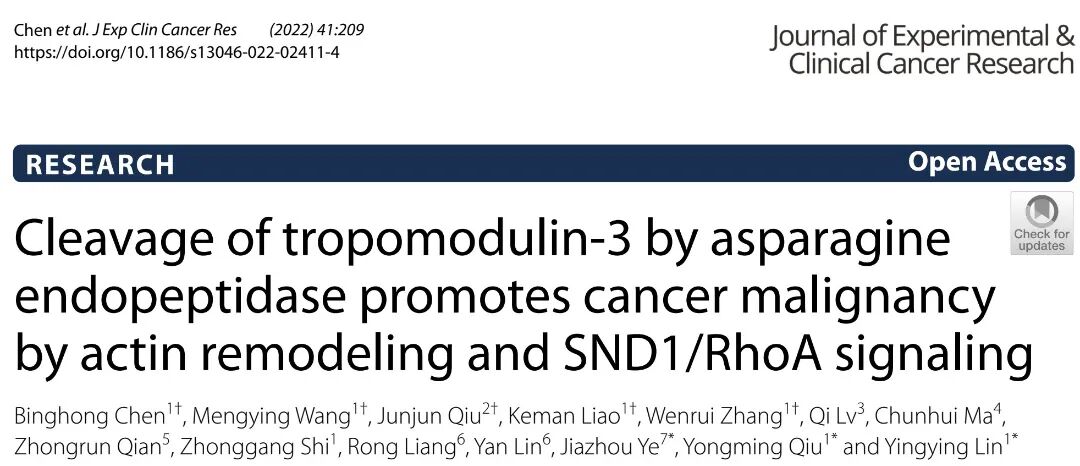

Professor Yongming Qiu's team discovers a possible new mechanism for treating glioma.
On 28 June 2022, Professor Yongming Qiu of Renji's Head Trauma Centre and Associate Research Professor Yingying Lin of the Shanghai Institute of Head Trauma were co-corresponding authors of “Cleavage of tropomodulin-3 by asparagine endopeptidase promotes cancer malignancy by actin remodeling and SND1/RhoA signaling” in the Journal of Experimental & Clinical Cancer Research, with an impact factor reported as 12.658.
Proteases are important signalling molecules involved in key physiological and metabolic pathways and tightly regulated in the body. Disordered activity triggers cleavage of substrate proteins and contributes to cancer, inflammation and neurological disorders. Diverse proteases enriched in tumour microenvironments are important in tumour initiation and progression and represent potential new diagnostic and therapeutic targets. Despite known biochemical functions, unanswered questions about in vivo signalling and regulation of activity in the tumour microenvironment restrict clinical translation of proteases and their specific inhibitors. New research is urgently needed.
Following their discoveries of important asparagine endopeptidase (AEP) functions and mechanisms in glioma—reported in JNCI in 2020 (impact factor 13.506), Cancer Letters in 2020 (8.679) and in 2021 (9.756)—Qiu and Lin's team found that AEP cleaves a new substrate, Tmod3, generating functional fragments with a distinctive mechanism promoting infiltrative tumour growth. The N-terminal fragment competitively binds and inhibits full-length Tmod3, promoting invasion. The C-terminal fragment enters the nucleus and activates SND1/RhoA signalling, promoting proliferation. Its new nuclear function changes the understanding of Tmod3, demonstrating how proteolytic regulation produces functions entirely different from the parent protein and alters tumour-cell behaviour. The fragment was also abnormally highly expressed in glioma, liver cancer and ovarian cancer and closely associated with poor prognosis, suggesting AEP-mediated Tmod3 cleavage as a potential diagnostic and treatment target in several malignancies.
The work clarifies the functions and molecular mechanisms of this cleavage in infiltrative tumour growth. The source describes it as highly innovative and as offering new strategies for several cancers, including glioma.
Renji's Head Trauma Centre and the Shanghai Institute of Head Trauma investigate molecular mechanisms of traumatic, haemorrhagic and tumour-related brain injury, along with treatment, repair and regeneration. They have accumulated and organised findings with potential future clinical translation to benefit more patients.
Original paper: https://trebuchet.public.springernature.app/get_content/d75c9984-19c5-4638-9471-aa26e079fb9b.
Biographies of the main corresponding authors
Yongming Qiu
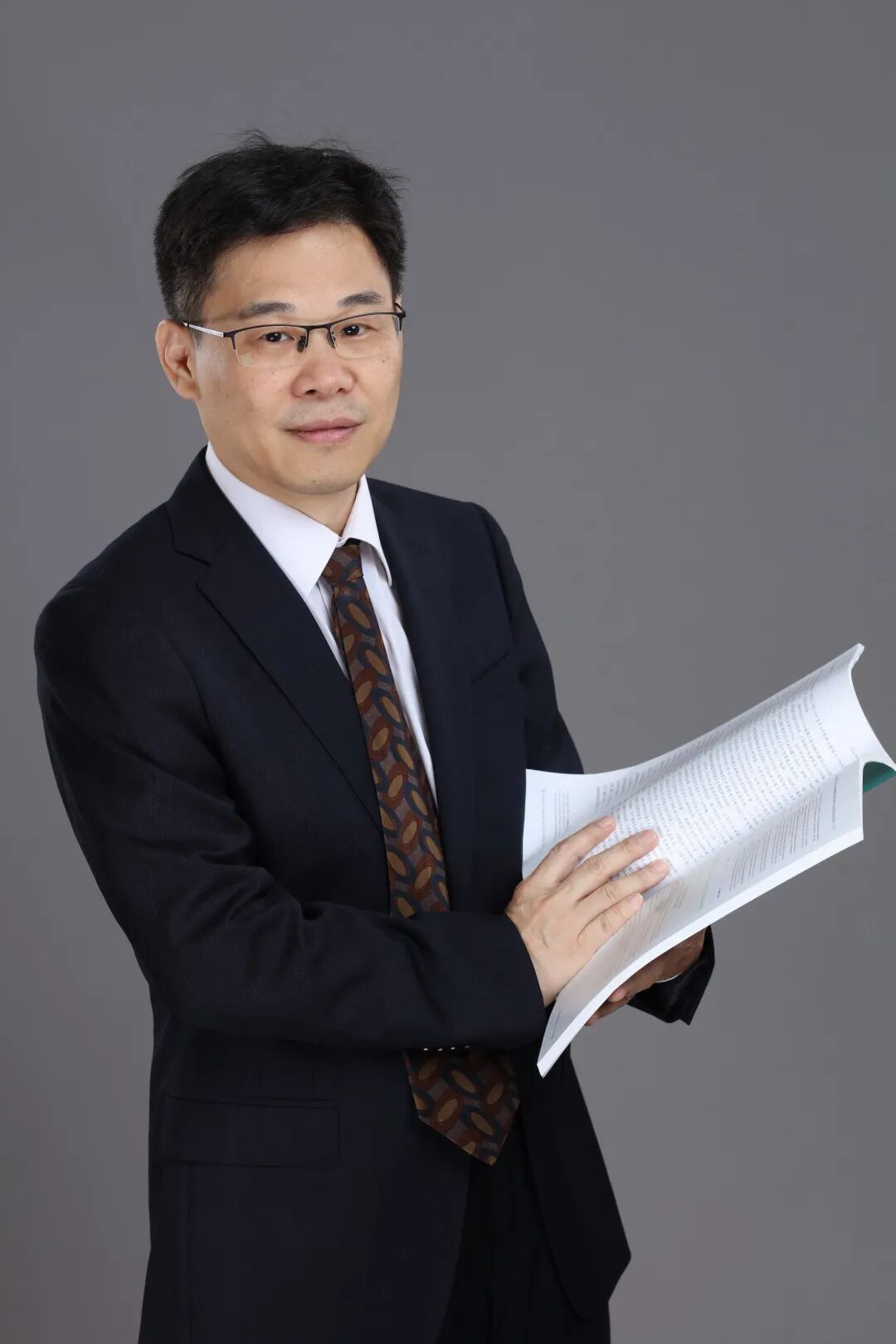
Yongming Qiu, Professor and doctoral supervisor.
As principal investigator, he had led five NSFC projects, five Shanghai Science and Technology Commission projects and other research. Honours included the Wang Zhongcheng Neurosurgery Young Physician Award, Shanghai Outstanding Academic Leader, second prize in the Shanghai Health System Silver Snake Award, Shi Siming Award, Meiji Dairy Life Science Award, Baosteel Education Award and Kuang Ankun Award. He held one Chinese invention patent and eight utility-model patents. Research appeared in JNCI, Journal of Experimental & Clinical Cancer Research, Neuro-Oncology and Cancer Letters. He served as guest editor for the Frontiers in Oncology topic “Molecular Biology of Biomarkers in Diagnosis and Treatment of Glioblastoma Multiforme”.
Contact: qiuzhub@126.com.
Yingying Lin
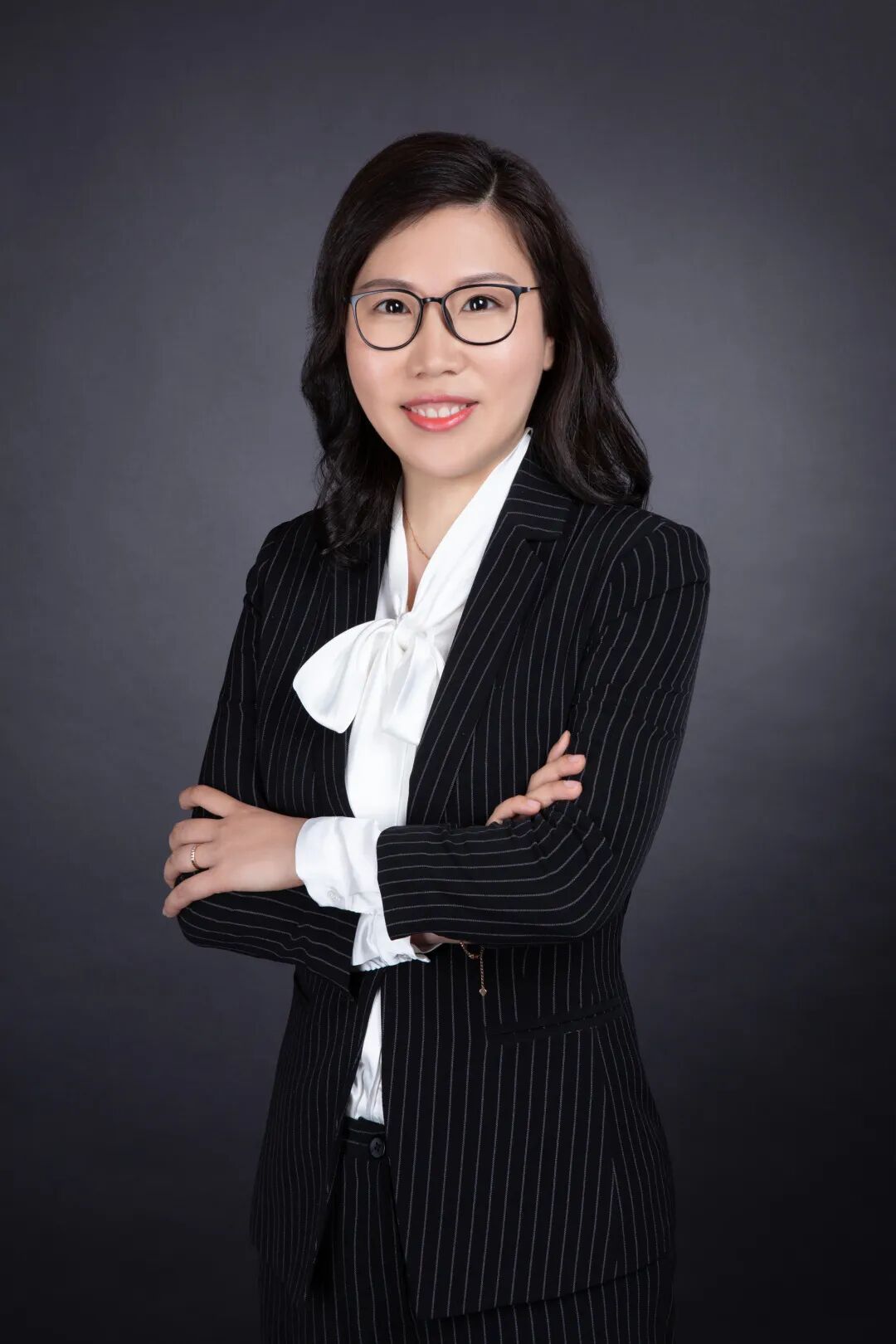
Yingying Lin, Associate Research Professor and master's supervisor.
Her group investigates proteases and evolution of the tumour microenvironment, combining biochemical and molecular work with clinical samples and models to explain malignant progression and identify diagnostic and treatment strategies. As principal investigator, she had led two NSFC grants, Shanghai Science and Technology Commission projects and other studies. Research appeared in JNCI, Journal of Experimental & Clinical Cancer Research, Cancer Immunology Research, Cancer Letters, International Journal of Cancer, British Journal of Cancer and International Journal of Biological Sciences. She served as guest editor for the Frontiers in Oncology topic on molecular biomarkers in glioblastoma diagnosis and treatment.
Contact: yylin@sibs.ac.cn.
邱永明教授团队
发现脑胶质瘤治疗可能的新机制
2022年6月28日,上海交通大学医学院附属仁济医院颅脑创伤中心邱永明教授和上海市颅脑创伤研究所林盈盈副研究员为共同通讯作者在《Journal Of Experimental & Clinical Cancer Research》(影响因子=12.658)上发表题为“Cleavage of tropomodulin-3 by asparagine endopeptidase promotes cancer malignancy by actin remodeling and SND1/RhoA signaling”的原创性论文。
蛋白酶是非常重要的信号分子,涉及多个关键的人体生理代谢途径,在体内受到严格的调控。蛋白酶活性紊乱触发多种底物蛋白的酶切在诸多疾病中发挥重要作用,诸如肿瘤,炎症和神经系统障碍等。已知肿瘤微环境富含的各种各样的蛋白酶是肿瘤发生发展的重要因素,也是临床诊疗新靶标的潜在突破方向。尽管生化功能明确,蛋白酶在体内的信号转导途径,肿瘤微环境中酶活性调控机理等等基础问题的不明,极大限制了蛋白酶及其特异抑制剂在肿瘤临床诊疗中的转化应用,亟需新的研究进展。
颅脑创伤中心邱永明教授、林盈盈副研究员的团队,继发现天冬酰胺内肽酶(asparagine endopeptidase,AEP)在脑胶质瘤中的系列重要功能和机制(JNCI-J Natl Cancer Inst,2020,影响因子 13.506;Cancer Lett,2020,影响因子8.679;Cancer Lett,2021,影响因子9.756)后,该研究发现天冬酰胺内肽酶AEP靶向切割新底物蛋白Tmod3;且产生的功能性截断体促进肿瘤浸润性生长的独有机制。N端截断体竞争结合抑制全长Tmod3的功能,促进肿瘤细胞侵润;同时C端截断体入核后激活SND1/RhoA信号通路,促进肿瘤细胞增殖。C端截断体的核内新功能更改变了对Tmod3这个蛋白的固有认识,表明蛋白经过酶切调控之后产生了完全不同于亲本蛋白的作用,影响肿瘤细胞功能。不仅如此,在脑胶质瘤,肝癌和卵巢癌中均发现该截断体的异常高表达,且和不良预后密切相关,提示AEP酶切Tmod3可作为多种恶性肿瘤潜在的诊疗新靶点。
该成果阐明蛋白酶AEP酶切Tmod3对于肿瘤浸润性生长的功能和分子机制,具有极好的创新性,为包括胶质瘤在内的多种恶性肿瘤的诊疗提供了新的策略。
上海交通大学医学院附属仁济医院颅脑创伤中心、上海市颅脑创伤研究所聚焦于外伤性、出血性、肿瘤性等脑损伤的分子机制研究及相关治疗、修复再生研究。目前已积累并梳理了相当的研究成果,将来有望实现临床转化,以期造福更多的患者。
论文原文链接:
https://trebuchet.public.springernature.app/get_content/d75c9984-19c5-4638-9471-aa26e079fb9b
主要通讯作者简介
邱永明
邱永明,教授,博士生导师
作为第一负责人主持国家自然科学基金(5项),上海市科委(5项)等多项课题的研究。荣获王忠诚神经外科青年医师奖、上海市优秀学术带头人、上海市卫生系统“银蛇奖”二等奖、施思明奖、明治乳业生命科学奖、宝钢教育奖、邝安堃奖等。获得国家发明专利1项, 实用新型专利8项。相关研究成果发表在JNCI-Journal of the National Cancer Institute, Journal of Experimental & Clinical Cancer Research, Neuro-Oncology, Cancer Letters等期刊。担任Frontier in Oncology (Molecular Biology of Biomarkers in Diagnosis and Treatment of Glioblastoma Multiforme)客座主编。
联系邮箱:qiuzhub@126.com
林盈盈
林盈盈,副研究员,硕士生导师
课题组围绕蛋白酶与肿瘤微环境演化等问题,从生化分子机制出发,结合临床样本和模型阐释蛋白酶在肿瘤恶性进展中的作用机理,以期发现新的诊疗策略。作为第一负责人主持国家自然科学基金(2项)和上海市科委项目等多项课题研究。相关研究成果发表在JNCI-Journal of the National Cancer Institute, Journal of Experimental & Clinical Cancer Research, Cancer Immunology Research, Cancer Letters, International Journal of Cancer, British Journal of Cancer, International Journal of Biological Sciences等期刊。担任Frontier in Oncology (Molecular Biology of Biomarkers in Diagnosis and Treatment of Glioblastoma Multiforme)客座主编。
联系邮箱:yylin@sibs.ac.cn