Traumatic brain injury in China: epidemiology, care pathways and clinical research
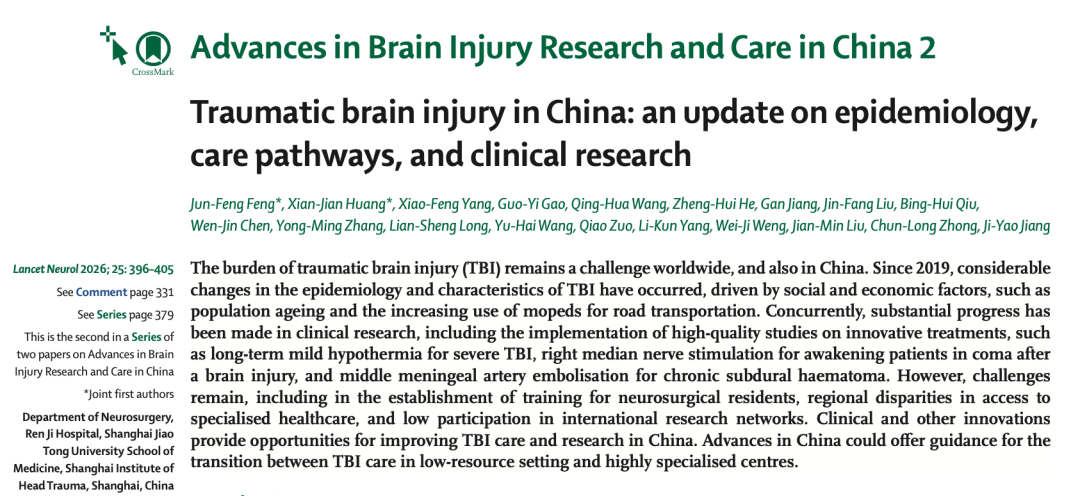
On 19 March 2026, Renji Hospital Neurosurgery, Shanghai Jiao Tong University School of Medicine, as the corresponding institution, published “Traumatic Brain Injury in China: Epidemiology, Care Pathways and Clinical Research” online in The Lancet Neurology (impact factor 45.5), comprehensively discussing progress and challenges in China.
In 2019, Professor Jiyao Jiang of Renji Neurosurgery published the cover article “Traumatic Brain Injury in China” as first and sole corresponding author (Lancet Neurology 18:286–295, 2019; recommended related report: congratulations to Jiang’s team on its Lancet Neurology publication and advances in Chinese TBI care). It was well received internationally and, at the time of this report, had been cited 531 times as a highly cited paper. In 2024, the Editor-in-Chief and editorial team invited Jiang and Junfeng Feng’s team to write a follow-up review.
Fifteen Chinese neurotrauma teams collaborated to systematically introduce recent progress and challenges to global readers: changes in TBI incidence and characteristics; improvements to drink-driving and traffic regulations; on-scene first aid, transfer and emergency fast-track pathways; standardised critical care and clinical research; the Chinese approach to traumatic intracranial hypertension; and relatively limited resources in central and western China.
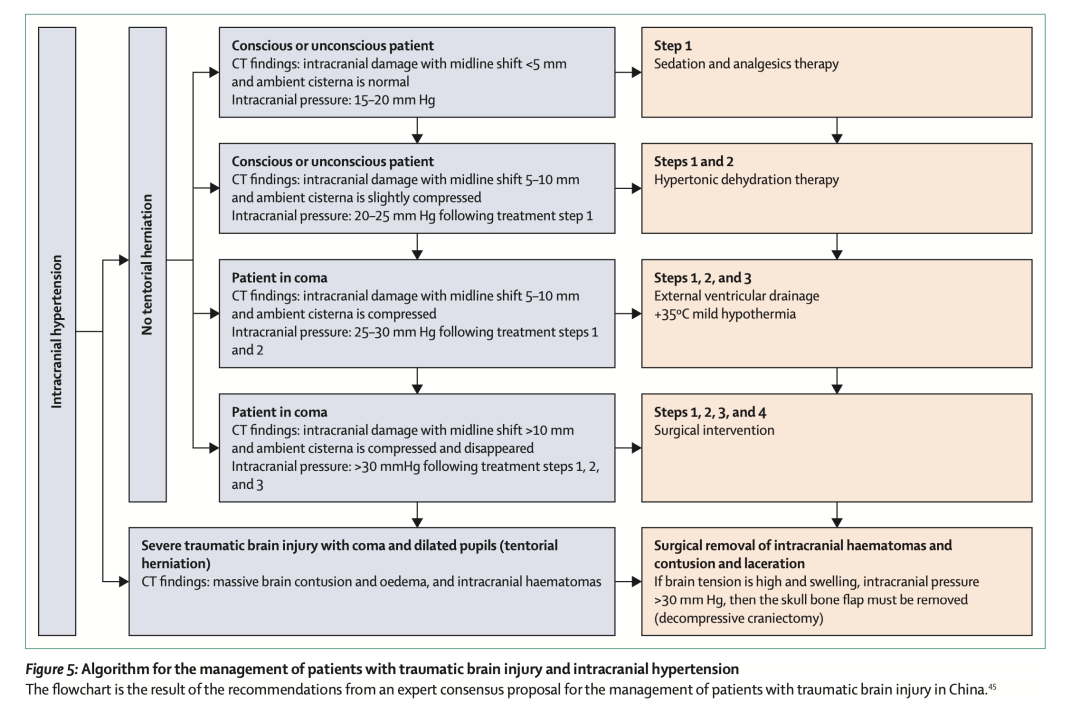
A central feature is the team’s presentation of a Chinese management pathway for traumatic intracranial hypertension to the international community. Pressure elevation caused by haemorrhage, oedema, infarction and swelling is a major cause of death and disability after acute TBI. Although Europe and the US have published tiered management approaches, the authors identify gaps and impractical elements. Jiang first proposed the Chinese pathway in 2024; Nine national experts, including Feng, repeatedly revised it. The report describes removing approaches considered unreasonable or difficult to implement, including barbiturate coma and excessive hyperventilation, to improve practicality and enable individualised, evidence-based care, offering Chinese experience to neurosurgeons worldwide.
Renji Neurosurgery has distinctive strengths in clinical TBI care, research and translation, and is among China’s influential neurotrauma and neurocritical care centres. Repeated invitations from The Lancet Neurology for Jiang and Feng’s team to lead Chinese TBI reports have brought Chinese work to international readers and strengthened its academic influence.
The sole corresponding author is Jiyao Jiang, Honorary Chief Expert at Renji and Director of the Shanghai Institute of Head Trauma. First authors are Junfeng Feng, Director of Renji Neurosurgery, and Xianjian Huang of Shenzhen Second People’s Hospital. Coauthors include Xiaofeng Yang (First Affiliated Hospital, Zhejiang University School of Medicine), Guoyi Gao (Beijing Tiantan Hospital, Capital Medical University), Qinghua Wang (Zhujiang Hospital, Southern Medical University), Gan Jiang (Shanghai Jiao Tong University School of Medicine), Jinfang Liu (Xiangya Hospital, Central South University), Binghui Qiu (Nanfang Hospital, Southern Medical University), Wenjin Chen (Xuanwu Hospital, Capital Medical University), Yongming Zhang (Anhui No. 2 People’s Hospital), Liansheng Long (Nantaihu Hospital), Yuhai Wang and Likun Yang (Wuxi Taihu Hospital), Jianmin Liu and Qiao Zuo (Shanghai Changhai Hospital), Chunlong Zhong (Shanghai East Hospital, Tongji University), and Zhenghui He and Weiji Weng (Renji Hospital).
Corresponding author
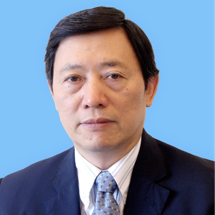
Professor Jiyao Jiang
Renji Hospital, Shanghai Jiao Tong University School of Medicine
Chief physician and doctoral supervisor; recipient of the State Council Special Allowance and the Ministry of Health designation for Young and Middle-Aged Experts with Outstanding Contributions; Honorary Chief Expert at Renji Hospital and Director of the Shanghai Institute of Head Trauma. Former Executive Committee member of the World Federation of Neurosurgical Societies (WFNS), President of the International Neurotrauma Society (INTS), Vice President of the Chinese Medical Doctor Association’s Neurosurgery Division and Chair of the Chinese Medical Association’s Trauma Society.
He has treated over 4,000 difficult and critically ill neurotrauma patients and led development of 14 Chinese guidelines and expert consensuses for TBI diagnosis and treatment. As sole corresponding author he has published 8 papers in The Lancet Neurology, including 2 cover articles; as first or corresponding author he has published over 60 SCI-indexed papers, including in The Lancet Neurology and eClinicalMedicine, with over 12,000 citations. As principal contributor he received second prize in the National Science and Technology Progress Award, first prize in the Shanghai Science and Technology Progress Award and first prize in the Ministry of Education Science and Technology Progress Award, among other honours.
Professor Jiyao Jiang
First authors
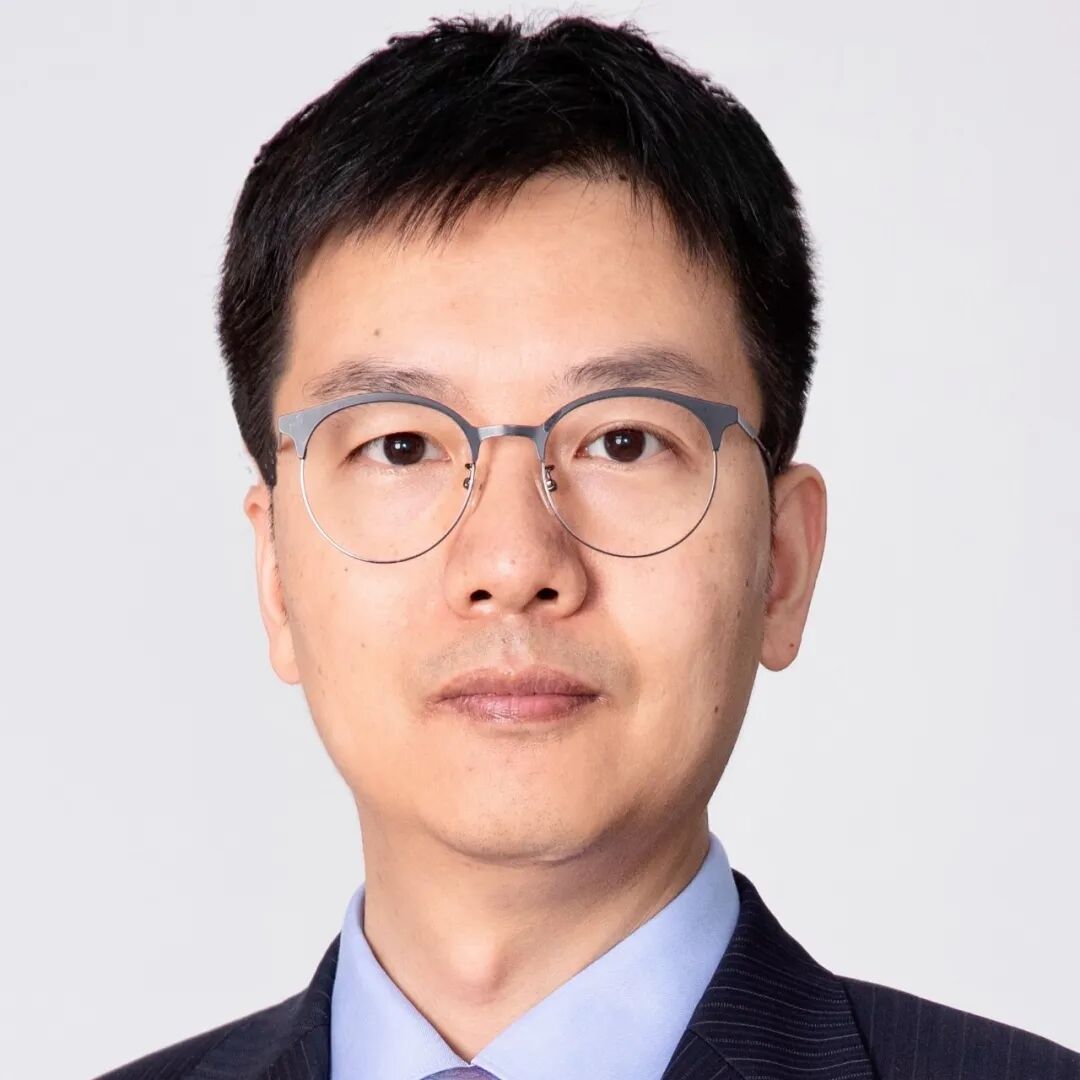
Junfeng Feng — Chief Physician
Renji Hospital, Shanghai Jiao Tong University School of Medicine
Chief physician, research professor and doctoral supervisor; Director of Renji Neurosurgery; Deputy Director of the Shanghai Institute of Head Trauma; Deputy head of the Neurocritical Care Working Group of the Chinese Medical Doctor Association’s Neurosurgery Division; member of the WFNS Neurotrauma Committee (NTC); member of a working group of the Chinese Medical Association’s Trauma Society; deputy head of the trauma working group of the Shanghai Medical Association’s Neurosurgery Society; committee member and secretary of the Shanghai Medical Doctor Association’s Neurosurgery Division.
His honours include the Wang Zhongcheng Chinese Young Neurosurgeon Award, the Innovation Award of the Wang Zhengguo Trauma Medicine Award, the Shanghai Silver Snake Award, Shanghai Outstanding Academic Leader (Young) and Shanghai Outstanding Young Medical Talent, and the inaugural National Outstanding Young Physician designation in the high-level medical talent programme.
He focuses on clinical surgery and comprehensive treatment for TBI and neurocritical illness, and studies brain protection and neural repair and regeneration. He has received five National Natural Science Foundation grants, holds 20 granted patents and has published over 30 SCI-indexed papers.
Professor Junfeng Feng
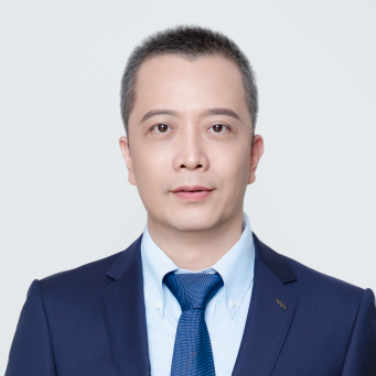
Professor Xianjian Huang
First Affiliated Hospital of Shenzhen University (Shenzhen Second People’s Hospital)
Director of the neurosurgical intensive care ward, chief physician, PhD, graduate supervisor and Director of Neurosurgical Teaching; Guangdong Outstanding Young Medical Talent.
Member of the Neurotrauma Working Group of the eighth committee of the Chinese Medical Association’s Trauma Society; fourth-term committee member of the Chinese Neurosurgical Critical Care Management Collaborative Group; Vice Chair of the Guangdong Medical Association’s Trauma Society; deputy head of the trauma and critical care group of the neurosurgery divisions of the Guangdong Medical Association and Medical Doctor Association; committee member of the Guangdong Medical Association’s Evidence-Based Medicine Society; Vice President of the Shenzhen Medical Doctor Association’s Neurosurgery Division and head of its trauma and critical care group; Chair of the Critical Care Rehabilitation Committee of the Shenzhen Rehabilitation Medicine Association; reviewer for the National Natural Science Foundation and provincial Natural Science Foundation.
Copyright notice: Intellectual property in content published by BrainMed’s Neurosurgery News, Neurointerventional News, Brain Medical Consultation and AiBrain belongs to BrainMed, the organisers, original authors and other rights holders. Republishing, excerpting, copying, cropping or recording without permission is prohibited. Authorised use must acknowledge the source. Forwarding and sharing are welcomed.
2026年3月19日,上海交通大学医学院附属仁济医院神经外科作为通讯单位,在国际顶刊《柳叶刀神经病学》杂志(影响因子45.5分)在线发表题为《中国颅脑创伤:流行病学、救治路径和临床研究》长篇报道,全面介绍中国颅脑创伤取得的进步和面临的挑战。
2019年,上海交通大学医学院附属仁济医院神经外科江基尧教授作为第一作者和独立通讯作者在国际顶刊《柳叶刀神经病学》发表题为《中国颅脑创伤》封面文章(柳叶刀神经病学18:286-295, 2019,推荐阅读:热烈祝贺江基尧教授团队在《柳叶刀神经病学》发表论文,中国颅脑创伤救治水平进入国际先进行列!)。论文发表后得到国内外广泛好评,迄今已被引用531次(高被引证论文)。2024年,柳叶刀神经病学主编及编辑部再次邀请江基尧、冯军峰教授团队撰写中国颅脑创伤综述续篇。
国内共15家颅脑创伤团队携手合作,向全球读者系统介绍了中国颅脑创伤近年来取得的进步和面临的挑战,包括:中国颅脑创伤发生率变化和特征、酒驾和道路交通法规的完善、颅脑创伤现场急救转运和医院急诊绿色通道建设、危重颅脑创伤患者规范化救治和临床研究状况、创伤性颅高压中国处理方案、中西部地区救治条件偏弱等关键问题。
作为文章的最大亮点,江基尧教授团队首次向全球提出了创伤性颅高压的中国处理方案(流程)。急性颅脑创伤患者因颅内出血、水肿、脑梗死、脑肿胀等原因而导致的颅内压升高,是患者致死致残的最主要原因。近几十年来,欧美国家相继出版了颅内高压阶梯治疗方案,但临床实践中仍有诸多不全面和不合理的内容。江基尧教授于2024年首次提出了中国处理方案(流程),经冯军峰等全国9名专家反复修订,摒弃了既往临床实践操作性差的巴比妥昏迷、过度通气等不合理的治疗方法,提升了颅高压治疗的临床可操作性,实现循证医学基础上的个体化精准救治,为全球神经外科医师规范治疗颅脑创伤后颅高压患者贡献了中国智慧。
上海交通大学医学院附属仁济医院神经外科在颅脑创伤临床救治、临床研究、创新转化等方面有鲜明的特色,是国内颅脑创伤和神经危重症救治领域最有学术影响力的中心之一。《柳叶刀神经病学》连续邀请江基尧教授、冯军峰教授团队牵头撰写中国颅脑创伤系列报道,推动了中国颅脑创伤走向世界舞台,提升了中国团队在国际颅脑创伤领域的学术影响力。
该综述论文的独立通讯作者是上海交通大学医学院附属仁济医院荣誉首席专家、上海市颅脑创伤研究所所长江基尧教授,第一作者是上海交通大学医学院附属仁济医院神经外科主任冯军峰教授、深圳第二人民医院神经外科黄贤键教授,共同作者包括浙江大学医学院附属第一医院的杨小锋教授、首都医科大学附属北京天坛医院的高国一教授、南方医科大学珠江医院王清华教授、上海交通大学医学院江淦教授、中南大学湘雅医院刘劲芳教授、南方医科大学南方医院邱炳辉教授、首都医科大学宣武医院陈文劲教授、安徽省第二人民医院张永明教授、南太湖医院龙连圣教授、无锡太湖医院王玉海教授和杨理坤教授、上海长海医院刘建民教授和左乔教授、同济大学附属东方医院钟春龙教授、以及上海交通大学医学院附属仁济医院何征晖博士和翁维吉博士。
通讯作者简介
江基尧 教授
上海交通大学医学院附属仁济医院
上海交通大学医学院附属仁济医院主任医师、博士生导师
国务院特殊津贴专家、卫生部有突出贡献中青年专家。上海交通大学医学院附属仁济医院荣誉首席专家、上海市颅脑创伤研究所所长、曾担任世界神经外科医师联盟(WFNS)执委、国际神经创伤协会(INTS)主席、中国医师协会神经外科医师分会副会长、中华医学会创伤学分会前任主委
救治各类疑难危重颅脑创伤4000余例
牵头制定14个颅脑创伤诊治《中国指南》和《专家共识》
以唯一通讯作者在《Lancet Neurology》刊登论文8篇(封面论文2篇)、第一作者/通讯作者在柳叶刀子刊《Lancet Neurology》和《EClinicalMedicine》等SCI杂志发表论文60余篇。引证12000余次。第一完成人荣获国家科技进步二等奖、上海市科技进步一等奖、教育部科技进步一等奖等
江基尧 教授
第一作者简介
冯军峰 主任医师
上海交通大学医学院附属仁济医院
主任医师、研究员、博士研究生导师
上海交通大学医学院附属仁济医院神经外科主任
上海市颅脑创伤研究所副所长
中国医师协会神经外科医师分会神经重症学组副组长
中华医学会创伤学分会学组委员
上海市医学会神经外科分会创伤学组副组长
上海市医师协会神经外科分会委员兼秘书
世界神经外科联合会(WFNS)颅脑创伤专家委员会(NTC)委员
获王忠诚中国神经外科青年医师奖、王正国创伤医学奖创新奖、上海市银蛇奖、上海市优秀学术带头人(青年)、上海市杰出青年医学人才、第一届医学高层次人才“国家优秀青年医师”
专注于颅脑创伤、神经重症相关临床手术及综合救治,开展脑损伤保护和神经修复再生研究。获国家自然科学基金5项、授权专利20项、发表30余篇SCI论文
冯军峰 教授
黄贤键 教授
深圳大学第一附属医院(深圳市第二人民医院)
深圳大学第一附属医院(深圳市第二人民医院)神经外科重症监护病区主任,主任医师,博士,研究生导师,神经外科教学主任,广东省杰出青年医学人才
中华医学会创伤学会第八届委员会神经创伤学组委员
中国神经外科重症管理协作组第四届委员
广东省医学会创伤学分会副主任委员
广东省医学会及医师协会神经外科医师分会创伤重症组副组长
广东省医学会循证医学分会委员
深圳市医师协会神经外科医师分会副会长兼创伤重症组组长
深圳市康复医学会重症康复委员会主任委员
国家自然科学基金委和省自然科学基金委函审专家
声明:脑医汇旗下神外资讯、神介资讯、脑医咨询、AiBrain所发表内容之知识产权为脑医汇及主办方、原作者等相关权利人所有。未经许可,禁止进行转载、摘编、复制、裁切、录制等。经许可授权使用,亦须注明来源。欢迎转发、分享。